
October 20, 2016

A Win-Lose Situation

            Okay, believe it or not, I’m actually somewhat ahead on ranty blog posts right now.  Three weeks ahead.  But I want to put it out there again that suggestions and requests are always welcome.  Or just general comments. 
            Without them I’ll just keep blabbing away about whatever comes to mind.
            For example…
             A few weeks back I blabbed on about art, especially the tendency in art stories to make characters as miserable as possible.  That idea bounced around in my head for a while.  The other day it hit another idea, and once they were next to each other I knew how to explain this.

            When we’re starting out as people, and as writers, we tend to look at things in very black and white terms.  Something is positive, or it’s negative.  Good or bad.  That’s it.  The idea of something being mostly good, despite having some bad in it, doesn’t tend to cross the mind as a first choice.  Or that a villain could be anything less than 100% evil.  White hats and black capes, right?

            I can be honest.  I used to do this a lot.  I think most writers do. It’s an experience thing.  None of us ever think we’re doing it—we’re all wise and worldly, after all—but the truth is it’s just a stage the majority of us go through as we’re learning to tell stories.
            If I had to make a guess, I think this is why a lot of these artistic stories tend to be so negative, especially the ones by beginning writers.  The only visible choices are all positive or all negative, and if they were all positive there’d be nothing for anyone to talk about. Soooo…
            The characters in these stories just have awful, pathetic lives.  They have bad jobs for low pay where they’re unappreciated and have horrible bosses.  They hang out with boring friends and have bad relationships and unenthusiastic, unfulfilling sex with barely-adequate partners.
            Sound familiar?
            While this can work on a very simple level, it’s just not a great representation of the real world.  Yes, the world is a messy place, full of compromises and mistakes and a lot of people trying to do the best they can, usually under less than ideal circumstances.  Bad things do happen to good people far too often, and some folks just never seem to get a break.
            However…
            There can be a lot of bad, yeah, but there’s also a lot of good.  Friends and family who help out.  Random sympathetic strangers.  Even just sheer luck. Sometimes—maybe just once or twice in our lives—we stumbled across just what we need at the exact moment we need it.
            The simple truth is, life is a mix.  It’s very rarely all good or all bad.  And that holds in fiction, too.  A good story is rarely going to be all of one or the other.  My characters need to succeed (we don’t want to be following losers), but success doesn’t always mean getting the sexy love interest, finding the treasure, or triumphantly winning the battle without physical or mental scars.
            Great example—we’ve all heard the story about the day Oprah gave everyone in her audience a luxury car, right?  Fantastic!  Nothing but positive there, right?
            Except…
            In the weeks to come, many of these people were begging her to take the cars back.  Seriously.  Did you know you have to pay taxes on big prizes like that?  What do you think the tax is on a $60,000 luxury car?  And do you want to guess at the minimum insurance payments?  The attempt to make all these lives better actually made many of them worse.
            You’ve probably heard similar stories about lottery winners.  At first they’re thrilled to win all that money—who wouldn’t be?  But then you hear stories about how people start to look at them differently and act differently. They’re no longer Yakko from work—they’re Yakko the multi-millionaire. And every time they don’t pick up the tab or don’t chip in or don’t offer to help, the looks change a little more.  Seriously, check it out—a huge number of lottery winners say it ruined their lives.
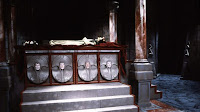
         Remember that classic story “The Monkey’s Paw,” where no matter what you wish for there’s always a negative twist to it?  Ursula K. LeGuin did the same thing in The Lathe of Heaven, about a man whose dreams shape reality.  And if you’re a Doctor Who fan, you may remember the Game of Rassilon, where those who win shall lose, and those who lose shall win.
            Alas, even with all these examples, it’s not always easy to see this.  Definitely not easy to write it.  Multi-layered success is a challenging thing, and—as I mentioned above—it takes a degree of experienceto pull it off.
            Simple experiment. Take your favorite book or movie.  Odds are it’s got a happy ending, right?  At least a mildly-positive one?
            Now—find the bad things.  What did it cost the protagonist to get to that happy ending?  Ruined relationships?  Compromised morals?  Lost job?  Property damage?  Bodily damage?  Maybe even a death or three?  I’m willing to bet there was a price.  Probably even a big one.
            Winning rarely comes without some losses.  Losing isn’t always the end of the world.  And my stories should reflect this.
            Next time… it’s Halloween.  Time to sit around the campfire and tell… well, some kind of scary story.  We’ll figure out what.
            Until then, go write.
I really like this title, even though it makes me think of the conservative talk show host in V for Vendetta.

So, a question was posed in the comments a few weeks back—how do you deal with criticism?  Specifically, how do you tell good, useful criticism from questionable opinions, and how do you weight those opinions to tell which are worth listening to and which are just… well, wrong.

I think that was the question, anyway. If I’ve completely missed it, Chris, feel free to point and laugh at me in the comments. Until then, though, this is what I’m going with…

This is kind of well-timed, too.  Back in May I handed in my new book to the publisher, and near the end of the month I got back notes from my editor.  Lots of notes.

Pages of notes.

 I won’t lie.  It stung.  It never feels good to have someone pull out lists of reasons why months of work needs… well, even more work.

Here’s the thing, though.  He was right on about 85% of what he said.  And I knew it.  My editor’s a smart guy, and he picked up on a lot of things—small things, really—that didn’t work in the story. But these small things snowballed into three or four big problems.

(Which I am now about halfway through fixing…)

So… how did I know he was right?

Assuming I’m actually open to receiving some honest criticism, one thing I can immediately look for is if this criticism is objective or subjective.  Is it a factual, provable point, or is it just a reader’s opinion.  If I use the wrong spelling of canon, drop commas in weird places, or don’t have a single transition anywhere… these are real problems that have a right or wrong answer.  This is objective criticism, and if I’m going to get argumentative about something like spelling, well… my writing career is going to take a while to get going.

Which takes us to subjective criticism.  This is when my editor or beta readers express their opinions on my writing.  And opinions can be taken with a grain of salt. Or several grains.  Sometimes a spoonful.

For example, some opinions are informed.  My agent doesn’t think this is a good time to try selling an urban fantasy book.  He spends his time talking to different editors and looking at recent market trends, so he’s probably got a pretty good sense of things.  That doesn’t mean selling a UF book right now is a guaranteed failure, but it’s probably a good way to approach things for now.

On the other hand, some people’s opinions are a bit… less informed.  I think zombies suck.  Maybe you could give her a dog?  Or a cat?  I feel like this sex scene could be cut.  Have you considered ending the book on Chapter Six and just making it a novella?  Have you considered giving this up and going back to investment banking?  These are all critical statements, but there’s nothing backing them up except one reader’s opinion.

And don’t get me wrong.  Everyone’s entitled to an opinion, and their opinion is (usually) totally valid.  But at the end of the day, some opinions carry more weight than others.  Neil deGrasse Tyson’s opinions on moon colonies carry more weight than mine, even though I once did a whole month of research for a zombies-on-the-moonbook.  Pretty much every woman on Earth has better thoughts than me about the struggles, barriers, and sexism they encounter as a woman.  On the plus side, my opinions on G1 Transformers and Micronauts carry more weight than my brother’s (he was more into sports when we were kids…and as adults, too).

But how do I tell objective feedback from the subjective stuff? There are so many rules and accepted standards!  It could take years and dozens of drafts to learn them all!

Well, here’s one easy rule of thumb.  If I’m giving you feedback for something, and my notes have a lot of phrases beginning with–

“I think…”
“I feel…”
“This didn’t do it for me.”
“I just don’t…”

–my critique probably isn’t that objective.  Just because my personal reading preference may be for casual dialogue, implied sex and violence, or clever twists doesn’t automatically mean these things are right for a given story.  And it doesn’t mean a lack of them is wrong.  So when I’m saying “I think you need this,” I’m not offering advice based on facts or rules, just off my own thoughts and feelings.

However…

Yeah, there’s always a however…

As I’ve mentioned before, some people will try to soften the blow with criticism because they don’t want to hurt my feelings when I read their notes. So even though they’ll have a perfectly valid, solid point to make, they’ll lead it with one of those phrases I mentioned above.  “Not 100% sure, but I think you may want to check if Schwartzenagger is the correct spelling.”  I’ve done this to other writers.  Readers have done it to me.  It’s just human nature.

Except…

The flipside of this is the people who don’t realize they’re just voicing their opinions or some half-understood advice. And these folks will declare with absolute certainty that I must change this character’s name or move that comma or turn all my zombies into witches because, seriously, who still writes about zombies?  It’s over, people. Witches are the new hot thing.

So when I’m wading through my feedback, I need to be able to sort good opinions from bad ones.  And real objective criticism from heartfelt opinions.  That’s part of my job as a writer.

Now, all that being said… there are times someone’s personal opinion might hold a little more weight.  If some producer wants to pay me to rewrite my screenplay to include an alien love-child, or to rewrite the main character of my civil war slave story to be a white guy…that’s their call.  If a publisher wants to buy my Agent Carter fan-fic with all the names and a few genders swapped, I probably won’t tell him no.  If someone wants to pay me actual money to do something that could very well ruin my story…  well, getting paid is nice.  A lot of writers cover their monthly bills that way.  Especially in Hollywood.

Y’see, Timmy, the bad news is that a huge amount of knowing how to sift through criticism and make these choices is just plain experience. It’s the ugly process of writing, getting feedback, rewriting for the feedback… and realizing two or three drafts later some of that critique could’ve been ignored.  Then having this happen again… and again.  And again.  The only way to learn this is through writing and rewriting and learning exactly how all of this word-stuff fits together and then writing some more and having it suck a little less.

Also, it’ll help a lot if I read more.  Lots of things in lots of genres.  If I can name a hundred manuscripts that have done the same thing as mine with a character, with structure, with dialogue, that’s probably a good sign that what I’m doing is acceptable. But the only way I’m going to know that is if I’ve read lots and lots of material.

By the same token, if I read a hundred books a year and not one of them has done what I did with dialogue… well, it might mean I’m a visionary, but odds are it means this isn’t really an acceptable practice.  If I find one or two out of that hundred that do it, they’re probably the exception than proves the rule.  Again, though, the only way I’ll know is to read.

Yeah, this sounds like a lot of work.  It is. I didn’t figure all this out overnight, or even in the eight or nine years since I started this blog.  This is actual decades of experience, stretching back to the early ‘80s when I first started screwing up this stuff with fanfic, comic book scripts, and lizard man stories.  And I screwed up and got rejected a lot.

As I’ve mentioned before, experience is what you get when you don’t get what you want.

Speaking of not getting what you want…

There will be no post next week because I’m going to be down at San Diego Comic Con.  If you happen to be there Saturday, though, I will be part of a panel on worldbuilding and storytelling, so you could show up and mock me in person.

And I’ll probably put up a few photo tips to make up for the lack of actual post.

When we do meet again, though, I’d like to talk about chefs.

Until then… go write.

November 7, 2014 / 2 Comments

Take It From The Top…

Musical reference.  If you were ever in band class, you already have an idea what I’m talking about.

Here’s a quick tip I wanted to toss out for a common problem…

I think most of us have some project—a novel, a screenplay, a short story—that we really loved at one point, but had to put down.  Maybe it was because of work.  Family stuff could’ve cropped up.  Perhaps circumstances forced us to move on to other things.  It happens.

Then we go back to it.  Not just to dabble with it over a weekend, but to pick up things where we left off.  And—no surprise—it’s tough to make things work the way they did before the break.

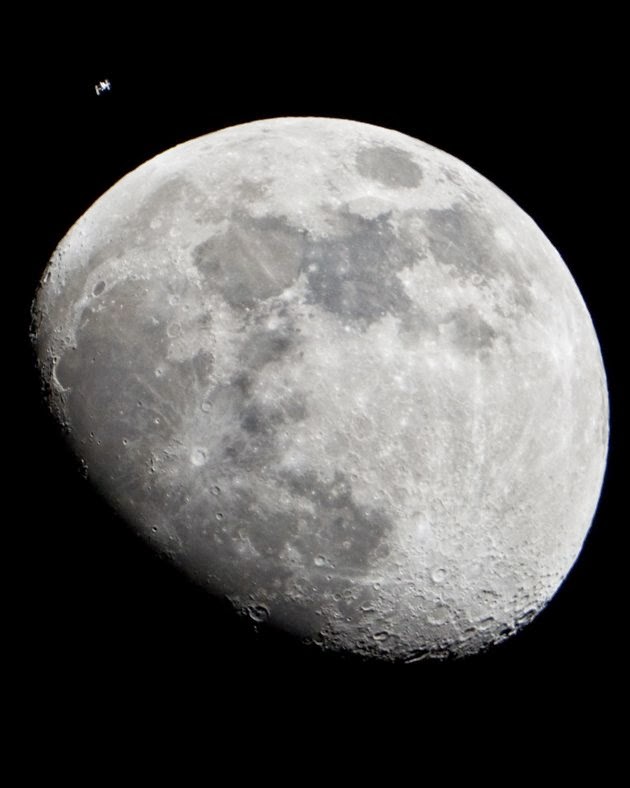
If you’ve been reading this little pile of rants for a while, you may remember me referencing a novel I started about zombies on the Moon.  I began work on it back in late 2009, but put it aside after a few months because my publisher at the time wanted me to try a mash-up novel.  When I tried to go back to the zombie idea, he’d just bought another “zombies in space” novel and warned me he probably wouldn’t want another one (I ended up writing a book about a creepy apartment building instead).  I even tried to go back to Dead Moon again two years ago, and… well, it was a struggle.  I couldn’t remember how the characters sounded in my head, or where some of the plot points were leading.  I banged my head against it for about three months and then, well, circumstances required I move on again.

My lovely lady recently had a similar problem.  She tried to finish a first person manuscript that was about 4/5 done, but she hadn’t touched it in about a decade and it was very, very voice-heavy with a very tricky plot.  That last 20% took her months.

And I made the same mistake again, even after my attempts to get back to the Moon.  One of my most recent books began as a different novel back in 2007.  It was set aside twice (much like Dead Moon), and I’d kind of given up on it.  But then I realized I could salvage a lot of the plot and characters and use them as kind of a spin-off-side-quelto that creepy-apartment story.  Which sounded great on a bunch of levels.

Except what really happened was that I tried to pick up right where I left off.  I fumbled with it for a long time before I realized I needed to forget X and start writing Y.  And I was 2/3 through Y before it hit me that the whole thing was really just clinging to X again.  I pulled it apart (now with a deadline creeping close) and finally got Z put together.

Which my editor looked at and immediately caught a bunch of Y stuff.

Y’see, Timmy, if we’re doing things right, we all keep growing as writers.  We gain experience (some good, some bad).  We learn new things.  We swear never to do certain things ever again.

And because of this, we stumble when we try to go back.  It’s kind of like bumping into an old ex and pretending nothing’s changed when… well, a lot has changed.  There’s skewed memories, things we know that we don’t want to talk about, and experiences that make casual conversations kind of awkward.  Because we’ve grown and moved on.  There can still be something there, sure, but it’ll never be what it was back then.

Final anecdote.  A month or two back I was offered a spot in a high-profile anthology.  My first thought for a story that fit was actually an unproduced script I’d written for a television show back in 2001.  But this was a themed anthology—my story had to fit this theme and these characters.

So I read through the old script twice to get the story and the beats back in my head.  Then I put it aside.  Didn’t look at it again.  I wrote my first draft in a week (about 12,000 words) and had three more drafts done in the next two and a half weeks.  The editor loved it.

So, here’s my tip.

If I’m going to go back to a half-done project that I haven’t done anything with for a significant amount of time, I might be better off just starting from scratch. Don’t try to save or salvage or repurpose.  Just start over.  This way I’m not fighting with present vs. past experience or voices or plotlines.  I’m just writing

Sometimes it’s faster to start over on a project than to pick it up after a long time away from it.

Next time, I’m going to introduce a reader request about characters.

Until then, go write.

September 29, 2014 / 4 Comments

Photo Tip

Categories