Historical reference! It’s like a pop culture reference, but it lets you pass tests…
            I’ve talked about different genre issues a few times in the past.  With the upcoming holiday, though, I thought it would be nice to revisit one that’s near and dear to me.  To be more specific, I thought we could talk about the different forms of horror. 
            Anyone who’s dabbled in horror knows that, when we tell folks this is our chosen genre, our work tends to get lumped into this vague slasher/vampire/Satanist category.  Either that or we’re tagged as someone working through a collection of childhood issues.  Most folks don’t realize horror can be broken down into many different sub-genres, just like drama or comedy or war stories.  Just because Resident Evil is under the umbrella (no pun intended) of horror doesn’t mean it’s anything like It Follows, and neither of them resembles Bram Stoker’s Dracula.  Or Stephen King’s Salem’s Lot.  Or Craig DiLouie’s Suffer The Children.
            So, here’s a few different panels of that umbrella.  Some of them are established sub-genres which have already been debated to death.  Others are just things I’ve noticed and named on my own that I feel are worth mentioning.
            Also, you may notice I’m defining a lot of these by how the characters in the story react/interact with the scary things.  That’s deliberate. All stories are about characters, and horror stories hinge on that.  One of the most common complaints we all hear about horror—to the point that it’s almost a joke—is when the characters do something that makes no sense.  So how my characters act and react is going to have a lot of effect on the story I’m telling…
Supernatural stories—This is one of the easiest ones to spot.  It’s your classic ghost story.  The phone lines that fall into the cemetery.  The pale girl out hitchhiking alone in the middle of night.  The foul-smelling thing in the lower berth. 
            There are a few key things you’ll notice about these.  One of the biggies is that the protagonist rarely comes to harm in a supernatural story.  Their underwear will need to go through the wash three or four times and they may not sleep well for years afterwards, but physically, and even mentally, they tend to come out okay.  If anyone suffers in a supernatural story it’s usually the bad guy or some smaller character.  Also, these stories tend not to have explanations– they just are.  There aren’t any cursed objects or ancient histories at play.  Things happen because… well, they happen.
            The Sixth Sense is still a great example of a supernatural story, as is “A Christmas Carol” by that populist hack Charles Dickens.  Even the Pirates of the Caribbean franchise is more supernatural stories than anything else.
Giant Evil stories—These are the grim tales when the universe itself is against my characters.  Every person they meet, everything they encounter–it all serves some greater, awful evil.  H.P. Lovecraft and Robert Howard wrote a lot of giant evil storiesThe Omen is another good (so to speak) story of the universe turning against the protagonist.  Any fan of Sutter Cane will of course remember the reality-twisting film In The Mouth of Madness.  In a way, most post-apocalyptic stories fall here, too—the world belongs to radioactive mutants, the killer virus, or the zombie hordes.
            Personally, I’d toss a lot of haunted house stories in here, because the haunted house (or ship, or insane asylum, or spaceship, or whatever) is essentially the universe of the story.  Not all of them, but a decent number.  The reader or audience doesn’t see anything else and the characters don’t get to interact with anything else.  House on Haunted Hill, The Shining, Event Horizon, and most of the Paranormal Activity films could all be seen as supernatural stories, but their settings really elevate them to giant evil stories.
Thrillers—Thrillers also stand a bit away from the pack because they tend to be the most grounded of horror stories.  Few creatures of the night, no dark entities, far fewer axe-wielding psychopaths.  The key thing to remember is that a thriller is all about right now.  It’s about the clock counting down in front of my heroine, the killer hiding right there in the closet, or the booby trap that’s a razor-width from going off and doing… well, awful things to my characters.  There’s a lot of suspense focused on one or two characters and it stays focused on them for the run of my story.  A thriller keeps the characters (and the reader) on edge almost every minute.

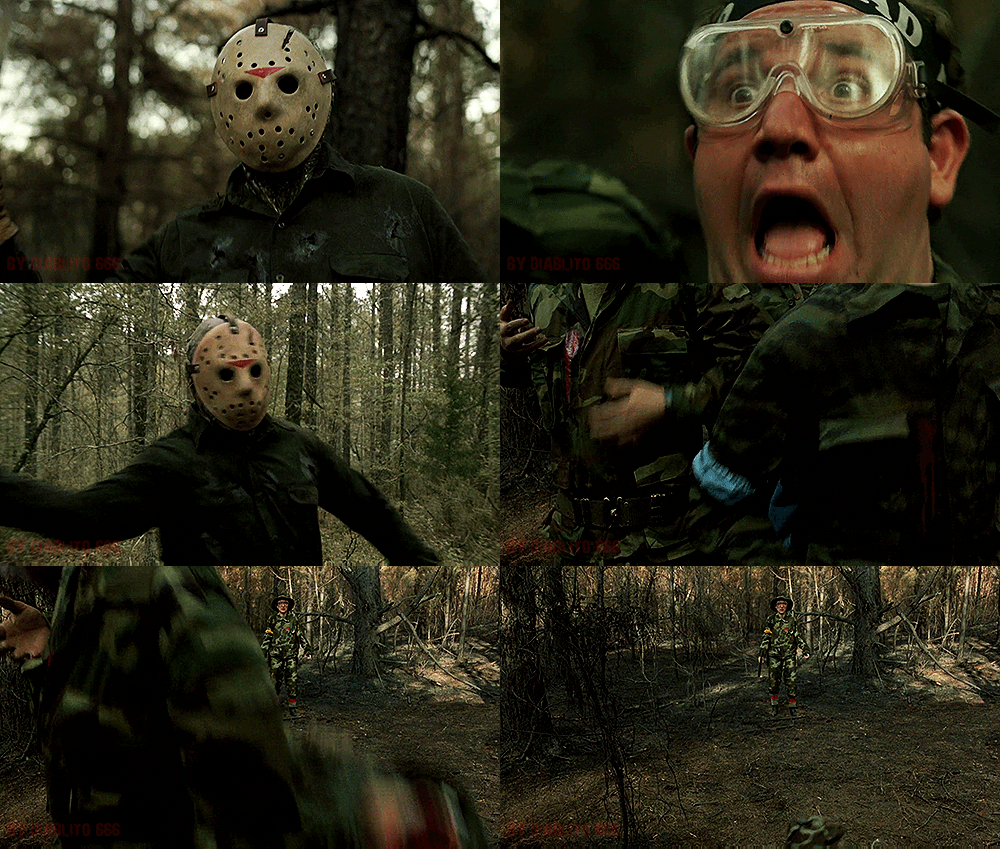
Slasher stories—These are really about one thing, and that’s body count.  How many men, women, and fornicating teens can the killer reduce to cold meat?  Note that there’s a few distinctions between a slasher story and a torture porn story (see below), and one of them is usually the sheer number of people killed.  There’s also often a degree of creativity and violence to the deaths, although it’s important to note it’s rarely deliberate or malicious.  Often it’s just the killer using the most convenient tools at hand for the job—slasher tales are pretty much a parkour of death.  The original Friday the 13th film series has pretty much become the standard for slasher pics, and it’s what most people tend to think of first when you mention the term.

            A lot slasher stories used to have a mystery sub-element to them, and often it was trying to figure out who the killer was.  Then it kind of morphed into being a twist… alas, often not a very well-done one.   Slasher stories also developed a bad habit of falling back on the insanity defense and got stereotyped as “psycho-killer” movies.  Which is a shame because some of them are actually very clever and creepy.

Monster stories—The tales in this little sub-genre tend to be about unstoppable, inescapable things that mean the protagonist harm.  They’re rarely secretive or mysterious, but they do have an alarming habit of tending toward nigh-immortality.   The emphasis here is that nothing my heroes (or the villains, police, military, or the innocent bystanders) do can end this thing’s rampage, and any worthwhile rampage tends to involve people dying.  There may be blood and death, but the focus with a monster isn’t finding it or learning about it– it’s stopping it.  Or at least getting as far away from it as possible.  Of course, how far is far enough with something that doesn’t stop?
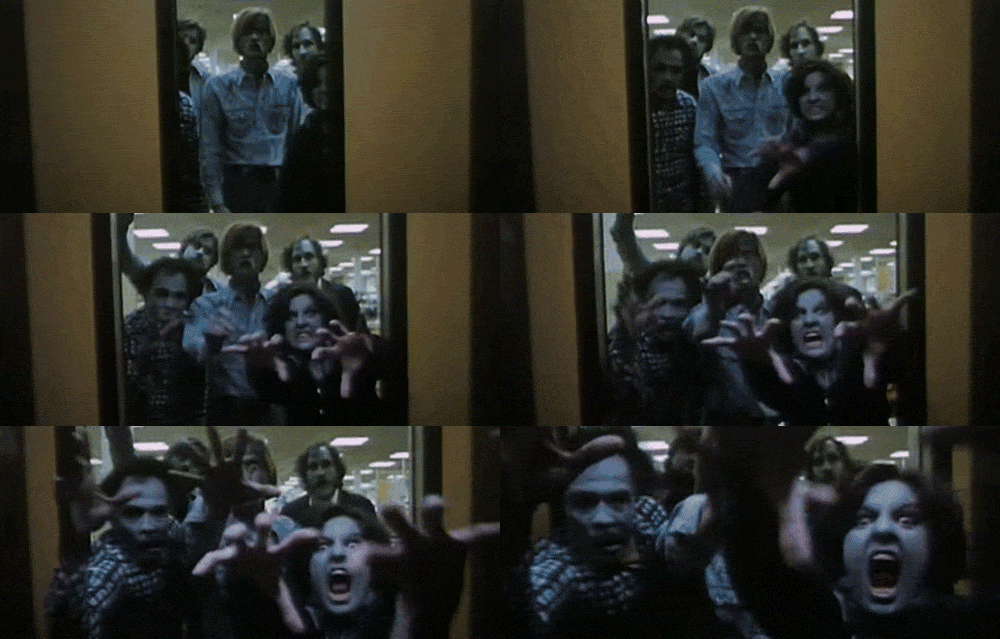
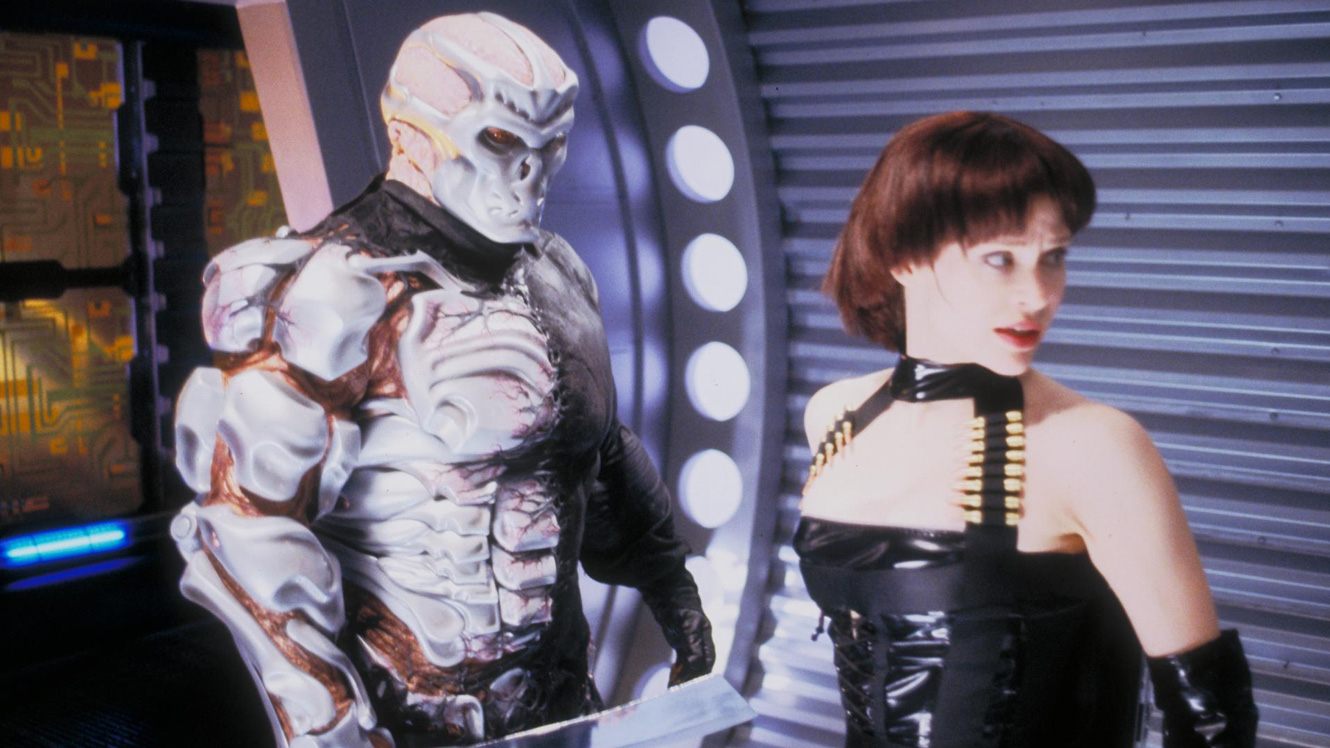
            The original monster story is, of course, FrankensteinGodzilla is a monster, in a very obvious sense, but so are zombies, Samara in The Ring, and even Freddy Kruger.  I still hold that the reason Jason X is so reviled by fans of the franchise is that the filmmakers turned it into a monster movie, not a slasher film like the ones before it.
            My lovely lady also made an interesting observation recently.  In monster stories, you almost always have a moment when the audience feels a twinge of sympathy for the monster.  Look at any of those named above, and you’ll see there’s a point when we empathize with Frankenstein, Godzilla, and yeah… even super-killer cyborg Jason (who seems to settle down once a holodeck dumps him back at a deserted and lonely Camp Crystal Lake and you realize he just wants to be left alone).
Adventure Horror stories—To paraphrase from Hellboy (which would fit quite well in this category), adventure horror is where the good guys bump back.  While they may use a lot of tropes from some of the other subgenres, the key element to these stories is that the heroes are fighting back.  Not in a weak, flailing, shrieking cheerleader way, but in a trained, heavily-armed, we’ve-got-your-numberway.  Oh, it can still go exceptionally bad for them (and often does), but this sub-genre is about protagonists who get to inflict a bit of damage and live to tell the tale.  For a while, anyway.  To quote an even wiser man, even monsters have nightmares.
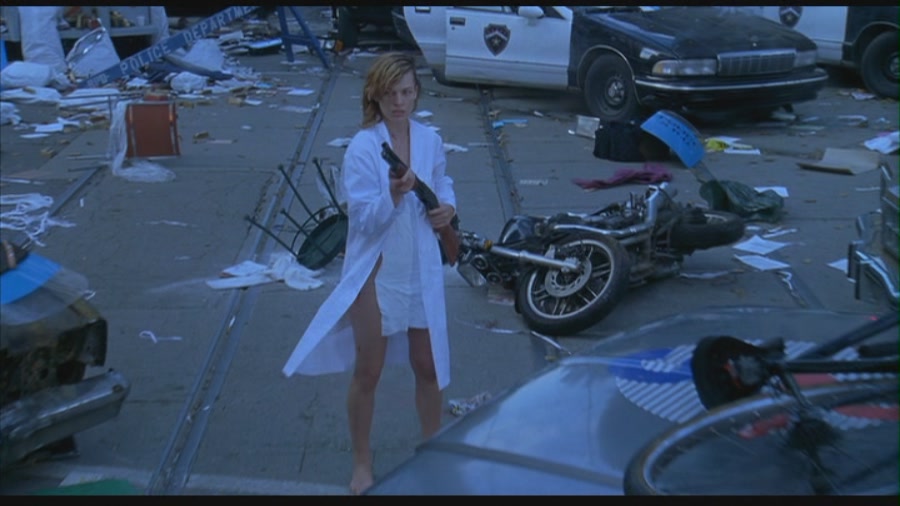
            The Resident Evil franchise is horror adventure with zombies, just like my own Ex-Heroes.  Jonathan Maberry’s definitely dabbled in it as well, with some of his eerier Joe Ledger books. The Ghostbustersmovies could fit here, too.  There’s long-running shows like Grimm and Supernatural, and some of you may have seen a fun little cable series called Ash vs. Evil Dead
Torture porn—Director Paul Verhoven once commented that the reason Murphy is killed so brutally in the beginning of Robocop was because there wasn’t time at the start of the film to develop him as a character.  So they gave him a horribly gruesome death, knowing it would create instant sympathy for him, and then they’d be able to fill in more details about his life later on in the film.  That’s the general idea behind torture porn.  Minus the filling in more details about the characters later.
            I’m not sure if King himself actually coined the term “torture porn” in his Entertainment Weekly column, but that’s the first place I remember seeing it.  At its simplest, torture porn is about making the reader or the audience squirm.  If you can make them physically ill, power to you.  The victims are usually underdeveloped, unmemorable, and doomed from the moment they’re introduced.  It’s not about characters, it’s about the visceral things being done to the characters.  They’re getting skinned, scalped, boiled, slowly impaled, vivisected… and we’re getting every gory detail of it.  A film industry co-worker once told me “porn is when you show everything,” and this sub-genre really is about leaving nothing to the imagination.  They are the anti-thriller, to put it simply.
            A key element to torture porn is the victim is almost always helpless.  They’re bound, drugged, completely alone, or vastly outnumbered.  Unlike a slasher film– where there’s always that sense that Dot might escape if she just ran a little faster or make a bit less noise– there is no question in these stories that the victim is not going to get away.  That hope isn’t here, because that’s not what these stories are about.
            So there’s seven subgenres we can break horror down into.  And there’s many more.  All fascinating stuff, right?
            Why are we talking about it?
            Y’see, Timmy, when a lot of us start off  as writers, we flail a bit, usually in the attempt to copy stories we don’t quite understand the mechanics of.  As such, we aren’t sure where our own stories fit under the big horror umbrella (or sci-fi, or fantasy, or…).  We’ll begin a tale in one sub-genre, then move into a plot more fitting a different one, wrap up with an ending that belongs on a third, and have the tone of yet another through the whole thing. 
            It’s important to know what I’m writing for two different reasons.  One is so I’ll be true to it and don’t end up with a sprawling story that covers everything and goes nowhere.  I don’t want my thriller to degenerate into a slasher, and if I’m aiming for cosmic-level, Lovecraftian evil it’d be depressing to find all the earmarks of a classic supernatural story.  I also want to be able to market my story, which means I need to know what it is.  If I tell an editor it’s not torture porn when it plainly is, at the best I’m going to get rejected.  At the worst, they’ll remember me as “that idiot” when my next piece crosses their desk.
            In closing, I’ll also toss in the free observation that it’s difficult to merge two of these subgenres because a lot of them contradict each other by their very nature.  Not impossible, mind you, but difficult.  Probably one of the few exceptions I can think of in recent times is The Cabin In The Woods, which does an amazing dancing back and forth between being a monster movie and a giant evil movie.
            So, that’s enough of that.  Feel free to dwell on these points over the weekend while you’re drinking, watching some scary movies, and sneaking Kit Kats out of the candy bowl (seriously—feel ashamed about that. Those are for the kids!)
            Next time… I thought we could talk a little bit about democracy.
            Happy Halloween.  Don’t forget to get some writing done.

October 13, 2016

Let’s Go Crazy…

            Quiet moment for Prince while you all sing the next line in your head.
            And… moving on.
            It being the Halloween season, I thought it’d be worthwhile to blab on about something I’ve referred to once or thrice here asthe insanity defense. Like most times you’ve heard this phrase invoked, it’s a cheap cop-out.  While it’s most noticeable in films and television, you can also find it in books, and in several graphic novels.

            The insanity defense is when our heroes have spent the entire story chasing a killer.  It’s not always a killer, mind you.  Might be a stalker who hoped for the big leagues, weirdo in a clown suit, something like that.  Anyway, they run down clues, have close calls, and spend the whole time trying to make sense, one way or another, of what’s been happening.  And finally, at the end, our mysterious killer is cornered and his secret revealed for all to see…

            Alternately, sometimes certain events or moments just have to happen in my story.  It’s been all plotted out and I need a reason for the characters to do this so that and that can happen a bit later.  I also know I need an in-story motivation for these events, no matter how bizarre or unlikely they are.
            Faced with these challenges, sometimes I might be tempted to fall back on the easiest solution I can. 
            I’ll say the character is insane.
            Now they don’t need a motivation, right?  He or she is just doing this stuff because, well… they’re insane.
            Alas, this is pretty much hands-down the laziest writing I can ever do (not to mention kinda insulting to anyone suffering from actual emotional or mental issues).  All characters need a solid reason to do the things they do, and when I decide to use insanity as a justification for any of my character’s actions, abilities, or behaviors, it just shows that I’m too lazy to work out a real motivation.  The plot needs to be driven forward, and there’s no logical reason for this to happen, so I’ll just say someone’s crazy and relieve myself of the need to be logical.  It’s a cheap way to hide my button-pushing.
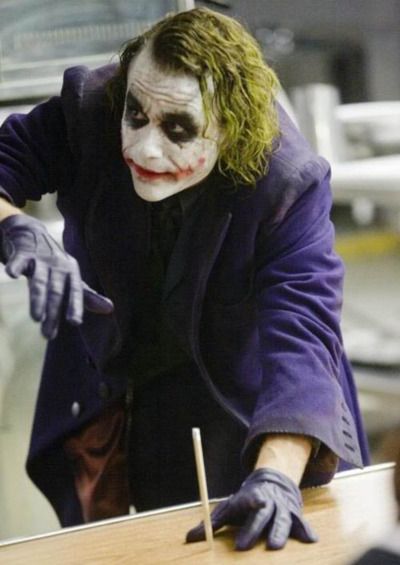
            Just to be clear, madness in and of itself is not a bad thing (speaking from a character point of view, of course).  The Joker.  Renfield.  Hannibal Lecter.  Calvin “Cal” Zabo.  All of these characters are insane to different extents and are all pretty much magnificent either in print or on the screen. 
            Thing is, the writers behind these characters all realized the key point I’d like to make here.

            The Joker believes he can prove that everyone, at heart, is ruthless and psychotic,  just like him.  Renfield believes eating insects and spiders means he’s eating their life-essence and extending his own.  Hannibal Lecter doesn’t consider himself bound by the standards and taboos of the human race, giving him a cold ruthlessness that sometimes makes the Joker almost look normal.   The writers behind these characters didn’t just fall back on “they’re insane.” Each character has an actual motivation for their actions.

            A few times here I’ve mentioned my fairly awful college novel, The Trinity.  In said book, the antagonist is insane.  As he sees it, in the book of Genesis, God rewarded Abel for sacrificing a sheep but turned his nose up at Cain’s much larger sacrifice of harvested fruits and grains.  When Cain did spill blood later (Abel’s), God “rewarded” him with a mark that said no man would ever be able to lay hands on him.  Based off this, my villain’s determined God wants us all to kill as many people as possible.  A twisted interpretation, granted, but see where it’s coming from?  He’s not killing people because he’s insane, he’s killing them because, from his point of view, this is what God wants.  We can point at it and say he’s doing Y because he believes X and expects Z as a result.
            There’s an old joke you’ve probably heard that goes like this–one definition of insanity is repeating the same action over and over and expecting different results.  But let’s consider that for a moment.  The implication is that Yakko is choosing to repeat a given action (let’s say, shoving baloney into his pants) because it’s his belief that the outcome of this action will be a certain, predictable result–just not the one he’s getting.  He isn’t just shoving sandwich meat down there for no reason.  He has a motive fueled by what he sees as logical expectations.
            Y’see, Timmy, insanity is not a motivation.  It’s the lens the characters are seeing their motivation through.  Madness doesn’t make them irrational, just… differently rational.  To quote another joke, “Just because I’m crazy doesn’t mean I’m stupid.”
            Now, there is still a place for that sort of mindless madman (or madwoman) gibbering in the corner, lurking in the attic, or chopping up attractive teens at the old summer camp. But we’re probably going to talk about that in two weeks, as we get closer to Halloween.
            Next time, I’d like to talk about the Game of Rassilon.
            Until then… go write.
September 30, 2016

Artsy Character Redux

            I wanted to revisit a topic I discussed a while back. If you’ve been following the ranty blog for a while, this’ll probably seem familiar. And if not, well, I promise it’ll be as semi-informative as anything else I put up here…
            A few years ago, on one of the message boards I used to frequent, someone once accused me of being horribly biased against anything that’s “character driven” or lacks a plot.  I didn’t feel the need to address it there, but it did get me thinking.  Am I horribly biased?
            After wondering about it for a brief while, I realized… yes.  Yes I am.
            Horribly biased.
            Keep in mind what bias means.  We tend to think of it as something evil (especially during an election season) but all it means is someone has an automatic tendency to lean toward or away from something when it comes to judgment.  If I have the choice of watching a sitcom rerun or Agents of SHIELD, my personal bias is to watch Agents of SHIELD.  If one salad is made with spinach and one with kale, I’ll probably choose the spinach.  It doesn’t mean Agents of SHIELD beats every sitcom or that spinach is always better than kale—it’s just the way I roll.
            Unless the spinach is cooked, which is disgusting.
            By the same token, if I have the choice between a story where extensively-defined protagonists do absolutely nothing and a fun story with good characters and an arc… well, I’ll go with option B every time.
            So, yeah, I’m biased.  In fact, if you check the numbers, you’ll find most people are.  We like compelling characters, but we also want to see things happen.  Check out a list of bestselling books or films or plays.  How many of them involve people sitting on their butts for long periods of time?  How often do we look at a list of Academy award nominees and realize we haven’t seen 3/5 of them… if not more?
            The sad truth is, that kind of stuff just doesn’t sell.
            Please keep in mind before you leap to the comment section–I’m not the only one saying this.  People have been saying it for decades.  Probably centuries.  There’s a reason so much of Charles Dickens’ popular crap survived and most people can’t even name three of his contemporaries.  Stephen King has had a storytelling career for five decades now, but how many other authors followed him out of the 1970s?  People want to be entertained.  Silent film director Marshall Neilan humorously pointed out (about a hundred years ago) that there are two kinds of directors—the ones who make artistic movies and the ones whose movies make money.
            Are making money and popularity the only yardsticks of success?  Hell no, not by a long shot.  But they’re the common ones that most folks use.  If I tell you that I wrote a phenomenally successful book, you’re not thinking I made my dad proud, or impressed my tenth grade English teacher, or really touched three dedicated readers.  When I say “phenomenally successful” it means the book hit the New York Times bestseller list, sold a few million copies, and I’m writing this out for you next to my kidney-shaped pool while Jennifer Lawrence works a knot out of my shoulders.
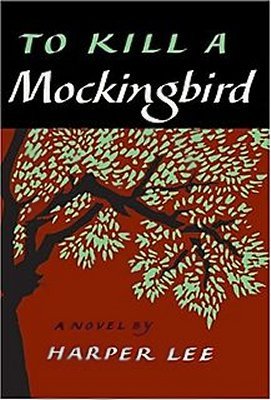
            All that being said, there’s nothing inherently wrong with stories that focus more on character than on action.  There are a lot of character-driven stories that are just fantastic.  They’re vastly outnumbered by thebad ones, no question, but saying all such stories are bad would be just as lazy as the folks who dismiss all genre work as pedestrian and simplistic.  Harper Lee’s To Kill a Mockingbird is far more a slice-of-life story than it is a courtroom drama.  Fiend is about drug addicts stumbling through a zombie apocalypse.  Contact is people studying and deciphering radio signals from the stars while figuring out what this discovery means for humanity.  The film (500) Days of Summer is far closer to a character study than a romantic comedy.  I’m sure anyone reading this can name three or four more.
            So, if I want to write something that leans far more on character then action, here are three tips for making it something people will still want to read.
1) Have compelling characters
            Somewhere along the line a lot of people got it in their heads that the only way a character can be interesting is if they’re seriously messed up.  This became the yardstick for “mature” fiction.  My character’s a drug-addicted, abuse-surviving, cancer-ridden, sexually-frustrated, self-loathing, dishonored soldier with a horrible case of Tourettes Syndrome currently working as a waiter at Denny’s.
            While such a person may have a great deal going on under the surface, you’ve got to wonder how my reader’s supposed to relate to such a character.  Or how they’re supposed to like them.  Even if this is some kind of redemption tale… how do I have somebody come back from going that far off track?
            If I’m going to make my story all about characters, I need to make it about characters my readers will actually like.  They don’t need to be perfect, by any means, but they also don’t have to be so flawed we wonder why they’re not in prison or an institution.  Someone facing an uphill battle is great, but someone facing a sheer cliff is just pointless.
2)Have something happen
            This is probably my biggest complaint with 99% of such stories that I read.  Nothing happens.  The week this story covers is the same week a few million other people have had.  Heck, it’s indistinguishable from the same week these characters have had fifty-two times a year.  Mundane.  Average. Unspectacular.  There’s nothing special or noteworthy about it in any way.
            Now, nobody has to fight off a killer AI android for a story to be interesting.  They don’t need to rob a bank or save the Ark of the Covenant from the Nazis or steal the Declaration of Independence.  But they need to do something.  If my characters don’t have a reason to aim a little higher while we’re watching them, then we’re seeing static characters.
3) Have an arc
            Once I’ve got a compelling character and I’ve got something happening, I need to have an arc.  By its very nature, an arc implies we end somewhere else.  Arcs that end in the same place are called circles, and there’s a reason you haven’t heard of well-structured character circles.  You’ve heard of people running in circles, though, haven’t you?  And that’s never a good thing, is it?
            The whole point of a story is to get from A to B.  People grow and change.  If there’s only going to be A, that’s just a plot point.  Plot points can be fascinating, but they also tend to sit on the page if they’re all alone with nothing backing them up.  Just as something needs to happen in the observed life of my character, something needs to change. 
            And that’s it.  Seriously.  It’s really that simple. Three tips to writing a character-driven story that will still make audiences cheer. 
            Because cheering audiences pay better.
            Next time…
            Well, I’ve got an idea for next time, but I guess we’ll see if I get to it or not.
            Until then, go write.
            Kind of a goofy title.  Hopefully it’ll make sense in a few minutes.
            Hey, did you know today is the 50th anniversary of Star Trek?  Yep, the original series premiered fifty years ago today (tonight, really).  “The Man Trap,” the one with the salt vampire.
            May we always boldly go where no one has gone before…
            Anyway…
            If you follow me on Twitter, you know I often spend my weekends watching a half-dozen or so B- or openly awful movies while working on toy soldiers or tanks or something. And I often tweet out little bits of advice when I see a storytelling screw up that should’ve been easily avoided. They’re more frustrating in film, because it means someone had the screenplay sitting right there in front of them before this messed-up scene was put on film. And yet… they still put it on film.
            And sometimes the screw-ups are so bad, so overwhelming, that all I can do is drink…
            A recent awful film I saw hit on a really big problem I’ve seen a few people wrestle with. To be honest, I wrestled with it on my oft-mentioned book, The Suffering Map.  And when I realized what I’d been doing, not only did I feel like an idiot, but I realized that book might be salvageable someday after all.
            With a certain amount of rewrites.
            What am I talking about?
             A few weeks back I was watching a movie that was probably going for the idea of a goofy, somewhat inept hero with much more capable friends. Think of Jack Burton in Big Trouble In Little China or even, to a lesser extent, Shaun in Shaun of the Dead.  Alas, that’s a very tricky balance to pull off, and this writer/director didn’t have the skill or experience to do it.

            Instead, the “hero” came across as kind of sleazy (almost stalkery) and completely useless.  I mean, seriously, this guy barely worked as bait for the monsters.

            Meanwhile, the cute bartender (who liked him because… well, it was in the script, I guess) is well-trained with firearms, has a plan, stays calm under pressure… and keeps getting regulated to reaction shots and wide shots of the supporting character.  Except for one or two scenes, she’s almost a background character.
            And then, at the end, the hero sweeps her off her feet.  After the world’s been saved by someone else.  No, a third person altogether, not either one of them.
            That movie killed half a bottle of rum.  One of the big bottles.
            Anyway…
            Example two.
            In my early drafts of The Suffering Map, my main character, Rob, pretty much dominated the book.  There were some good supporting characters in Sondra, Miguel, Levi Gulliver and his ravens, and my villain, Bareback (a shameless Cenobite rip-off in those first three or four drafts), but Rob was easily 70-75% of the book.
            When I finally made a serious revision, one of the big changes was giving more time to Sondra. Really, the story involved her almost as much as Rob, and she had her own arc that I’d all but skimmed over because… well, he was my main character, right?
            By the next big revision (the last one) the novel was pretty much split clean between them.  But it still wasn’t quite right, and—as I’ve mentioned before—it was rejected a few times.  It was around this time that I finally trunked it.  Well, cyber-trunked it.
            Y’see, Timmy, both of these stories suffered from the same problem—not being aware of who should be the main character.  They’re not focusing on the heroic, active person—the person who’s actually making choices and doing things. And learning from those choices and changing because of them. What I came to realize was that Rob shouldn’t be the main character of The Suffering Map—Sondra should be.  She was more active, she was more interesting, and she had a serious arc.  Really, the book was her story.  Which I knew, but I was so stuck in the headspace of it being Rob’s story that I didn’t recognize the actual hero.
            The bad movie did the same thing.  It only took a few moments of mental re-plotting to see how much stronger and more entertaining the film would be if it had been focused on the bartender.  She was smart, clever, willing to take charge… all the stuff we want and need in a main character.
            Granted, it’s always possible to bend or break those rules, but—as I mentioned above—it’s not an easy thing to do, and probably not something to attempt without a lot of serious experience.
            I also think it’s worth addressing the elephant in the room.  In both of these examples, the better lead, the one shunted to the side, was a woman.  This isn’t always going to be the case, but I also didn’t want to gloss over it. 
            For me, it came down to The Suffering Map being my first all-out serious attempt at a novel.  I was worried I didn’t have the skill to pull off a female lead, and at the time I was right. But as I kept rewriting it over the years, and Sondra became a better character, I developed those skills. Alas, as I mentioned above, it still took me a while to get past the idea of “Rob is the main character.”
            In the bad movie… well, I don’t know what they were thinking.  I wasn’t there.  It’s possible, as I mentioned above, they went for a goofy hero with better sidekicks and really messed up the balance.  Or maybe they just planned on her as a love interest, put in a lot of character traits thinking it’d be cool to have a love interest who wasn’t just window dressing, and couldn’t register the fact that they’d made this supporting character into a far better protagonist than their lead. We’ll never know.  All I can say is that it was far from the movie’s only problem, and no one should ever watch it without a serious amount of alcohol on standby.
            But back to our topic…
            If I’m doing a story with a good-sized cast of characters, it may be worth taking a moment to look at the story from a few different points of view.  Maybe that clever thing I’m trying to do with my main character isn’t working.  Maybe she’s the main character.  Or that guy.  Or that person in the coat over there.  My goal as a writer should be to tell the most interesting story possible, and sometimes… that might not be the story I started with.
            Next time, I’d like to blather on a bit about where you’ve decided to write.
            Until then… go write.

Categories