January 6, 2011

The Crutch

Yeah, the last post was late but this one’s on time. So you get two in one week. Enjoy.

So I was talking with a friend of mine on Facebook a while back. For the record, I don’t recommend it. Facebook really has to stop creating new profiles every three months and try fixing a few actual problems, like their stupid chat system.
But I digress…
Anyway, he wanted to know how I manage to sit down every day and pound out a few thousand words. How do I exercise the self control to plant myself in front of my desk and write? Which is a fair question.
Which I will answer with a story…
About ten years ago I was working on an alien invasion film for the Sci-Fi Channel (back when they had executives who knew how to spell) and messed up my knee. I was running up a staircase with a case of props for the alien autopsy scene and twisted too fast on a stairwell landing. My knee actually made a bubble-wrap noise. End result– two and a half months of walking with a cane and popping pills (Gregory House eat your heart out) before I got in to have my meniscus rebuilt. On my 30th birthday. Seriously. And then three months of rehab after that.
I finally get back to full mobility and guess what happens less than five months later? The other knee gets damaged on a straight-to-DVD movie. This time it was three months of waiting for workman’s comp to schedule surgery. At least the cane was broken in by this point.
So, after almost a year and a half of sitting around doing nothing I had put on some weight. And when I say “some” I mean it in the same sense people say “the Bush administration could’ve handled things better.” To be blunt, I’d packed on almost fifty extra pounds.
Fortunately, an actor friend of mine knew I was trying to lose weight and shared a few tips. He also had a great personal trainer and shared his name and number with me. Jerzy–a former Olympic weightlifter– showed me a few exercises, but for most of those first two hours we just talked. And one thing became very clear.
There would be no hand-holding, no prodding. I would get the instruction book, the rules, and then I’d be left on my own for a month. This was all my responsibility. If I was going to lose this weight, the only person that was going to make it happen was me. Jerzy gave me his home phone number, his cell, and his email. “But,” he said with a shrug, “if you really need me to tell you ‘don’t eat the chocolate cake,’ you can’t be that serious about losing the weight.”
See where I’m going with this?
Y’see, Timmy, there is no trick to sitting down and writing. You just do it. If you’re serious about this, you shouldn’t need to find some clever way to get yourself in the chair every day. You should want to be there. The real problem should be getting you out of the chair.
I lost sixty pounds in fourteen months with Jerzy. And in about two weeks I’ll be starting my fourth novel. The publisher liked the idea so much he wrote up a contract and paid an advance just off my pitch.
If that’s what you want, do I really need to tell you to sit in the chair and write?
Next time, let’s talk about gods, super-aliens, and other omnipotent forms of existence.
Until then… go write.
January 4, 2011

New Year’s Resolutions

By the time you read this, it might already be 2011. Think carefully on my words, o wise people from the future…

No, wait. It’s definitely 2011. Sorry about that.
And where the hell is my flying car? It’s the future, fer cripes sake…
Anyway…
As is my habit at the start of the year, I’d like to talk for a bit about one of the outer-issues, so to speak, of writing. Normally I try to stick to tips on the writing process itself, but I think it’s good once a year to bring up gurus or networking or one of those elements that has nothing to do with writing, but people are convinced is essential to it.
So, that being said… let’s talk about your New Year’s resolution.
This little rant is really aimed at two groups of people. I’ve mentioned them obliquely here once or thrice. So let me ramble on about them a bit more directly. Or better yet, let me tell you a few stories…
Story the first.
A friend of mine recently lost her job. These days, that’s call for a panic attack, granted, but she kind of lucked out. She actually got a sizable severance package she wasn’t expecting. About three months pay, when all things got added up.
Now, said friend has talked about writing a book for ages, so when I heard this my very first thought was “a blessing in disguise.” Three months pay can be stretched out to four or five months if you live tight, which means at least three months she could devote just to writing. How many people reading this little rant would love such a thing? Three solid months where all you had to do was write your current project?
I said so and my friend agreed, it could be great. But she couldn’t talk for long– she was heading over to a dealership. Y’see, with all this money, she could finally get a new car. Nothing wrong with her old car, mind you. I mean, it wasn’t new. It didn’t have an iPod dock or OnStar or anything. But it was a safe, functioning, fuel-efficient vehicle.
So, new car. Payments. Higher insurance. OnStar fees. Turns out she needed to focus on looking for a new job right away. Yeah, you may argue this is just poor money management. More to the point, though, it really hammered home where writing really sat on her priority list.
How many people do you know like this? They go out to clubs, they see movies, and they go to parties. They spend money on clothes and food and games. These folks insist they want to write, but it seems to be the one thing they never do. Will they give up anything just so they can have a little more writing time? High speed internet? Cable television? Name brand groceries? Dropping any one of these things would mean less expenses, which would mean less time at the day job (or watching YouTube clips) and more time writing.
So if you really want to be a writer, why would you keep doing stuff like that?
That’s the first group. As for the second…
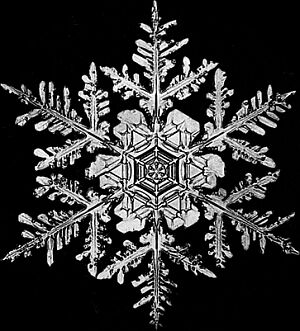
There’s a mentality bubbling that I call special snowflake syndrome. I don’t think it’s anything new, by a long shot. I do think it’s grown in strength because the internet lets these folks get together and talk. If I believe something, and I bump into a stranger or two online who believe the same thing, then it must be true, right?
These folks believe that writing is easy. It’s an art that flows from fingertips easier than water from the tap. It’s a gift to be shared with the world. They’re also loose with labels and definitions. I’ve seen these folks claim you can call yourself a writer if you post on message boards. Or that you’re a successful writer if one person says they like what you wrote.
More to the point, because writing is so “easy,” these people believe they’re all entitled to success, regardless of their skill or effort. They will succeed. Because they’re all special! They expect it the same way most of us expect the sun to rise in the morning and politicians to mudsling during debates. We’d be stunned beyond words if these things didn’t happen. In the same way, the snowflakes just can’t grasp the idea that success may not be in their future. I mean, he succeeded and she succeeded and they succeeded– don’t I deserve to succeed now? My turn must be coming up soon, right?
Y’see, Timmy, the awful truth is that writing is hard work and most of you won’t succeed. No, not even if you know five other people who have. More to the point, you’re definitely not going to succeed if you don’t take writing seriously and put some real effort into it.
Now, if you just want to dabble in writing, that’s fine. We all have a lot of skills and talents we keep on the casual level and never develop. I can do an oil change and rotate my tires. Even once replaced a broken passenger-side window all on my own. But I’m no mechanic. I also dabble in cooking with a fair degree of success, but I’d never dream of calling myself a chef. And I’d never claim I was an artist, even though I sketch and doodle all the time.
Story the second.
In the opening scenes of Scott Frank’s phenomenal script Dead Again, detective Mike Church (who would go on to direct Thor) goes to visit a disgraced psychologist now working in a grocery store (who would, sadly, go on to do not as much). As their talk moves on, the psychologist notices Mike looking again and again at a pack of cigarettes and makes the following observation.
—————————–
“Someone is either a smoker or a nonsmoker. There’s no in-between. The trick is to find out which one you are and be that.”
“Well, I’m trying to quit.”
“People who say that are pussies who cannot commit. Find out which one you are. Be that. That’s it.”
——————————-
So here’s my New Year’s resolution suggestion for you. It’s going to sound a bit harsh, but if you’ve been coming here for any amount of time, it’s not for the milk and cookies, is it?
Yep, there’s been milk and cookies this whole time and no one told you.
The point is, do you really want to do this?
I know that may sound like a silly question, but do you? Really?
Are you willing to give up anything for this? Tiger Woods pretty much gave up his childhood to become the greatest golfer in the world by age twenty. Leonardo barely ever left his workshop. Galileo went to prison rather than stopping his work. Do you have that kind of dedication? Do you even want to have that kind of dedication?
Are you calling yourself a writer because you want to write, or because you want to be on bestseller lists or get invited to cool Hollywood parties? Do you want to put words on paper, or are you just looking forward to the results of doing it?
I don’t have cable television. Or high speed internet. My car is fifteen years old (but gets phenomenal gas mileage). I don’t own an iPod, a BluRay player, or any type of gaming system past this laptop.
What I do have is the freedom to write full time. Which I put to very good use, as all the Amazon links on the side can attest to. And I have it because I don’t have all those other things.
All I ask you to do as your belated resolution is to figure out if this is really what you want to be doing for a living. If you can be honest with yourself about this, you will be much, much happier in 2011.
Find out which one you are. Be that.
Next time (if I haven’t driven you away), I’ll be ranting again about writing. Just sitting down and writing.
Until then… you’ve got something to think about, yes?
And maybe some writing to do.
December 24, 2010 / 3 Comments

The Most Wonderful Time of the Year

Ahhh, Christmas. Time for family and friends. Eggnog and presents. Gathering around the fireplace and maybe watching a few holiday classics on the tube.

Also a great time for psychopaths, invading aliens, and big explosions.

I should probably explain that last bit.

Are you sitting comfortably?

Then we’ll begin.

In a way, holidays make for great settings because they come pre-packaged for a writer. Much in the same way saying “Angelina” conjures the mental image of a certain actress, I can tell you “the neighborhood is decorated for Christmas,” and I’ve set the stage. Just like that.

Oh, sure, I can go into more detail if I really need to. It might be very important that the Hendersons decorated that small pine on their front lawn and the Applebaums have mistletoe over their front door. And maybe that old Mister King has nothing on his lawn. But I’ve set out all the broad strokes with just six words. Even if the description never went any further, you know what Sawmill Drive or Sunset Boulevard look like. How many pages of writing does that save me?

Major holidays are great shorthand for the time of year and tone of a story. This can help you make the ideas behind your story even more powerful. Is there anything more romantic than meeting your true love on Valentine’s Day? We almost expect serial killers on Halloween. The 4th of July is just brimming with patriotism here in the U.S.

Y’know, it just struck me while writing that… How many countries have “Independence from England” as a national holiday? Dozens, right? And what’s England got? Guy Fawkes Day. They celebrate the day they didn’t let religious extremists take over.

Anyway…

If your setting lines up with your story, you’ve almost got a theme going there. If your characters are discussing peace on earth while decorating a Christmas tree, good for you. Maybe they’re talking about forgotten promises at New Year’s or being grateful at Thanksgiving. So if you’ve got a story that follows some holiday-centric ideas, it might be worth setting it at said holiday.

That being said there’s also a Clarke’s Law-type issue to consider here. Sometimes the best story to set at a given holiday is, in fact, the worst story for that holiday. For example…

If you’ve been reading this blog for any amount of time, you’ve probably heard me reference screenwriter Shane Black once or thrice. One of the things he’s known for is setting so many of his films at Christmas. Lethal Weapon. The Long Kiss Goodnight. Kiss Kiss, Bang Bang. All fun movies, all set at Christmas. What’s interesting to note, though, is that not one of them depends on Christmas for any element of their story. Lethal Weapon is a buddy cop film about taking down drug lords. The Long Kiss Goodnight involves an AWOL assassin trying to stop her old employers. Heck, the most Christmassy part of Kiss Kiss, Bang Bang is Michelle Monaghan walking around for a good chunk of the film in her Naughty Santa costume.

Christopher Moore’s wonderful book The Stupidest Angel is also set at Christmas. It’s got a zombie uprising during the most wonderful time of the year.

There’ve also been one or two Christmas horror movies, and a few Valentine’s Day ones as well. Again, reversing the expectations.

And how many alien invasions has the Doctor stopped on December 25th at this point? Five? Six?

Y’see, Timmy, what works for these films is the contrast between our expectations for this time of year and what the story delivers. Events become a little more extreme when played out against a backdrop that evokes opposing feelings. And if it’s a backdrop you don’t have to spend time describing or explaining… well, that just gives you time to get on with your story.

Next time we’ll be closing in on New Year’s, so I may chat about resolutions. Or looking forward to next year. Maybe both.

Until then, a very Happy Christmas season to you all. Don’t go too crazy with the eggnog– it is loaded with calories.

And go write.

You’ve probably heard at least half of this week’s title before. If you’ll indulge me for a bit, I’ll explain the other half.

Since I’ve been waist-deep in the drafting process, I figured I could toss out a rough guide of what that usually means to me. I’ve given lots of suggestions about this sort of thing before, but I thought it might be cool to show a step by step, solid example of how I take a project from a pile of rough ideas to something I’ll show friends, to something I consider worth showing to… well, people who might give me money for it.

Before going into this, I also want to remind everyone of the golden rule.

What works for me might not work for you, and it almost definitely won’t work for that guy.

As I’ve mentioned once or thrice before, we all have our own way of writing. Doing these drafts in this way helps me, but you might need to do something a little different.

That being said…

The 1st Draft— This is just the “get it done” stage, as far as I’m concerned. I don’t worry about catching typos or crafting every subtle moment in the plot. I just want to finish this draft with a beginning, an end, and the majority of points in between.

I tend to skip around a lot in the first draft. I’ll scribble down random beats or dialogue exchanges that occurred to me while the idea was fermenting in my head and drop them more or less where I think they’d go. This serves as a very, very rough outline, just enough so I can start writing on page one and go.

At this early stage, if I get stuck on something (an awkward conversation or complex action scene), I’ll just skip it for now. I know I’ll be able to go into the exact details of Wakko’s nervous breakdown later, so I’d rather keep moving forward and leave those snarls for Future Peter to deal with. Again, for me, the most important thing is to get the overall framework done. It’s a lot easier to think about the little things when the big things aren’t looming over you.

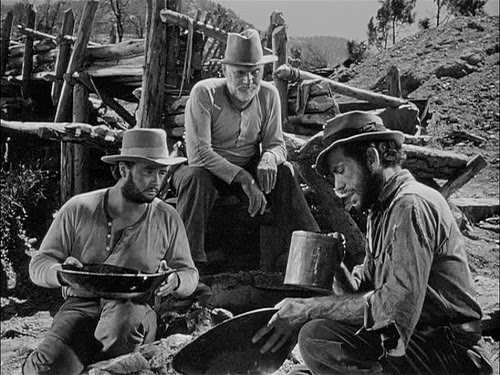
I also don’t hold back here at all. I let dialogue, descriptions, and action scenes go on forever. I know I’ll be cutting eventually, so there’s no reason to worry about length now. For this stage, it really is quantity over quality. I mentioned this visual once before. Think of the first draft like prospecting for gold. If you wanted to find a pound of gold, how much soil would you dig up? Seventeen ounces? Five pounds? Five hundred pounds? Where are your best odds for finding that pound of gold?
I don’t show this draft to anyone. My lovely lady may get an out-loud reading or a little peek if I think I’ve done something exceptionally clever. There have been one or two times she’s called me out on something that sounded good in my head but was kind of flat and awkward in someone else’s. I also don’t do much past a night off to celebrate the end of this draft before diving into…

The 2nd Draft— Now it’s time to smooth it out. All those problems I left for Future Peter to deal with need to be dealt with. Gaps get filled in. All those awkward knots get worked out. Because I can see a lot of these elements in relation to the whole story now , I’ll usually find the answers to these problems are more apparent.

The goal with this draft is to have a readable manuscript. No more little notes to myself or trailing paragraphs that need to get connected somehow. Someone should be able to pick this up and read it start to finish without thinking they lost a few pages or only got my notes on a chapter.

Keep in mind this doesn’t mean I do show it to people. It just means I should be able to. Really, the only person who might see this is my lady-love, and not even her always. Sometimes she has to wait.

A few people have argued with me these two drafts really just amount to me doing a first draft in two stages. That may be true, but they’re not writing the ranty blog, are they?

Okay then, so… now I step away for a couple of days. Maybe as much as a week. I’ll watch movies, work out a little extra (I need it after three or four months at my desk), build little toy soldiers, or maybe even scribble up a few ranty blog posts in advance. Sometimes I’ll play with a short story idea. The goal is to push the manuscript as far out of my mind as possible. Don’t look at it, try not to think too much about it. And then…

The 3rd Draft–Stephen King says to start cutting on draft two, but as I said, my draft two is what some people may call a solid first draft. As such, I usually wait until draft three to start slashing. This is where I hunt down adverbs, adjectives, pointless dialogue descriptors, and so on. Two fun rules I’ve mentioned here before–

2nd draft = 1st draft – 10%

one adverb per page, four adjectives

One thing I really go after here is the padding phrases I have a bad habit of dropping in everywhere (sort of, somewhat, kind of, more or less) that don’t really do anything. One of my regular readers dubbed this Somewhat Syndrome, and I like to tell myself I’ve gotten better about it now that I’m aware of the problem. Sometimes I also like to tell myself that Famke Janssen and I would have a really deep, emotional connection if we ever met…

Anyway, at this point I’ve gone through the whole manuscript at least twice, so a few larger cuts should be visible. The long description of Wakko ceremonially sharpening his katana. Dot’s flashback to the summer she lost her virginity during a midnight swim with a handsome stranger. That impassioned speech Wakko gives against taxing the rich. That’s some beautiful writing there, but is it actually doing anything?

This tightening process is also when I can usually spot flaws in the overall structure. In larger stories, it’s not uncommon to end up with “floating” events that are important, but aren’t tied to a solid point in the script. This one may be here right now, but with all of the story in front of me I might realize it would work better there.

If I haven’t already, this is when I let the lady love have a look. She’s my first set of eyes to let me know I screwed up something (10%) and I’m too close to see it.

For the record, this is where Ex-Patriots is right now.

The 4th Draft–This is the first big polish. I go through sentence by sentence, looking for words that come up too often or stilted dialogue. I also make sure all the cuts and swaps from the last draft haven’t messed anything up. Are the logic chains still complete? Transitions still good? Parallels parallel? Arcs smooth? Did Dot just pull a skeleton key out of her pocket that she shouldn’t have yet? Did Yakko just turn into a woman for a few minutes in the middle of the chapter?

This draft doesn’t take long. Just a day or two. It’s just one slow, careful read of the story.

Once I’ve got the fourth draft all shiny, this is the one I show to folks for comments. I generally send it out to five people. They’re a carefully selected bunch, all of whom have some level of literary background, and I don’t think there’s one among them I’ve known for less than five years. One’s actually been reading and critiquing my work for over two decades now, and she still doesn’t cut me any slack. The key thing is they’re all people who will give honest, useful criticism.

This goes off into the world and it may be a month before I look at it again. The trick here is to resist messing with it while those people are looking at it. Again, it’s a great time to flex different mental muscles. Maybe I’ll do a lot of research on an upcoming project. Maybe I’ll build a model tank. Or maybe I’ll just get caught up on laundry.

The 5th Draft— Now I’ve gotten notes back from whatever folks I cajoled into reading this thing. I sit down with all the comments and go through the whole manuscript page by page. This is one of those times that having a second monitor’s very helpful, because I can have three or four versions open and visible at once.

So, what did everyone think of page one? What comments were there on page two? How’s page three look? As I’m doing this, I’ve also got my own copy of the 4th draft that I’m using as a “master document.” This way I can get all the notes assembled in the relevant place and make whatever changes are required. This document is more or less the 5th draft, and it can take another two weeks or more to finish it with a full book manuscript.

I mentioned above that I get five people to make comments for me, and that’s so I can get a broader sampling on each issue that comes up. If four people like something but one doesn’t, odds are I’ll call that good. Nobody’s going to get every joke or like every chapter. If three don’t and two do (and of course I do, or I wouldn’t’ve written it), I’ll sit and give it a good look. And if nobody likes it, well… I’m smart enough to know when I’ve screwed up something doesn’t work.

6th Draft— This one’s yet another smoothing, polishing draft. I need to make sure everything still works now that I’ve made those tweaks and changes from my reader’s notes,. So, yet another line by line reading, adjusting as I go.

And honestly, at this point… this is usually when I’m done. There’s only so much a given writer–in this case, me– can do with a given story. There comes a point when further work accomplishes nothing. If it’s not ready to show to a publisher by now, it probably means I screwed up something big right at the start. Perhaps when I first thought I could adapt To Kill a Mockingbird into a hardcore tween vampire romance starring the Animaniacs.

Y’see, Timmy, there’s a real danger that if you keep trying to come up with reasons to do another draft, you’ll keep finding them. I’m sure we all know someone who’s just been working on the same manuscript for years and years and years because they’ve got another one or two drafts to put it through. After a while of that, your story stops looking like a coherent tale and a bit more like the Frankenstein Monster. And not the nice, clean Boris Karloff version. I’m talking about the seriously messy Roger Corman one.

Maybe even, dare I say it, Mr. Stitch.

Next time it’s going to be Christmas. Well, the Eve of Christmas Eve. So I might prattle on with some ideas about how you can have holiday fun.

Until then, go write

Categories