
January 5, 2012 / 4 Comments

Why Are We Here?

            I don’t mean that in some vague, metaphysical sense.  It’s pretty straightforward.  Why are you looking at this web page?  What are you hoping to find here?

            Let me make it easier.  Let me explain why I keep posting here.
            No, there isn’t time to explain.  I will sum up.
            (bonus points if you get that one)
            Two little stories.  Tale the first.
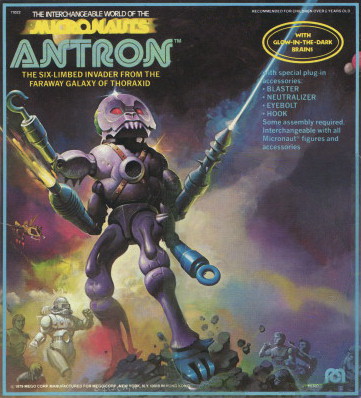
            I’ve wanted to tell stories as far back as I could remember.  I was setting up my Star Wars figures and Micronauts in little tableaus when I was in grade school.  By middle school I’d found my mom’s old electric Smith-Corona (complete with vinyl dust cover) in the back of the closet and I was sending clumsy “submissions” to Jim Shooter at Marvel Comics.  And by high school, well, by then my rejection collection was getting pretty thick.
            It’s gotten thicker since then, believe me.
            Tale the second.
            Not too many months back I stumbled across a link to a published author’s new blog.  He was about at the same level as me—years of trying to get in and finally had a few sales under his belt.  Two of them to a very big, respectable publisher.  Said author, much like myself, wanted to offer some tips for new writers who were just starting out.  However, unlike me, this fellow didn’t want to talk about how to improve your writing. He was going to offer tips on networking, promotion, blog tours, and so on.
            Of course, looking over his first four posts, there was one point he kept hammering home.  The best way to sell your writing is to have good writing.  The best way to spread word of mouth about your writing is to be an excellent writer.  This could not be stressed enough.  All the clever gimmicks and sales tricks and blog tours weren’t going to help in the slightest if you didn’t have something people wanted to read.
            But he wasn’t going to talk about that on his blog.  He was going to talk about clever gimmicks and sales tricks and blog tours.
            That’s kind of what got me started on this whole thing years ago.  At the time, I was seeing tons of articles and websites about the tricks and gimmicks, but very few about the actual craft of writing.  And, yes, I do feel pretentious talking about “craft” when I write books about superheroes fighting zombies.
            Anyway, I’d say a good sixty or seventy percent of the material I saw was tips on what to do after you’d written something.  How to get reps, how to get your books in stores, that sort of thing.  Which always seemed a little cart-before-the-horse, as people used to say in the pre-Segway world.  Perhaps even worse, a large percentage of the remaining material—the stuff that actually talked about writing– spoke about it in terms of absolutes and set down hard rules that didn’t seem to come from any sort of actual experience.  It was just people parroting some rule about storytelling they’d heard somewhere as if it were a quantifiable, scientifically-proven fact.  In some cases, as far as I could tell, these people had just made up their rules out of the blue. 
            And a few of these folks were asking for money. 
            At the time I was sitting on this half-assed Blogspot site.  I’d pulled a loosely Egyptian-themed name from the back of my head (Thoth was the god of writing), a title that I put even less thought into (seriously, check out how many “Writer on Writing” blogs and columns there are out there), and used the space to post a few spec columns I’d created for a magazine I was working for.  They’d been rejected (twice) so I’d thrown them up here as… honestly, I don’t know.  Just so it felt like I’d done something with them.  I thought they were fairly well written and made some good points—I didn’t want them to languish on my computer.  Maybe in the tiny, limited space that was the internet somebody would stumble across them and find them useful.
            Bonus fact.  It was maybe a year after I started posting here more-or-less full time that somebody pointed out Thoth-Amon was also the evil sorcerer in the Conan books and comics.  Completely slipped my mind when I picked this site.
            Anyway, as I worked my way further and further into the life of a full-time writer, I got exposed to more and more people’s work.  I read scripts for a couple different contests and got a bunch of exposure to it (reading 400+ pages a day will do that to you).  And one thing that amazed me was I kept seeing the same basic mistakes.  Often to headache-inducing levels.
            A large number of aspiring writers fall into one of two camps.  Some of them think writing and storytelling are mechanical, quantifiable processes that can be broken down to A1-B2-C3.  These are the folks who will quote the MLA Handbook to explain why their novel deserves to be published and use Syd Field as proof their screenplay is perfect.  The other group think rules are for old-school losers who don’t get that spelling, formatting, and structure just hamper the creative process and will get overlooked when people see the inherent art in the writing.
            Both groups are usually wrong, for the record.
            Note that I said “usually.”  Most folks think it’s all-or-nothing.  You have to be on one extreme or another.  The truth is that it’s more of a middle ground.
            Y’see, Timmy, there are things that are absolutely “right and wrong” in writing. I have to know how to spell (me—not my spellchecker).  I have to understand the basics of grammar.  If I’m writing a script, I’ve got to know the current accepted format.  A writer can’t ignore any of these requirements, because these are things you can get wrong and you will be judged on them.
            On the other hand, there is no “right” way to start your writing day or to develop a character, only the way that’s right for me and my story.  Or you and your story.  Or her and her story.  If you ask twenty different writers about their method, you’re going to get twenty different answers.  And allof these answers are valid, because each of these methods work for that writer.  But that doesn’t mean I can ignore every convention or rule I don’t like.
            And that’s what I’m doing here.  Prattling on about some of the hard rules and general suggestions I discovered during thirty-odd years of learning how to be a writer, along with some of my own I’ve developed after trying to write a hundred or so short stories, scripts, and novels.  It’s stuff I think might be helpful if you’re actually serious about writing for a living.
            And I’m going under the general assumption that if you’ve slogged through all this, you’ve got at least a basic grasp of this writing thing and are hoping to go further with it.  Perhaps even make a few dollars with it.  And if any of you have a specific question or topic you’d like me to prattle on about, let me know.
            Next time, speaking of right and wrong, we return to one of my favorite topics—spilling!
            Until then, go write.
December 29, 2011 / 3 Comments

Let’s Review

            Just enough time and space left in 2011 for me to squeeze in one last ranty blog post.
            This was a big year for me.  For the first time in my life, I spent the entire year writing fiction.  I’ve spent over five years as a full-time writer, but a lot of those years were writing magazine articles as well as my own stuff.  This was the first year of nothing but my fiction and living (well, squeaking by) on the money I made off that.
            Which also meant this was the first year I had no schedule.  I had a few broad deadlines for projects, but even most of those had a 30 day buffer built into the contract.  So anything I got done this year—or didn’t get done—was all my responsibility.  If I didn’t do it, it wouldn’t get done.
            How did I do with all the extra pressure of living the dream life?
            –I started the year by finishing up the last draft of Ex-Patriots, which hopefully two or three of you have since picked up and enjoyed.
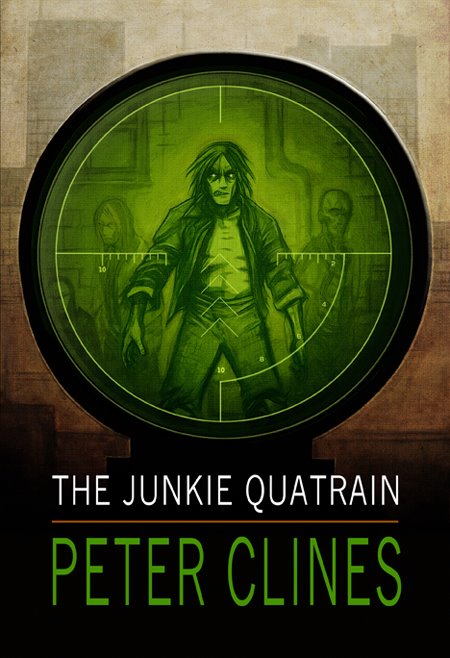
            –Then I wrote The Junkie Quatrain as part of a bonus material deal with Audible.com.  Four interlocking/ overlapping short stories that form a pretty solid-sized novella (about 37,000 words) in six weeks.  I was pretty darned proud of that.  It reminded me of tales about Ray Bradbury and Robert Lewis Stevenson writing stories specifically to pay rent.  Permuted Press is putting out The Junkie Quatrain as an ebook next month (shameless plug), and I think Audible.com is going to release them as a collected piece as well.
            –I wrote –14-, which was a whopping 149,000+ words in the first draft.  It went through five more drafts that cut a lot and added some more.  The 129,000 word manuscript is under the keen eyes of the Permuted editor right now.
            –I did about a dozen DVD reviews for the Cinema Blend website.  I wanted to do more, actually, but they’re shifting over to Blu-Rays and I haven’t gotten around to picking up a Blu-Ray player yet.  Maybe for my birthday…
            –I wrote forty-eight entries for the ranty blog (counting this one).  There’s also a half dozen on the H.P. Legocraftsite and another nineteen entries on another blog I do.  Plus a few lengthy diatribes on the Permuted Press message boards and the Facebook fan page I’ve got going.
            –At the moment I’m 20,000 word into Ex-Communication, the third Ex– book.  To be honest I’d hoped to be a lot further along at this point, but then there were holidays and traveling and this monster eggnog my brother makes with lighter fluid…
            –And as soon as I finish this post I’m going to try to grind out a superhero story for an upcoming anthology called Corrupts Absolutely.  It’s due by December 31st, so we’ll see how I do.
            So, that’s what I wrote this year. 
            How about you?
            Yeah, I had the advantage of writing fiction full time as my day job.  I’m guessing most of you didn’t have that.  Still, you’ve written something, right?
            Hopefully the answer is yes.  If it isn’t, here’s a simple New Year’s resolution, one I suggest every year about this time.
            Write a page a day.  That’s all.  Tell yourself you’re going to do that and stick to it.  It’s about three hundred words, depending on your formatting. 
            If you write one page a day, you can have a short story by the end of January.  You could have a screenplay by the end of April, giving you plenty of time to enter some of the big contests.  Next Christmas you could have a very solid novel on your computer.  All from writing just one page a day. 
            If you’re actually serious about being a writer, this should be the equivalent of resolving to sleep in the months to come.  Not sleep more or sleep better.  Just to sleep.  In other words, it should be something you couldn’t stop yourself from doing if you wanted to.
            Happy New Year to the double-handful of you who keep stopping by to read this.  Next time will be the first post of 2012, so I thought I’d do a quick recap about the history of the ranty blog and why I keep scribbling here once a week for several years now.
            Until then, go drink some champagne, kiss someone you love, and toast the new year.
            Then go write. 
            Just write one page.
December 24, 2011

Wherefore Art Thou Romeo

            Pop culture reference, four hundred years late.  Plus, if you actually know how to read that title line, you’ve got a hint at what this week’s ranty blog is about.

            Sorry this is late, by the way.  Yesterday was early Christmas lunches with family and parties at night with friends.
            Speaking of which, one last push before Christmas—you can still order Kindle books as last minute gifts and my publisher has a ton of them on sale for dirt cheap prices, including my own Ex-Heroes.  You can also pick up the Kindle version of The Eerie Adventures of the Lycanthrope Robinson Crusoe for half off the paperback price.
            Now, with all that out of the way… let’s get back to our title subject.
            One thing I stumble on a lot in stories is names.  Sometimes writers will load up every single character in their manuscript with a proper name.  I read through and I know the given name of the cabbie, the waitress,  the office intern, the homeless guy at the freeway exit, the woman whose ahead of the main character in line at the grocery store.  It doesn’t matter how important—or unimportant—they are to the story, they get a name.
            Another thing that makes for a troublesome read is when there are lots of people with similar names.  Sometimes, if there are enough of them, it can just be the first letter of the name.  Believe it or not, I read two scripts this year by two different people, but each screenplay was loaded with names that began with the letter J.  There was Jason, Jackie, Jerry, Jonathan, Javarius, Jacob, Jenny, and even a Jesus.  I read one the year before where everyone’s name began with P.  Since names are the reader’s shorthand for characters, making them confusing is not a great way to go.
            What I’d like to do now is to suggest a simple rule of thumb that can eliminate both of these potential problems.  And I’d like to illustrate this rule of thumb with a popular character most of you probably know…
            Calvin and Hobbes was created by Bill Watterson back at the end of that ancient decade known as the ‘80s.  The glaciers had retreated, a few mammoths still wandered the plains, and I had just started college in western Massachusetts.  The two title characters were Calvin and his stuffed tiger, but after them the two people we saw the most were Calvin’s long-suffering mom and sometimes just-as-mischievous dad (no real question where Calvin got it from).  Their names, as any fan of the series knows, were Mom and Dad.
            No, seriously.  That was it.  Mom and Dad.  I challenge anyone here to find a single scrap of evidence from the decade or so of Calvin and Hobbes strips that shows these two characters have any names past that.
            There’s a simple explanation for why they didn’t.  The entire strip is done from Calvin’s point of view.  In his world, people randomly transmorgify into giant bugs or space aliens.  Dinosaurs are still common if you know where to look.  And those two adults in his house with the sagging poll numbers are just Mom and Dad.  Not “just” in the sense that they’re diminished somehow—they simply don’t have any identity past what Calvin’s given them.
            A character’s name should be what your main characters refer to them by.  If my main character doesn’t know their name (and never will) there’s probably not a reason for the reader to know it.  Calvin never thinks of his parents as anything other than Mom and Dad, so within the story of Calvin and Hobbesthey never get names, just those simple titles. 
            It’s not just Calvin and Hobbes, of course.  There are a lot of examples where storytellers don’t name someone because it’s unrealistic for the main character(s) to know that name.  A few other well-known characters without names include…
–The little red-haired girl
–The alien bounty hunter from X-Files
–The other woman
–House’s cellmate
–The cute blonde waitress
            It didn’t lessen any of these characters to not have actual names.  If anything, you could probably make the case that some of them were more memorable because they didn’t have names—it added to their sense of mystery
            Consider it this way.  Stephen King’s novella “Rita Hayworth and Shawshank Redemption” is about Red, Andy, and the other prisoners.  Because of this very few of the guards get named, even though there are dozens of them in the story.  They’re the outsiders.  But in King’s The Green Mile it’s the guards who are the focus of the story so most of the prisoners don’t get names, even though there are hundreds of them in the prison.
            Or, if you prefer, consider this.  If you’ve ever worked as a waiter or waitress, or ran the checkout counter at a store, how many of your customers could you name?  On the flipside, can you name the waiter from the last time you went out?  Or the clerk the last time you bought something?  They were probably even wearing a nametag, but I bet you can’t.  And the reason you can’t is because they weren’t important to your story. 
            While giving every character a name helps show how well-thought out the world is, in the long run it makes a story confusing.  If your main character doesn’t know who someone is, there’s nothing wrong with just calling them Man #3 or the other girl, and it usually makes for a much cleaner, easier read when you don’t have to info-dump half a dozen names on each page.
            Next time, I thought I’d do my annual sum-up of the year in writing.
            Merry Christmas, Happy Hanukah, and a general Happy Holidays to you all.
            Try not to take the whole week off from writing.

            Have you noticed the somewhat blatant examples of product placement on television shows lately?  Our heroes are on a stakeout, driving to a crime scene, or fleeing for their lives… and they suddenly stop talk about how cool their car is.  Heroesjumped that shark early on with their constant references to the Nissan Rogue, but as of late it seems like almost every show is doing it.  There was a truly awful example on Housea few weeks back.

            For the record, I give CHUCK a pass on blatant product placement because the show completely embraces the idea of blatant product placement and, as such, blends it in a lot better than the others.  It pretty much made Subway cool by pointing out how ridiculously un-cool Subway is.
            Anyway…
            One thing we’ve all seen is when a story veers off into unrelated, irrelevant material for a little while.  It’s as if the writer lost track of where their story was going and it just meandered away.  We’ve all heard people say “I let the characters guide me,” but if the characters are guiding the story off the page and into a different book, it’s probably time for the writer to pause for a moment and reassess things.
Violet, moments before her gruesome end.
            For example, remember in Charlie and the Chocolate Factory (the book, not the movie) there’s the whole recurring bit about how the bad kids keep messing things up and putting their various parts where they’re not supposed to be.  Eventually little Violet Beauregarde chews some gum she shouldn’t and swells up into a giant blueberry.  The other guests are horrified, Wonka sighs in regret, and the Oompa-Loompas roll poor Violet away to a soundproofed room where the other guests can’t hear her screams or terror and agony as the little people gut the swollen girl and harvest her organs for the international black market ring that the candy factory is just a front for.
            You don’t remember that bit?
            It is a bit off from the rest of Dahl’s book, isn’t it?  Tonally speaking.  Probably why he didn’t include a scene like that.  If you do remember that scene… well, you should probably talk to someone.  Preferably someone who can prescribe medication
            The problem I’m talking about is telling a story that isn’t your story.  Sometimes, in the middle of a perfectly good tale, writers will steer off into… well, something else entirely.  Another few examples…
            If I’m doing a touching character piece, I shouldn’t have a ninja attack.
            A post-apocalyptic thriller probably should not have a song and dance number in the middle of it.
            If I’m writing a romantic comedy, no one should get kidnapped and harvested for their organs (a common theme to veer off into, apparently).
            In a pulse-pounding action story, no one should pause for a ten minute monologue about how horrible it was watching their mom get worn away by cancer.
            If you’ve been reading the ranty blog for a while, you probably remember a while back when I talked about the rules of love.  The fourth rule relates directly to this idea.  Sometimes a romantic element just doesn’t fit in a story.  Maybe the people are too different.  Perhaps there’s too many other things going on.  Maybe the current situation just doesn’t allow for those kind of thoughts.
            A lot of time when we see stuff like this, it’s a poor attempt to copy something else.  The writer’s seen an element work in another existing story and tried to transplant it into this story, regardless of whether or not it works.
            Speaking of black market organs, that’s a great analogy—transplants.  If any of your family or friends has ever needed blood, bone marrow, or maybe a kidney, you know it’s a big deal (and hopefully you’re all tagged as donors).  Even with blood, which is pretty easy these days, there’s a half-dozen or so tests that need to be run.  If it’s an actual organ transplant there’s a ton of factors that need to match up for it to be successful, and these factors need to be determined by a professional.  Even between close relatives there can be huge differences.  I can’t just toss kidneys from one person to another and assume they’re going to work, because if even one of those factors doesn’t match up, I’ll have two dead people on my hands.
            The same is true of stories, too.  Something that’s creepy in your book might not be creepy in my book.  Just because this joke worked when she said it doesn’t mean it’ll work when he says it.  This story may have ended with the young couple together, but it doesn’t mean mine can do it.  If I just pull elements from one story and stick them in another, there’s a better chance I’ll kill the story than save it.  I need to do cross-checking and make sure all the factors line up before I do a transplant.
            What are the important factors?  Well, a big one is whether or not the patient actually needs a transplant or not.  Is there a reason to bring in this odd element?  Does it contribute to my story in one way or another?
            Past that, it depends on what’s being transplanted, and also from what into what.  Each one’s going to be different.  A joke or a clever description might not need much alteration, but pulling over a major subplot or character could take lots of work to both the element and the story it’s going into.  That’s part of the job of being a writer—knowing what works, what doesn’t, and what I need to do to bridge the gap.
            More to the point, it’s my job to tell the story I’m telling.  I shouldn’t be trying to tell my sci-fi story with a bit of Stephanie Meyer tween romance twisted in.  I shouldn’t be writing my dramatic screenplay but with that fun scene from Captain America wedged into it.  And it’s a bit silly to stick a cute dog in my horror short story just because all the Tintin books have one. 
            Know your story and write your story.  Don’t worry about that other story.
            Next time, I’d like to babble on about a great lesson you can learn from the parents in Calvin & Hobbes.
            Until then, go write.

Categories