March 9, 2012 / 5 Comments

Sequelitis

            Beginning with a minor aside, go see John Carter.  The original book, A Princess of Mars, has been a favorite of mine since I was a kid and I’ve referenced it here once or thrice for storytelling examples because it tends to be relevant.  I got invited to a press screening on Tuesday and loved it.  So go see it and prove a bunch of Disney marketing execs wrong.

           Continuing on to a second minor aside, ConDor Con was pretty fun.  It was a bit stunning to hear that another writer, Art Holcomb, reads this little collection of rants on a regular basis.  So expect me to be very self-conscious for the next few weeks.
            Anyway, on to the reason you all bother to show up here…
            I know I hinted that I was going to talk about dialogue this week, but two weeks back my friend Bobbie (who I know from a far classier place on the web) asked about sequels.  I started thinking about responses and the more I thought about it, the more I realized I had to say.  This wasn’t just something to jot off a quick answer to in the comments —it was a full post.
            So, here’s my thoughts on sequels.
            First off—and I can’t stress this enough—here’s my first thought about writing a sequel.
            Don’t do it.
            I don’t think you should ever write a book or screenplay with a sequel in mind.  Ever.  The only time to do this is when the person paying you says you’re going to get a sequel.  If I go to a publisher or a producer with a story that is “the first in a three part epic,” there is no possible reality in which I am going to be making a sale.  It’s just good math.  Most publishers and producers don’t want to be stuck with one manuscript from an unknown writer that doesn’t sell, so why would they possibly want to get stuck with two or three or more?  Why risk signing a contract for a three book/ movie series when you don’t even know if the first one’s going to do well? 
           Okay, that’s a bit of an exaggeration.  There’s always some chance of someone buying a series.  But the odds are already slim for an unknown writer, so why trim them down to almost nothing by writing something that’s going to put the publisher in an awkward position?
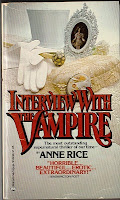
Seriously, would you think
this was getting a sequel?

            Ex-Heroeswas written as a single, stand-alone book.  So was A Princess of Mars (see, it was relevant) and Rendezvous with Rama and Interview With the Vampire.  Same with Star Wars (no subtitle), Pirates of the Caribbean, The Matrix, and Planet of the Apes (both versions).  I got to interview Alex Kurtzman and Roberto Orci once–arguably the  most successful, highest paid screenwriting team in Hollywood today–and they both shook their heads and scoffed at the idea of working on a  sequel story before you even knew how the first one was going to go over.

            Now, if you’ve bothered to read any of the stuff I’ve written past this blog, you may be poised to respond.   Some of you may have already skipped to the comment section.  Yes, Ex-Patriots was clearly written with a sequel in mind.  And the only reason I got to do that was because the first book did so well the publisher guaranteed me two sequels.  When the third book comes out you’ll notice everything stops there.  If they both do well, maybe Permuted Press will offer me a fourth and fifth.  Or maybe just a fourth.  Or maybe another three.  It’s foolish of me to plan on anything until both of us know where things stand.
            So, to recap, never write something that depends on a sequel.  Never. Ever.
            With that out of the way, let’s talk about writing sequels.
            One of the big challenges in writing a sequel (but not the only one) is making it accessible for everyone.  Readers can’t feel alienated and left out.  If my manuscript doesn’t have an entry point for them, I’ve just ruined the chances of anyone randomly picking it up and enjoying it.  And they won’t say “oh, I should’ve read Book X first,” they’re just going to say “It sucked.”
            As a writer, I need to make sure everyone is up to speed.  I don’t need to revisit every detail of the first book in the sequel, but I do need to make sure readers have a basic grasp of my characters, the world they’re in, and any key events that happened in their past.
            Here’s a few ways you can do that.
            Firstis just honest recollections.  People talk about things that have happened to them in the past.  I do it here all the time.  Someone could go back and reconstruct a semi-decent history of my life just from this blog.  I didn’t lay it all out in order, but a lot of it’s come up at one time or another.  When my lovely lady and I talk, it’s not unusual to mention “the last time your parents were out here” or “that place we went mini-golfing.”  My friend Marcus and I talk about theater shows and movie nights and miniature wargames we’ve played.  When I talk with my friend Patrick, we sometimes discuss films or shows we worked on—some separately and some we worked on together.
            The trick, of course, like all dialogue, is that it has to be motivated and it has to sound natural.  Patrick and I don’t randomly discuss films, after all, it usually spins out of another conversation.  If I’m just going to have a character do an infodump then it’ll come across as awkward at best, false at worst. 
            Secondis character descriptions.  Hopefully my characters have grown and changed a bit since the first story, so I can also add in hints of things that happened in the last book.  Maybe someone has a special coat or a piece of jewelry or maybe a new nervous habit.  It’s easy to mention where these things came from or the circumstances that led your character to them.
            In Ex-Patriots, for example, St. George now wears a long, dagger-like tooth on his jacket, a trophy from the final battle in Ex-Heroes.  He’s also got a web of scars on his arm where a zombie demon bit him.  And he can actually fly now, unlike the extended leaps he was doing in the first book.  Since all of these elements are part of his character, it’s simple to bring them up early on in the story.
            The Thirdway is the ignorant stranger.  Sometimes I have to tell someone else what happened before and why things are the way they are.  Maybe I need to explain why I have all these scars (like St. George had to explain to Captain Freedom in Ex-Patriots).  Perhaps Han Solo has to remind Leia he’s glad to help the rebellion, but he’s also hiding from Jabba the Hutt (in The Empire Strikes Back).  And I’m sure more than a few of us had to explain to the new kid what happened last summer between Wakko and Dot.  There are always meetings and debriefings and those awful Christmas catch-up letters.
            The ignorant stranger works very well with sequels because odds are I’m going to be introducing new characters.  As long as I’m not trying to do the “they were here all along” bit, that’s an instant excuse to explain things and talk about the past.
            And the Fourththing you can do is probably the most important to remember.  Don’t do anything.  Sometimes we don’t need to know what happened before to understand what’s going on right now.  Most of the Friday the 13th films didn’t felt the need to explain Jason’s origins.  They understood that there’s not much we need to understand about a psychopath past “he’s here” and “he has a machete.” 
            Tell the things you need to tell, but don’t be scared to leave some things mysterious, too.  Let the audience piece a few things together on their own.  You want a story with an entry point, but you also want it to entice readers to go back and see what happened before.  If I spell out everything that happened in book one, there’s no need for you to go back and actually read it, is there?
            The best part about all these methods, of course, is that they’re all pretty natural.  I can slip them into conversations and introduce them into a story without much effort.  And that means I’m getting this information out to the reader without making it look like I’m beating said reader over the head with it. 
            Speaking of sequels, I need to get back to Ex-Communication.
            Next time, that rant about dialogue.
            Until then, go write.

February 24, 2012 / 6 Comments

Listen Up!

            Look, I don’t have a lot of time this week, so I need to make this one kind of quick.  We’re about due for a short one, anyway.

            I’ve mentioned once or thrice, how as you know is a good sign that an unrealistic, often unnecessary exchange is going to happen between two characters.  It’s a flag to look for on your second pass through a manuscript.  Today I wanted to mention two other flags my lovely lady noticed one day while she was working her way through a pile of contest scripts.
            Probably seven out of ten times, if I start a line of dialogue with look or listenI’m either about to perform an expository infodump or state something that’s already apparent—or it should be apparent and I’m getting it across with exposition instead.
            Check out these examples…
            “Look, we’ve got to set these charges before the Nazis reach this bridge or the whole mission’s a failure.”
            “Listen, I don’t like this situation any more than you.”
            “Look, if I can reach the ranger station by sundown everything will be fine.”
            “Listen, you’ve never given up on anything in your life and I’m not going to let you start now.”
            “Look, I’m in love with her, okay?”
            There’s nothing wrong with any one of these lines individually, but using lookand listen can become a habit.  And that habit means my writing ends up filled with lots of exposition and on-the-nose dialogue
            Go through your manuscript and check for look and listen.  Are those sentences really adding anything, or are they just repeating something characters and readers already know?  Are they adding anything that couldn’t be expressed better through subtext or actions?  Some of them are probably good, but I’m betting a few of them could get reworked.
            I’m probably not going to get to rant next week because I’m a guest down at ConDor Con in San Diego.  I’m on a few panels, so if you happen to be there, stop by and listen to me… well, rant about writing and storytelling.  But when I get back I should have something interesting to talk about.
            Until then, go write.
February 17, 2012 / 10 Comments

I Long For a Bungalow…

            Long overdue pop culture reference.

            Every now and then I hear or read statements by people that there’s no real difference between writing a short story and writing a novel.  It’s all the same skills, they say, and it’s working toward the same goal, so working on one can only make you better at the other.
            I disagree with this, for the most part.  It’s a sloppy comparison, the kind that makes people say alligators and crocodiles are the same thing, or unemployment benefits and socialism.  There are some basic similarities, yes, but short stories and novels are two very different animals and they have to be dealt with in different ways.  Housecats and Bengal tigers have a lot of things in common, too, but if I find one in my living room when I wasn’t expecting it, it leads to one of two very different phone calls.  If I call the wrong person over to deal with it… well, one way or another, they’re going to be very annoyed.
            Here’s a better way to compare short stories and novels.  It’s not super-informative, but it should get your brain working on a few issues.  It came from a discussion between my lovely lady and I, and it’s such a solid analogy we then had some sharp words (well, not very sharp) about who actually came up with it after we’d been bouncing it back and forth for a while.  I shall split credit and say we came up with it, to be fair.
            What did we come up with?
            Carpentry.
            A good number of you reading this had to take some kind of shop class as kids, I bet.  You may have also belonged to Boy Scouts or Girl Scouts or some other group that did crafts at some point.  So I’m betting that a fair amount of you have held a hammer, driven a nail, and maybe even cut a board with a saw.
            A few of you may have even built a birdhouse.
            Birdhouses are pretty basic things.  Four sides, floor, perhaps a two-sided roof if you get fancy.  They generally have one entrance and not many features past that little peg for the birds use to land on or launch from.  I think I built two at different points in my childhood.  Although I think one was made out of a plastic milk jug, so it doesn’t count for our purposes today.
            So, all you scouts and shop students… is building a birdhouse the same thing as building a real house?
            Once I jump up in scale like that, there’s a huge design difference.  A five-inch square wall can hold itself up, but one that’s 9’ X 14’ needs a real framework.  That framework also needs to account for windows, interior doors, and possibly even supporting a second floor.  Heck, I’m probably going to depend on the framework even more—a birdhouse wall can just be a piece of wood, but for a house I’ll probably use two by fours covered with drywall or plaster.
            Plus there’s all sorts of extra details in a full-sized house.  I’ve got wiring, insulation, plumbing, and possibly cable to deal with.  Maybe tilework in the bathrooms and kitchen.  Central air if I’m feeling especially sinful.
            (Bonus points if you get that reference)
            Even my tools change.  A hammer and hand saw might work for a birdhouse, but for a full-size job I’m probably going to want a nail gun and some power tools because I need to be working at a different pace.  A table saw would be nice.  A level is very important.  Plus all the specialty tools for that drywall, wiring, and plumbing we were just talking about.
            The basic skills are the same, but what I do with them is completely different.
            This works both ways, too.  The blueprints for birdhouses are ridiculously basic things, assuming I even use any.  Half the time they’re not even drafted—just sketched out rough on a scrap of paper.  It’s not worth putting in any more planning than that because the actual construction takes so little time that the planning phase can completely overwhelm it.
            Past all that, what would you think of a birdhouse with drywall, plumbing, and cable?  It’d be a curiosity, yeah, but would you actually buy it?  I probably wouldn’t.  Hell, how would I hook it up once you hung it in the back yard?  And do you know how much it would weight if I framed the whole thing?  The whole support system for this thing just went from being a hook and eyebolt to a length of chain with a few bolts through it.
            Hopefully you all get where I’m going with this.
            Y’see, Timmy, I can’t approach writing a short story the same way I would a novel.  Each one has a very different structureElements that work on a small scale don’t work on a larger scale, and vice-versa.  While you can get away with less-detailed characters in one, they seem false in the other.
            How do you make it work?  Well… that’s still something each of us needs to figure out for ourselves.  This was just a reminder not to put a jacuzzi in your birdhouse.  And maybe to give your new home more than one hole in the front for a door.
            Next time, I’ll have something new for you to look at.  Or listen to.  Or something.
            Until then, go write.
February 9, 2012

The Lessons of Petrichor

            Normally, on the entry before Valentine’s day, I try to post something about ways to effectively use love as an element in stories, or at least sex.  The thing is, I haven’t really had any clever thoughts on these topics in the past year (well, not about writing it, anyway).  Rather than bore you all with a straight repost—or a thinly-reworded one—I figured I’d just put up a few links to the old stuff and move on with something new.

            So, Happy Valentine’s Day.  Enjoy the love.  Or at least the sex.
            Moving on…
            I’ve talked more than once about the dangers of writers using flowery language and obscure words for no other reason but to show off their vocabulary.  It alienates and often frustrates readers because they can sense there’s no point to this except the writer trying to act superior.  After running into archaic words six or seven times they’ll just put the story down in favor of doing something productive like folding laundry or watching episodes of Chuckon DVD.
            This week, I thought I’d give an example of how you can use obscure words in your story in a way that not only makes them natural, but will make your readers love you for it.
            So… biology lesson.
            “Petrichor” is an extremely specialized word that was coined by a couple of botanists back in the sixties.  It’s so rare and uncommon it won’t show up in most spellcheckers.  It has to do with plant oils that get absorbed into dry soil and then released into the air when that soil gets exposed to moisture.  Simply put, petrichor is that unique smell you get just as it starts to rain somewhere that’s been very dry.
            Over the past year or so, I’ve seen this word cropping up all over the place.  I don’t think I’m out of line by giving all the credit to Neil Gaiman, who used it in a phenomenal episode of Doctor Who called “The Doctor’s Wife,” and the word carried over later in that season as well.
            So, how did Gaiman get away with using such an obscure, specialized word?  Not only that, how did he do it in such a way that hundreds of other people immediately added it to their vocabularies and began using it?
            Here’s how, in three easy steps.
            First, within the context of the story, it makes sense to use an obscure word at this point.  This is supposed to be a password to a locked part of the ship, and it makes sense that a password wouldn’t be a common word or one that could be deduced without much effort.  So on this level, the audience (viewer or reader) can accept that there’s a valid, in-story reason for the writer to be using a word they’ve never heard before.
            Second is that it’s a real word that’s explained within the course of the episode.  It isn’t just a jumble of syllables I need to reason out through context.  It gets defined, which means its no longer an obscure word the audience doesn’t know, it’s a word they just learned.
            Finally, it makes sense within the story that this obscure word is introduced and then defined.  It isn’t just mindless exposition to justify the vocabulary.  The TARDIS is so advanced that its locks are telepathic.  Amy and Rory need to know this word and what it means in order to open the door into the old control room.  So when Idris explains “petrichor” to Rory, there’s a perfect in-story reason for this bit of ignorant stranger-ism.
            That’s the kind of thing I need to do when I want to randomly toss a rarely-seen, little-known word into my writing.  I don’t do it at the expense of the story, I do it in a way that strengthens the story.
            Next week I plan to blather on about birdhouses.
            Until then, go write.

Categories
