

This is one of those things I’ve meant to revisit for a little while now. So, hey, let’s talk about the Children of Tama.
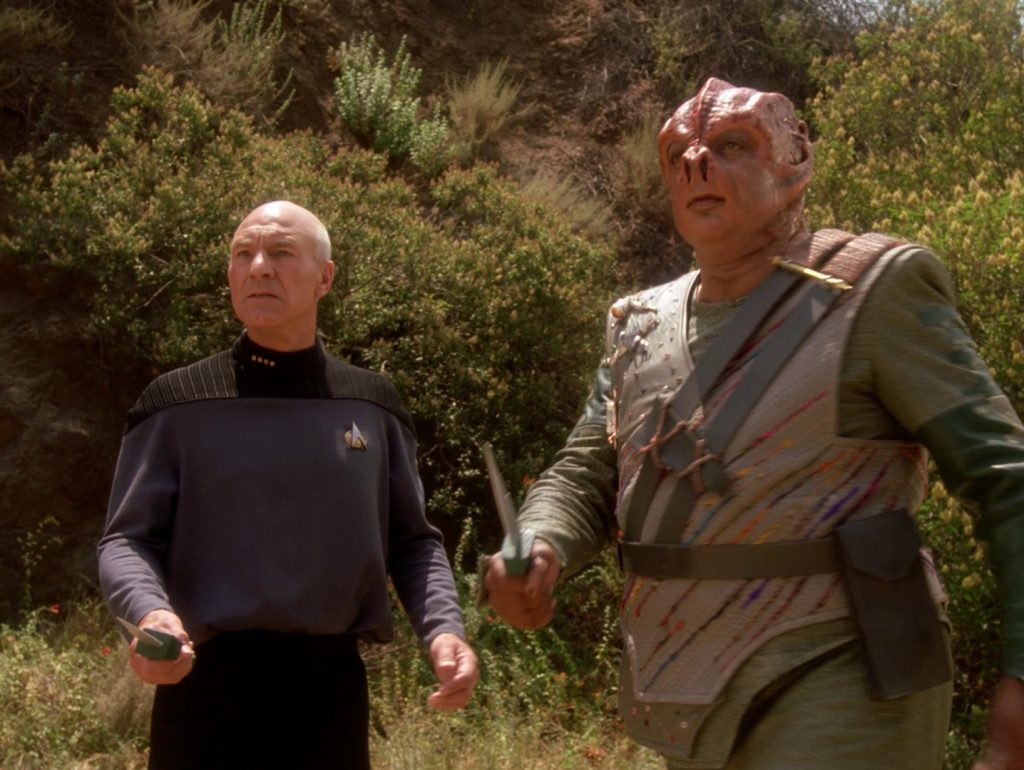
“Darmok” was one of the most popular episodes of Star Trek:The Next Generation, but on the off chance you don’t know it (it’s been *cough* thirty years, after all)–the Enterprise crew is attempting to open relations with an alien race called the Children of Tama. All previous attempts have come to a grinding halt because the universal translator can’t make sense of their language. It can be rendered in Federation English, yeah, but the words and sentence structure are just… gibberish. Determined to solve the problem, Dathon–the Tama commander—kidnaps Captain Picard, dropping the two of them on a hostile planet where they have to learn how to communicate and work together in order to survive. Through the course of this, Picard comes to realize Dathon’s language isn’t based on individual ideas and concepts, but on stories and metaphors. The Children of Tama wouldn’t say “I’m so relieved and happy to see you,” they’d say something along the lines of “Carol, when Zosia returns to Albuquerque.” It’s been impossible to properly translate the Tama language because the Federation doesn’t share their history and folklore.
In a way, all of us do this every day. We reference movies, TV shows, books, pop culture events, and then we stack and combine them. And we know people will understand us because they get the reference. It’s why we understand memes and reaction gifs and emojis.
Heck, want to know what an ingrained aspect of our language this is? When Bluesky first opened up, it didn’t have the functionality for gifs yet. So for almost a year, people responded to posts by just writing out things like “DiCaprioToast.gif” or “CasablancaShocked.gif.” And then the next step was (no joke) screenshots of Dathon from the “Darmok” episode describing various gifs. No seriously, that was a thing for a while.
Now, we also do this on a smaller scale. All of us have jokes and references that are only understood by certain circles. Coworkers. People who share a common interest. I may not get that programming joke, you might not understand School Spirits references, and neither of us are going to get those hardcore biathalon jokes. Pretty much every job has its own “inner language” and shorthand.
And sometimes those circles get even more intimate. Friends. Family. Even individuals. My gaming group has a bunch of things we all say that nobody else would comprehend. I’m in an ongoing group chat with a bunch of writers and we’ve got a few inside references none of you would get. And heck… my beloved and I have little things we say and do that nobody besides us would really understand (it’s how we’ll identify each other when the pod people/ body swappers take over). But to an outsider they could sound rude or confusing or like, well… gibberish.
Now, I’m willing to bet you all understand what I’m talking about here. The real question is, why am I bringing it up on the ranty writing blog?
A not-uncommon problem I see from some folks is they write dialogue loaded with references and figures of speech from their own personal experience. It might make sense within the writer’s personal circles, but outside readers just end up scratching their heads. And when this gets pointed out, the writers responsible for this issue will try to justify their words in a number of ways…
One is that their friends talk this way, and their friends are real people. Therefore, people really talk this way, and there’s nothing wrong with it. The thing is, as I’ve brought up here once or thrice before, “real” doesn’t always translate to “good.”
Two is they’ll argue this joke or reference is common knowledge. They’ll say the material is generally known– universally known, even– so the problem isn’t them, it’s the uneducated, unaware reader. This one’s tough, because it can be hard to agree on what “everybody knows” or even what’s generally known. If somebody honestly believes that everybody knows who won Best Original Screenplay in 1938, there’s not much you or I can do to convince them otherwise short of assembling a large focus group.
Y’see, Timmy, I can’t just write for my five closest friends. I mean, I can, sure, but not if I want to have some degree of success. I’m not saying my writing has to appeal to everyone and be understood by everyone, but it can’t be loaded with so many in-jokes and obscure references that nobody knows what I’m talking about.
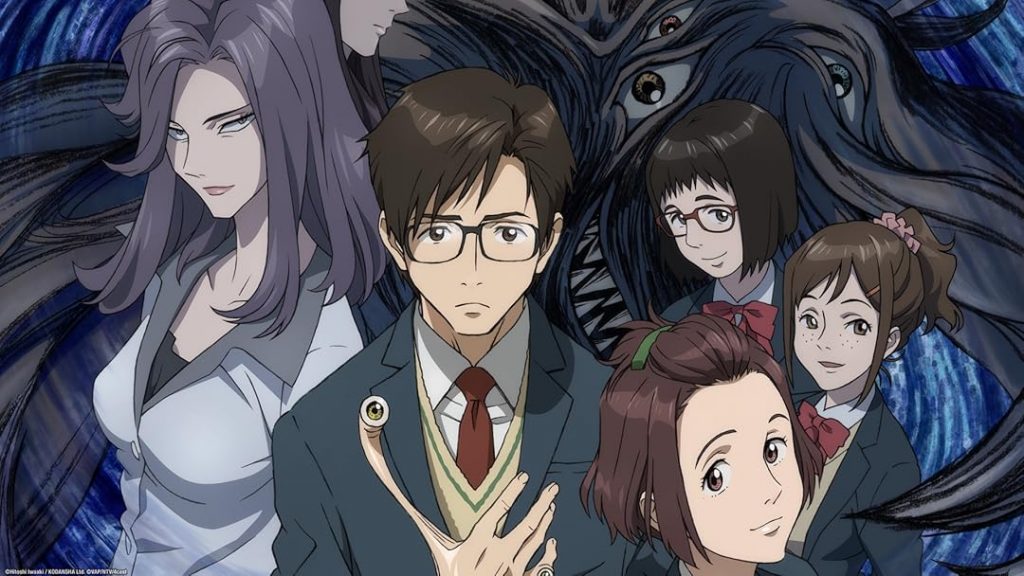
This is one of those inherent writer skills that we all need to be good at. We need to keep learning and being aware of the world. Not just the world as we want to see it, not just the parts that interest us—all of it. Because if a large swath of my story assumes you know the entire Japanese voice cast of Parasyte, Vietnam-era military jargon, or why talking about squirrel voices counts as sexy talk… it probably means I’ve just knocked my readers out of the story.
And knocking people out of my story is never a good thing.
In conclusion, the Children of Tama eventually joined the Federation. Lt. Kayshon was chief of security on the USS Cerritos and everyone could understand him. Most of the time. Commander Ransom, the first officer, even learned some Tama phrases.
Also, nobody won Best Original Screenplay in 1938. The category wasn’t invented until 1940.
You didn’t know that…?
Next time, I’d like to talk about what was really going on when we met.
Until then… go write.
One reply on “Just Between Us”
Dialogue has got to be in the top three things that it’s hard for writers to do well. I think I’m past the point of stilted, formal dialogue except for when it’s intentional.
As for language in general. I could see a future where our language evolves/devolves into little more than Gifs and emoji.