

Well, hey… 2026 managed to go off the rails pretty quick, didn’t it?
I totally get it if you can’t get your head around the idea of writing right now. It’s tough to be creative when it feels like you’re trapped in a burning house. But I’m going to soldier on because, well, it’s my job. And the ranty writing blog is part of it.
That said…
It being the start of the year, a lot of us are setting goals of some kind. Things we’re going to achieve. Ways we’re going to change. How we’re going to improve. And yes, maybe some of this is writing related.
There’s a saying you may have heard– change is good. As I may have mentioned before, I’m not a huge fan of it. It’s easy for change is good to become a defensive thing, a shield from criticism. After all, if change is good, and I changed something, my change must be good, right? It’s not my fault you can’t accept change.
What I prefer to say is that change is necessary. Change happens, whether we like it or not. And sometimes… yeah, we won’t. Styles go out of fashion. Preferences shift. Standards change. Lines get redrawn. What’s acceptable (or possible) changes. We learn new facts and (hopefully) shift our view of the world to embrace them. Not every change is going to be good, but… things are going to change.
As some of you know, I used to work in the film industry. At various times I found myself working with different producers. Knew a few folks who’d worked with others. And at some point I realized two of them made for an interesting study on creativity. Both of had begun their careers at the same point, making very similar movies and shows, but ended them very differently. And a lot of that had to do with their willingness to change.
Names shall be avoided out of basic politeness, but it wouldn’t take too much digging if you really had to know who some of them were.
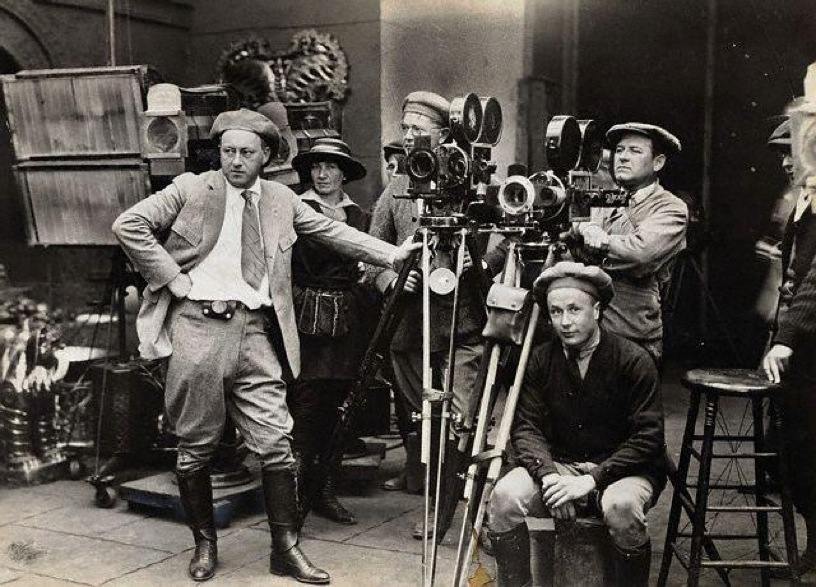
At first, Producer One was the more successful by far. By a lot of metrics, the most successful producer of the decade—television or film. And the next decade too. He was the guy behind some filmmaking techniques people take for granted today. I could probably name half a dozen shows he did (or more) and I’d bet serious money you’d know every one of them
But as that next decade started to wind up… this producer started to lose popularity. Y’see… as audience and studio expectations progressed, he was continuing to make what were essentially the same shows in the same way. I worked with him maybe ten years after that point and he was still making the same shows. Same kind of characters, same kind of plots and storylines, insisting on the same kind of shots and edits that had worked for him twenty years earlier. It got harder and harder for him to get projects off the ground because his work just felt more and more dated. Heck, when a few of his earlier, better-known things got rebooted, I heard from a few folks that the studios openly paid good money for him… not to have anything to do with them. To stay away and not be involved at all.
On the other hand, producer B kept growing and changing. He’d been making the same sort of shows at first, but he paid attention to the shifts and changes in what audiences expected. And what filmmakers could do with stories, and what they could do within different formats. He kept making hit shows, because he was willing to learn and grow and change. Maybe more importantly, he was willing to let go of old ways of doing things and old ways of thinking. And that growth kept him relevant. And very successful well into the 21st century.
But I know what you’re saying. Pete, I don’t want to work in Hollywood. Being a producer means nothing to me. What is this all about?
Let me put it to you this way…
I knew a genre author a few years back who talked constantly about how big publishers made so many mistakes and how self-publishing was the only way forward. And a main part of this author’s proof that publishing was doomed was, well, twenty years earlier they (the author) had been huge in their genre. A damned-near superstar. They’d learned how to write at the feet of a fantastic editor in the genre back in the 90s, learned exactly how to do the characters, the story beats, the payoffs. They’d taken those lessons to heart and sold a lot of books back then.
But over the years their sales diminished more and more. When I asked what they’d changed, they were pretty adamant—nothing! They were still writing books just like they’d learned how to in the 90s. The right way. The problem, I was told, was publishers were just chasing new trends and not sticking with what worked. Which is why, they would tell me again and again, traditional publishing was doomed.
And when I tried to gently hint that maybe there was something to learn from some of these new books… well, that was nonsense. After all, they had learned exactly how to write these books. Twenty years ago. From a master. Why would they change?
Y’see, Timmy, it’s tough to be creative when I’m not willing to acknowledge new things. Creation is, literally, making something new. I can’t improve if I’m not open to growth and change.
I’ve mentioned The Suffering Map here once or thrice—my first serious attempt at a novel, finished back in my mid-thirties. And I’ve also mentioned it wasn’t that good. Bordering on bad. For a bunch of reasons. But I’ve gotten better since then. Because I made an effort to learn. To change how I did things and looked at things. To grow as a writer.
Hell, I’ve tried to grow as a person. I’m glad a lot of my views and opinions have changed from what they were when I first started taking this seriously twenty years ago. Or thirty years ago. And sweet jebus, let’s not even talk about being a teenager in the eighties. Sooooooo glad I’m not that stupid kid anymore. He had a lot to learn about so many things.
I can’t do anything new if I’m not willing to try anything new. I can’t be current if I’m determined to stay in the past. And I definitely can’t expect to catch a lot of attention with an idea (or a mindset) that was outdated thirty years ago.
So as we stride forth into this new year, maybe think about letting go of those outdated ideas. The worlds moving on with or without us. Let’s learn some new stuff and do cool thing with it.
Next time, speaking of the film industry, I’d like to tell you about one of my favorite directors I ever worked with.
Oh, and if you’re reading this just as it published, tonight (Thursday) I’m going to be at Mysterious Galaxy in San Diego talking with Jeff Rake and Rob Hart about their new book, Detour. If you’re in the area, stop by and say hi!
Until then, go write.
One reply on “Infinite Growth”
Umm, Alan Watts The Wisdom of Insecurity deserves a mention in relationship to change.
And Vonnegut plot diagrams as well.
The older I get the harder it becomes to find anything original or unique, even a single line of originality makes me happy.
Give Parker her own book or series.
Thank you for your time and effort.