
January 5, 2012 / 4 Comments

Why Are We Here?

            I don’t mean that in some vague, metaphysical sense.  It’s pretty straightforward.  Why are you looking at this web page?  What are you hoping to find here?

            Let me make it easier.  Let me explain why I keep posting here.
            No, there isn’t time to explain.  I will sum up.
            (bonus points if you get that one)
            Two little stories.  Tale the first.
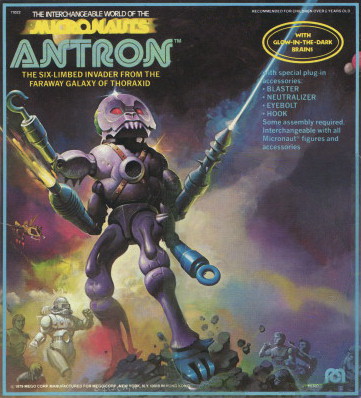
            I’ve wanted to tell stories as far back as I could remember.  I was setting up my Star Wars figures and Micronauts in little tableaus when I was in grade school.  By middle school I’d found my mom’s old electric Smith-Corona (complete with vinyl dust cover) in the back of the closet and I was sending clumsy “submissions” to Jim Shooter at Marvel Comics.  And by high school, well, by then my rejection collection was getting pretty thick.
            It’s gotten thicker since then, believe me.
            Tale the second.
            Not too many months back I stumbled across a link to a published author’s new blog.  He was about at the same level as me—years of trying to get in and finally had a few sales under his belt.  Two of them to a very big, respectable publisher.  Said author, much like myself, wanted to offer some tips for new writers who were just starting out.  However, unlike me, this fellow didn’t want to talk about how to improve your writing. He was going to offer tips on networking, promotion, blog tours, and so on.
            Of course, looking over his first four posts, there was one point he kept hammering home.  The best way to sell your writing is to have good writing.  The best way to spread word of mouth about your writing is to be an excellent writer.  This could not be stressed enough.  All the clever gimmicks and sales tricks and blog tours weren’t going to help in the slightest if you didn’t have something people wanted to read.
            But he wasn’t going to talk about that on his blog.  He was going to talk about clever gimmicks and sales tricks and blog tours.
            That’s kind of what got me started on this whole thing years ago.  At the time, I was seeing tons of articles and websites about the tricks and gimmicks, but very few about the actual craft of writing.  And, yes, I do feel pretentious talking about “craft” when I write books about superheroes fighting zombies.
            Anyway, I’d say a good sixty or seventy percent of the material I saw was tips on what to do after you’d written something.  How to get reps, how to get your books in stores, that sort of thing.  Which always seemed a little cart-before-the-horse, as people used to say in the pre-Segway world.  Perhaps even worse, a large percentage of the remaining material—the stuff that actually talked about writing– spoke about it in terms of absolutes and set down hard rules that didn’t seem to come from any sort of actual experience.  It was just people parroting some rule about storytelling they’d heard somewhere as if it were a quantifiable, scientifically-proven fact.  In some cases, as far as I could tell, these people had just made up their rules out of the blue. 
            And a few of these folks were asking for money. 
            At the time I was sitting on this half-assed Blogspot site.  I’d pulled a loosely Egyptian-themed name from the back of my head (Thoth was the god of writing), a title that I put even less thought into (seriously, check out how many “Writer on Writing” blogs and columns there are out there), and used the space to post a few spec columns I’d created for a magazine I was working for.  They’d been rejected (twice) so I’d thrown them up here as… honestly, I don’t know.  Just so it felt like I’d done something with them.  I thought they were fairly well written and made some good points—I didn’t want them to languish on my computer.  Maybe in the tiny, limited space that was the internet somebody would stumble across them and find them useful.
            Bonus fact.  It was maybe a year after I started posting here more-or-less full time that somebody pointed out Thoth-Amon was also the evil sorcerer in the Conan books and comics.  Completely slipped my mind when I picked this site.
            Anyway, as I worked my way further and further into the life of a full-time writer, I got exposed to more and more people’s work.  I read scripts for a couple different contests and got a bunch of exposure to it (reading 400+ pages a day will do that to you).  And one thing that amazed me was I kept seeing the same basic mistakes.  Often to headache-inducing levels.
            A large number of aspiring writers fall into one of two camps.  Some of them think writing and storytelling are mechanical, quantifiable processes that can be broken down to A1-B2-C3.  These are the folks who will quote the MLA Handbook to explain why their novel deserves to be published and use Syd Field as proof their screenplay is perfect.  The other group think rules are for old-school losers who don’t get that spelling, formatting, and structure just hamper the creative process and will get overlooked when people see the inherent art in the writing.
            Both groups are usually wrong, for the record.
            Note that I said “usually.”  Most folks think it’s all-or-nothing.  You have to be on one extreme or another.  The truth is that it’s more of a middle ground.
            Y’see, Timmy, there are things that are absolutely “right and wrong” in writing. I have to know how to spell (me—not my spellchecker).  I have to understand the basics of grammar.  If I’m writing a script, I’ve got to know the current accepted format.  A writer can’t ignore any of these requirements, because these are things you can get wrong and you will be judged on them.
            On the other hand, there is no “right” way to start your writing day or to develop a character, only the way that’s right for me and my story.  Or you and your story.  Or her and her story.  If you ask twenty different writers about their method, you’re going to get twenty different answers.  And allof these answers are valid, because each of these methods work for that writer.  But that doesn’t mean I can ignore every convention or rule I don’t like.
            And that’s what I’m doing here.  Prattling on about some of the hard rules and general suggestions I discovered during thirty-odd years of learning how to be a writer, along with some of my own I’ve developed after trying to write a hundred or so short stories, scripts, and novels.  It’s stuff I think might be helpful if you’re actually serious about writing for a living.
            And I’m going under the general assumption that if you’ve slogged through all this, you’ve got at least a basic grasp of this writing thing and are hoping to go further with it.  Perhaps even make a few dollars with it.  And if any of you have a specific question or topic you’d like me to prattle on about, let me know.
            Next time, speaking of right and wrong, we return to one of my favorite topics—spilling!
            Until then, go write.
November 17, 2011 / 5 Comments

Our THREE Secret Weapons Are…

            Pop culture reference.  Overdue.

            Okay, so what I wanted to blather on about today has its roots in screenwriting, but it’s a lesson that can get applied to short stories and novels as well. Simply put, it has to do with boring your readers.
            Some of you may have heard of the “rule of three.”  It’s  a good screenwriting rule of thumb that you should never do something more than three times in a movie because it starts wearing on the audience.  By the third time you’re showing me something, I’ve either got it or I don’t.  And if I don’t, it’s not my fault…
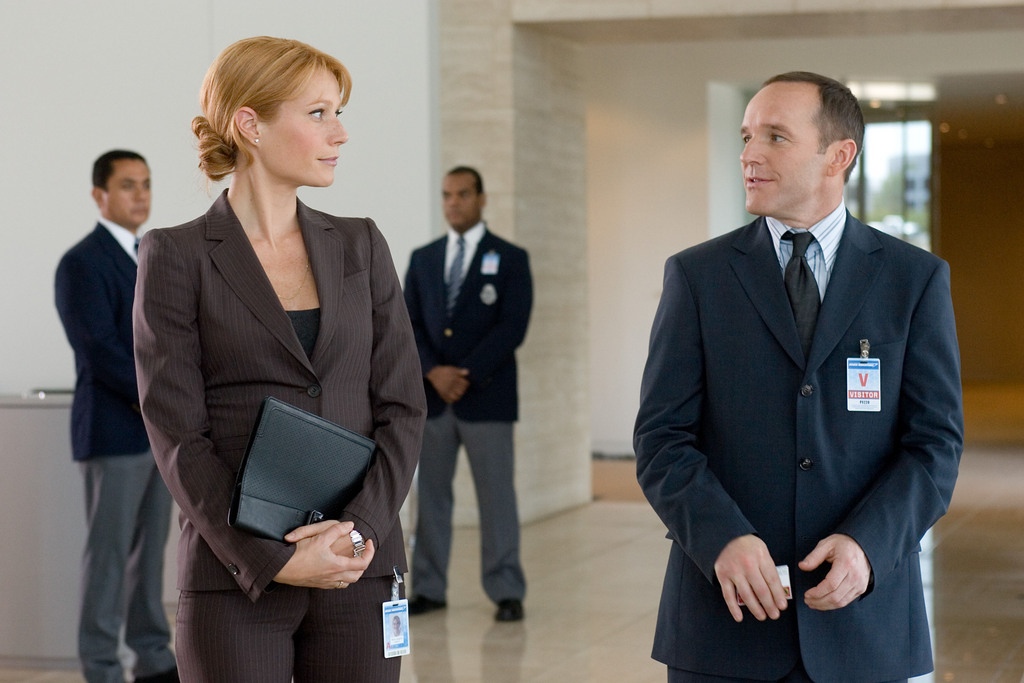
            For example, in the movie Iron Man we see three big examples of Tony Stark’s playboy lifestyle before something happens to make him change (blowing off the award ceremony, sleeping with the hot reporter, and partying on his private jet).  He then goes on to design three versions of the Iron Man armor, which also involves taking three test flights (one of them very, very short).  While all this is going on, we get three examples of what a great guy Obadiah Stane is, three of what an evil jerk he is, and the ever-loveable Agent Coulson asks three times about debriefing Tony and we get three jokes about the overly-long name of his government division before the payoff most comic geeks saw coming. 
            Seriously, pick up almost any movie you like and you’ll be stunned how quick the threes add up.  The Hulk goes on three rampages in his last movie.  In Highlander we see three other immortals die before the final battle.  In Aliens there are three major attacks and three examples of Burke being a slimebag.  In the movie Severance, the bear trap slams shut three times (and if you haven’t seen it, I’m not explaining that any further).  In Casablanca, Victor and Ilsa ask for the letters of transit three times.  Heck, in The Princess Bride, how many challenges does the Man in Black have to overcome to claim Buttercup (I’ll give you a hint—Inigo, Fezzik, Vincini)?  And there are three great swordfights in that film—all involving Inigo.
            Now I’m sure some folks reading this are thinking three’s just an arbitrary number, right?  It could be the rule of two or the rule of four.  That’s very true, and you can find some examples of both.  In Charlotte’s Web, for example, the children’s classic by E.B. White (he of the awful style guide), there are four words that get spun into webs and none of us were screaming “get on with it” when our parents read that book to us.
           In a script I just read, though, there were over a dozen examples of how low the single-dad main character had sunk.  It starts with him late for work (as a waiter—historically a job of high pay and great respect) where he had a party dine-and-dash so he has to cover their bill.  Then his car breaks down and he has to walk home in the rain.  Then he gets a collections notice. Then he has to go grocery shopping and doesn’t have enough money.  Then the babysitter demands more money because he’s late again.  Then his power gets shut off.  Then anotherparty dines-and-dashes on him and he gets fired.  Then he gets an eviction notice.  Keep in mind, this is only the first twenty pages of the script or so, and there’s still more examples coming.
            At what point did you get the idea this guy’s at rock-bottom?  Halfway through that list?  A third?  Check which note you got it on and count backwards.  Was it on the third example?
            I bet it was…
            Here’s the thing.  Each time we get exposed to information or events, it changes our understanding of them.  And a writer needs to be aware of how the reader is going to be seeing these facts or events.
            The firsttime we get exposed to a piece of information—and only the first time—it’s something new.  We, as the audience, didn’t know this or haven’t seen it before.  Agent Coulson’s introduced as yet another guy who needs to schedule a meeting about Tony escaping from Gulimar.  We brush him off the same way Pepper does (well, those folks do who don’t recognize the initials of his agency).
            The secondtime we see this happen, on the page or on screen, it establishes a pattern.  Now we know the first time wasn’t an isolated event or a fluke, and it gives us a little more information about things and characters.  Coulson shows up again and hasn’t forgotten about this meeting and he isn’t going away.  There’s also the unspoken question of how did some low-end, government flunky get into this extremely high-end exclusive party.
            The thirdtime confirms that pattern.  These behaviors or incidents are a definite element of the character or story.  Coulson shows up to remind Pepper of his loosely-scheduled appointment and she grabs him to use as a shield against Obadiah.
            When I start going past this point, things start becoming less informative and more… well, boring.  Once the information’s been established, continuing to repeat it is just noise the reader’s going to tune out.  And eventually—quickly, really—they’re going to get annoyed that I’m just repeating stuff they already know rather than moving forward, because storytelling is all about forward motion.
            Now, as I said above, there are always exceptions to the rule of three.  One of the easiest ways is when a writer is very subtle about something and the reader doesn’t realize they’ve gotten that first exposure.  They may be on their third or fourth before they notice it, so the pattern forms around the fifth or sixth time—and is all the cooler when they look back and realize the pattern was there all along.  When we finally notice the Observer on Fringe, we discover he’s been there all along, in every episode.  Another good example is Jason Hornsby’s Eleven Twenty-Three, where a town is suffering from brief outbreaks of extreme violence. It happens twice before the characters realize the outbreaks always occur exactly at the titular time, and then they suffer through three more of them before the end of the book.
            On the flipside, there are times we only need to see something once or twice to establish them.  This works best for real-world things that most people can relate to.  Neo only gets chewed out once by his boss, at the beginning of The Matrix, and we all immediately realize what kind of employee he is.  In Dean Koontz’s underappreciated Fear Nothing, we only need to see one of Christopher’s parents die to understand his sadness and loneliness.
             You can also change the dynamic.  Establishing something with the rule of three doesn’t mean you’re stuck with it.  One of the standards of good storytelling is conflict that forces things to change.  Once we’ve seen three examples telling us who  this character is, it’s a good time to start working that arc to change them into something else.  Yes, that third time asking about the appointment makes Coulson look like the ultimate paper-pusher, but right after that point we discover just how calm and collected he really is.  This is a guy who doesn’t just have a sidearm, he carries around shaped explosives just in case he needs to open a locked door.
            Look back over some of your writing and see how many times you give examples of something.  Character traits, recurring events, whatever.  Could some of them go away to tighten your novel or give you more space in that script for something else?  Or can you restructure things to hit one of the exceptions I mentioned above (three exceptions, for those of you keeping score).
            Next time, I wanted to take a step back and explain why you should avoid taking a step back in your writing.
            Until then, go write.
August 4, 2011 / 4 Comments

Simpsons Did It!

A pop culture reference that’s so spot-on it’s not even funny.

Okay, it’s a little funny…

(General Disarray, go get the minions before they get lost…)

One of the big worries with creativity is wondering if you really are being creative. Is that clever new idea of yours something you came up with all on your own, or is it something you unwittingly borrowed from someone else? Maybe you skimmed over the back copy of a paperback in your local neighborhood bookstore or read a few spoiler-filled reviews on Amazon and your brain just filed it away. Worse yet, what if your clever story gets out there and then you discover five other people already had similar ideas. Now you just look like some hack plagiarist.

I’ve been involved in a bunch of discussions about stuff like this in the past few weeks. Has anyone crossed X with Y before? Have you ever seen this element used in that genre? What about that plot but in this setting?

The answer to all of these, alas, is yes.

Some guru-types like to drawl on about how there are only seven stories (or nine, or thirteen, depending on who’s selling what this week). While I think this is an oversimplification, it does point out an obvious truth. Most stories have things in common with other stories. That’s just the way of it. The same type of characters show up. The same situations arise. The same relationships form.

Here’s a random observation for you. When was the last time you met someone who didn’t remind you of someone else? Think about it for a minute. When we were little everything was new and fresh but as we got older we started to see patterns and similarities. A guy I met at a birthday party last weekend reminded me of a guy who lived across the hall from me in college. When I first met her, I thought my girlfriend looked a lot like one of my next-door neighbors. A production assistant I used to work with looks kind of like a sound mixer I know in San Diego. Another one reminded me of my cousin Chrissie crossed with a bit of Angelina Jolie (a very good mix, I have to say).

But those are all first impressions. As I delve deeper, I start to see the uniqueness of each person. The better I got to know them, the more Leo, Colleen, Russ, and Sarah became individuals and those superficial similarities dropped away.

Still, those initial generalities can be a bit bothersome. If there’s something else out there that’s similar to your work, should you worry about it?

Probably not.

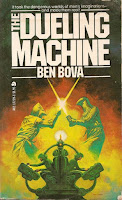
Submitted for your approval is The Dueling Machine. It’s a 1969 sci-fi novel by multiple-Hugo-award winner Ben Bova. In the far, far future, a brilliant scientist has created a machine to help reduce hostility. It’s “a combination of electroencephalograph and autocomputer” which lets two or more people connect their minds through the machine and interact in an imaginary dream world that they create inside the machine. The story comes about when someone is killed during one of these “simulated” duels—is it possible that dying in the imaginary world could make someone die in the real world?

Hopefully this premise sounds a bit familiar to you. It should because it’s a big chunk of the plot to The Matrix movies. And The 13th Floor. Also the Lawnmower Man films. Plus there’s a few books like Cybernetic Samurai and Snow Crash and Giant’s Star. And that television show VR5 that was on for a while. And about a hundred Star Trek episodes where people get trapped on the now-deadly holodeck, because the holodeck safety systems are apparently made of cobwebs and wet tissue paper. Heck, you’ve all probably got a dozen more at your fingertips, don’t you?

For the record, there are also dozens of books and movies and television shows featuring vampires in space (one’s actually called The Space Vampires—it was the basis for the movie LifeForce). And zombies in the old west. And new takes on time travel, space travel, politics, Jekyll and Hyde, all that stuff.

Now, this doesn’t mean that most stories copy other stories. We all draw from a lot of the same sources, so our thoughts are going to follow a lot of the same paths. But even on those paths we’re all going to march to the beat of our own drummer, so to speak. We’re also going to dress differently, bring different things with us, ask different people to come along, and we’re all probably heading down that given path for different reasons.

Y’see, Timmy, we put our own stamp on everything we do. If I did a modern version of Dracula and you did a modern version of Dracula, neither of us would end up writing Salem’s Lot, which was Stephen King’s modern version of Dracula. You might stick with Europe, but I’m probably going to set mine in southern California. We’d have our own ideas and notions and way of looking at it, just like Mr. King did.

Now, there’s a downside to this apprehension, too, and it’s kind of similar to the people who won’t write anything because they’re too busy learning how to write. Sometimes we—yes we—get so caught up in worrying if something is original that we grind to a halt trying to prove it isn’t. This desperate need to avoid being a copycat brings things to a dead halt.

True story —I was working on a book a few years back (right before I was inspired to start Ex-Heroes, in fact) called Mouth. As I was typing away, I suddenly came up with the coolest way to explain teleportation ever. I mean, this was Stephen Hawking-level brilliant. It was, if you’ll pardon the phrase, sheer elegance in its simplicity. I typed up a quick scene where Character A explained it this way to Character B, read through it, and realized it was even cleverer than that.

Too clever, in fact, for a guy like me to come up with it. It was too clean. Too perfect.

In a panic, I wracked my brain trying to figure out where I’d heard it before. Because I must’ve seen this somewhere. Online? In a comic book? All I was reading at the time was Amazing Spider-Man and that was all packed full of “Civil War” nonsense. Maybe a television show? What had we gotten from Netflix in the past few months?

I asked my girlfriend to read it. I figured she might recall whatever this source was, because I kept drawing a blank. She went through the chapter, got to the questionable explanation, and loved it. When I asked her where she’d seen it before, she couldn’t remember ever seeing it. After I pressed her for a bit and she re-read it again, she admitted it was vaguely like the explanation of “tessering” in Madeline L’Engle’s classic A Wrinkle In Time, but only in that it took what was plainly a very complex idea and boiled it down to an extremely simple explanation.

In other words, it was all mine. But I wasted a week worrying over whether or not I’d copied it.

Do a quick look at your chosen field. Make sure no one’s done something exactly like your idea. Then just write. Your own style and vocabulary and characters will give it a flavor all its own.

Like the Buddha says, don’t sweat the small stuff.

Next time, if I don’t get any suggestions, I may have to fall back on spelling.

Until then, like I just said, go write.

You would not believe what I had to go through to get this post up.

Anyway…

A simple element of storytelling is the obstacle. It’s what stands between the characters and whatever they want. An army of Nazis stand between Indiana Jones and the Lost Ark. The possibility of getting caught stands between Ferris Bueller and his perfect day off. The armored construct named the Destroyer stands between Thor and saving the world, but so does the inability to wield his mystic war-hammer, Mjolnir, because of his own doubts of his worthiness.

While opinions vary a bit more on this one, I think an obstacle is slightly different from a conflict. It’s just terminology, but exterior problems tend to be called obstacles, while interior ones are almost always labeled as conflicts. In the example I gave above Thor has to defend his friends from the Destroyer (obstacle), and he can’t wield Mjolnir because of his self-doubt (conflict). Make sense?

Now, while in strict literary terms obstacle is correct, I prefer to use the term challenge. I’ve found that thinking about “obstacles” tends to guide the mind solely onto physical impediments, like parts of an obstacle course. While this isn’t technically wrong, it does tend to result in a lot of the same things. This is when you get challenges that have that sort of “level boss” feel to them. Character A defeats obstacle B, then moves on to obstacle C, and finishes up with D.

Anyway, I did it a while back, but I thought it might be useful to scribble out some tips about challenges. And just so we can have cool, current pictures, I’m going to relate a lot of it to Thor. Some of them you might not have considered before, and a few of them… well, one or two it’s kind of sad that I feel it’s necessary to bring them up.

For example…

You have to have one.

Yeah, this sounds basic, I know, but it’s surprising how often I see stories where people either sit around doing nothing or just stroll through events with no effort. I ranted on about this sort of thing just a few weeks ago. Anything the characters need just appears. Anyone they need is willing to help with or without any motivation to do so. Any lucky break that has to happen does at the precise opportune moment. I know it sounds silly to most of you, but it’s honestly stunning how often this happens in amateur books and screenplays. Heck, it’s bothersome how often it happens in professional writing.

There needs to be something between your characters and their goals. If there isn’t, they would’ve accomplished these goals already. If I want a Diet Pepsi, I go get one from the fridge– that’s it. Hardly material for a bestseller, no matter how much you dress it up. On the other hand, if I want to drink from the Fountain of Youth, odds are there are some immortal pirates and conquistadors in the way, maybe a few alligators, quicksand, and the random swamp monster. That’s a story.

Your characters need a reason to confront it.

If your characters are going to take on a challenge, they need a reason to do it. A real reason. Indy isn’t chasing those Nazis halfway across two continents for an empty crate—he’s doing it for an artifact which represents the sum total of his entire life’s work. Thor isn’t squaring off against the Destroyer because he can’t think of any other way to spend the afternoon—the lives of his friends and innocent civilians are at risk.

Make sure this reason is really there. It might be obvious in your head why the characters are going to undertake a challenge, but is it that clear on paper? This is especially true for more internal things like Thor dealing with his pride issues, where the audience needs to understand why not being able to lift Mjolnir is such a big deal.

You need a reason for it to exist.

A combination of the first two points. Nothing’s worse than a challenge that only exists to be a challenge. It has no reason for existing in the world of the story, no past, no future, no motivation. It’s only there to serve as an obstacle for the protagonist to overcome. You might remember in Galaxy Quest when Sigourney Weaver loudly points out that the mashing hallway serves no purpose whatsoever. We can probably all think of a book or movie where, for no reason at all, an obstacle just popped out of nowhere. That kind of stuff just weakens any story.

Challenges have a purpose. They’re characters in their own right, or maybe obstacles other characters have set in your protagonist’s way. There’s a reason the Destroyer exists (it protects Odin’s vault), and there’s a reason it’s going after Thor (Loki ordered it to kill him). It didn’t just fall out of the sky and start smashing stuff for no reason. Think about why a given challenge is in your story, and if there isn’t a real reason, stop for a couple minutes and re-think it.

I’ll add one other note here. It’s generally better if the audience (reader or viewer) has at least some idea why said challenge exists. They don’t need to know immediately, but you also shouldn’t save it for the last five pages and say “Oh, the ninjas that have been hunting us for the past week? They were sent by my business rival in Hokkaido…”

It has to be daunting.

It’s bad enough the Destroyer was built to be the ultimate killing machine, but Thor has to face it with no powers whatsoever. No strength, no armor, no thunder, nothing. Atticus Finch stakes his career, his personal morals, and possibly his life on his defense of Tom Robinson. Jonathan Harker, Dr. Van Helsing, and their companions are the only who ones who know a supernatural monster has arrived in England—one that could kill tens of thousands if not stopped.

Characters should never want to deal with a challenge, because let’s be honest– we’d all love it if more things were just handed to us. Again, Diet Pepsi vs the Fountain of Youth. A challenge needs to be something that gives the character (and the audience) pause, or else it isn’t really a challenge. Even John Carter, gentleman of Virginia, Warlord of Mars, and greatest swordsman of two worlds, would occasionally look at the odds he was facing and say “Oh…crap.”

Well, Burroughs was always a bit more eloquent than that, but you get the point.

It can’t be impossible.

There’s nothing worse than being on the wrong side of a sure thing. Nobody reading this wants to get in a fist fight with Dwayne “The Rock” Johnson because we all know it’d be no contest. None of us want to be given the responsibility of stopping a runaway asteroid or even just a runaway bus, because I’m willing to bet for all of us here (myself included) those would be things we just couldn’t deal with.

If you’ve ever watched a boxing match, or any sporting event, you’ve probably noticed they’re evenly matched. NFL teams don’t face off against pee-wee football teams. The Yankees and the Red Sox don’t do practice games against little league. The most boring stories tend to be the ones where the protagonists have no chance whatsoever of meeting the challenge. If you’ve ever watched a horror movie where the killer is merciless, unstoppable, and inescapable… well, that gets pretty dull after the second or third kill, doesn’t it? One of the reasons Jason Voorhees was always scary in the Friday the 13th films (well, the originals, anyway) is that he never ran. He just sort of… marched? It always seemed like somebody had a chance of getting away from Jason if they could just go a little faster… and not trip on a root or a broken heel or something.

The other risk to be careful of here is if the challenge is completely impossible and your protagonist pulls it off anyway, it can look unbelievable and knock your audience out of the story.

Another thing to be wary of is the challenge that seems impossible to the character, but has a painfully obvious solution to the reader. This makes the characters unlikeable, by nature of stupidity, and that’s not going to win anybody points.

It should be unexpected.

This isn’t an absolute rule, but it’s something I still lean heavily toward. It’s the next logical step once you admit there has to be a challenge.

Every heist movie involves an enormous challenge—usually getting past near-foolproof security to break into a vault or museum. There are many chapters or scenes of preparation. Then, almost without exception, in the middle of pulling the actual job, something always goes wrong. There’s a variable that wasn’t accounted for, something the heroes and the audience are not expecting. A new set of guards, new security equipment, or maybe just a drunken woman at the bar who distracts people and throws off the timetable. There have even been a few clever stories where it’s not the heist that has the unexpected twist but the payoff. And this is where the story gets exciting. If my heroes are so trained and ready for anything that the job goes off without a single hitch, there really wasn’t a challenge, was there?

A small bonus of the unexpected challenge is that it often gives your characters a chance to look better. When they beat the unexpected challenge through sheer skill or cleverness, it makes them all the more likable.

You need to resolve it.

Once the writer has set up a challenge, the readers need to see it resolved somehow. We can’t set the Destroyer loose on the world and then just forget about it. To Kill A Mockingbird doesn’t dangle the threat of a mob in front of us for the whole book and then have nothing happen. I can’t have the hero pining over their lost love for the first third of my story and then never, ever address those feelings again. Believe me, your readers will remember these things. Once we, as writers, present a challenge to the audience it can’t be forgotten or ignored. As Chekhov said, if we see a phaser on the bridge in act one, we need to see it fire in act three.

So, if you’re up to it, make sure the challenges in your writing really are challenging, for the characters and for your audience.

Next week I’m going to accept a challenge myself, and talk about something I don’t like.

Until then, go write.

Categories