December 8, 2014 / 2 Comments

There Are Those Who Call Me…

            So very sorry about missing last week.  I was juggling a few things, time slipped away from me, and suddenly it was Saturday and somebody hadn’t updated things here.  Past me, I’ve discovered, can be a real lazy bastard sometimes.
            To make up for this, I’m going to do two shorter posts and put them both up this week.  Just some quick, easy tips.  I’m sure future me won’t mind writing them.
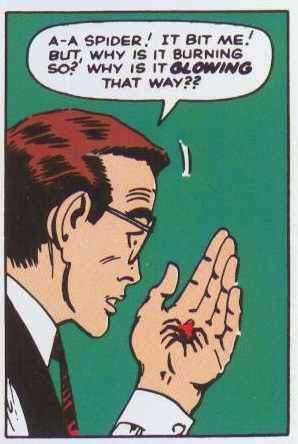
Not this Doug
            Anyway…
            I read a book a while ago about a character named Doug.  Good solid name.  That’s how the book referred to him.  Doug.
            Except to his parents.  They were only in the first two chapters, and they called him Douglas.  But even then, he thought of himself as Doug and that’s what he was called for the rest of the book.
            Although every now and then he was “the short guy” or “the short man” to break things up a bit.  Which is understandable.  Using someone’s name over and over and over again gets boring fast.  So once or twice on a page he’d be the short guy.  Or the short man.
            Except… there was a character, Jay, who’d been friends with Doug for years, and whenever they spoke Jay would always refer to Doug as “wingman.”  “Hey, wingman, grab me a drink while you’re up.” 
            Except… there was another character, an older one, who had met Doug briefly years ago (a friend of his parents).  At the time, Doug had been four and playing in a mud puddle.  So this guy kept referring to Doug as “the dirty kid.”  “Hey, dirty kid, what’s up?”  “The dirty kid said you might stop by.”
            Now, it’s understandable why people do this.  Over the course of our lives, most of us accumulate a number of names and nicknames and titles.  Most of my friends call me Pete, but I have a fair amount who call me Peter, as do most folks who don’t know me as well.  There’s also a bunch of family terms (son, brother, uncle, cousin) that different people use for me.  There’s also a number of folks who just refer to me by my last name.  For almost fifteen years I was regularly called Peter Props.  An early experiment with facial hair had a few mindless jocks referring to me as Goat-boy for a year of high school.  Heck, a woman in my college fencing class started calling me Hamlet and stuck with it for the whole time I knew her. 
            And there are more names past that.  We all end up with them.  That’s just life.
            But we’re not talking about real life.  We’re talking about fiction.  Two different animals.  I’d never use all these names consistently for myself, or for a character in one of my stories.  This is a variation on a problem I’ve mentioned before, usually in regards to screenwriting–the dump truck.  It’s a ton of names that I’m throwing at the reader for no real reason.  That’s just going to get confusing, and confusion breaks the flow.
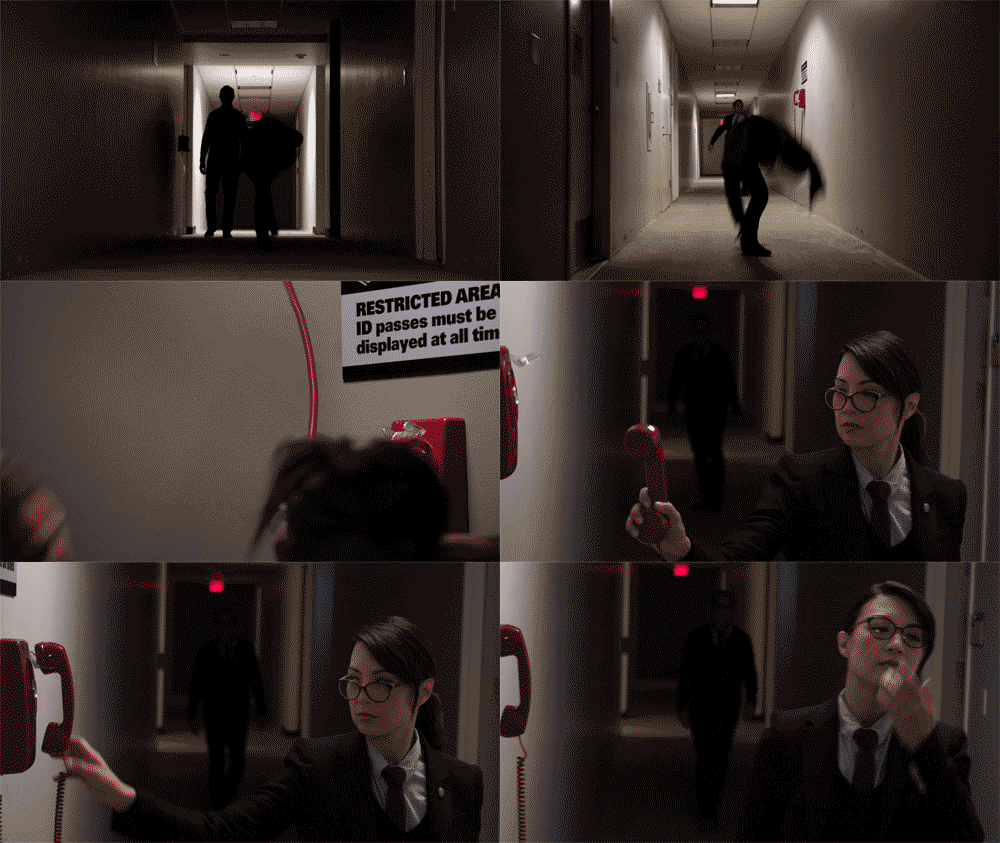
            Think of Agents of SHIELD, where many characters have codenames (the Cavalry, Mockingbird, Hawkeye).  Nine times out of ten, though, if a name is used, it’s just their given one (Melinda May, Bobbi, Clint).  Because it’s less confusing that way.  It’s the same in my Ex-Heroes books, where everyone has secret identities
            Y’see, Timmy, it’s okay to reference some of these things, but they shouldn’t be fighting with the name I’ve chosen to use for my character.  I may have a rich history written up for my character Eli, which includes a few names he’s collected, but I’m only going to use what’s relevant for my story.
            Next time, this Thursday, I shall continue things at this fast clip.

            Until then… well, come on.  You should know by now.

June 20, 2014

Go Big or Go Extinct

             Pop culture reference.  Huge one.
            I wanted to mention something that ties back to last week’s rant.  It’s about how I choose to begin a story.  I almost included it then, but I figured it worked as a stand-alone, and I’m trying to get away from the posts where I just blab on and on.
            Unless I really need to.
            Anyway…
            One piece of writing advice that people keep repeating is “start with action.”  It started cropping up in Hollywood as development people became more and more involved in shaping a story, mostly because it’s a very simple rule.  And from there it spread out to television, books, and other forms of storytelling.  I’m tempted to say this isn’t so much advice as a good solid rule.
            Now the catch (yeah there’s always a catch—if there wasn’t, I’d have nothing to write about on Thursdays) is that somewhere along the way a lot of people started pushing this rule when they didn’t really understand it.  Some folks hear “action” and immediately think explosions, ninjas, car chases, and giant monsters fighting giant robots.  So that’s what they tell people.
            Thing is, there are lots of issues if I’m going to start with Action (capital A).  One of the biggest is that I can’t start at big.  If I start at big, I’ve got nowhere to go.  Granted, the tension level in my stories should go up and down.  But if my first point is 9.5 out of ten, it means everything after this either has to be a huge drop or it can only squeak half a point higher.  Starting at 9.5 to 10  means every character arc, every bit of tension, every moment of action has pretty much topped out on page one.  There’s nowhere else to go.
            Also, let’s be honest… some stories just aren’t conducive to Action.  What kind of great action scene could I begin To Kill A Mockingbird with?  Or (500) Days of Summer?   The Notebook?  Heck, how many romantic comedies begin with a big action scene?  Action (still capital A) is great for… well, action tales and some genre stuff, but there’s tons of stories that this advice just will not work for.
            And because of that last issue, sometimes writers will force action into a story that doesn’t really need it.  Or shouldn’t have it.  But they’ve been told they need to start with action, so they come up with a way to cram it in.
            Y’see, Timmy, when I say starting with action should be considered a rule, I’m not talking about martial arts or gunfire or high speed bank robberies.  I just mean action in the classic definition of the word.  I need to start with something happening.  Because if  there isn’t something happening, what’s the point of this?
            For the record, this is why I usually shouldn’t begin with five pages of backstory or a random character moment.  I don’t want to hear about what happened before—that’s starting in reverse.  I want to begin with my story already on the move, heading forward.  As I’ve mentioned before, stories are like sharks.  If they’re not moving, they die.
            “Something happening” can mean anything.  Washing a car is action.  Cooking dinner is action.  Hurrying to make it to the meeting I’m late for is action.
            I mentioned last week that most Jack Reacher books begin with the main character in very subdued, quiet settings.  The show Orphan Black begins with a woman on a train and offending some people with her free use of profanity.  Stephen King’s Doctor Sleep starts with a little boy who refuses to use the bathroom.  Most episodes of Castle and Elementarybegin with someone discovering a body, but rarely with the actual murder.
            One of my own books, Ex-Heroes, begins with a woman on guard duty watching a zombie walk into a wall.  Then another character shows up, they talk for a bit, and she goes back to watching the zombie.  That’s all of chapter one.   The sequel begins with a Fourth of July party.  The latest book begins with a girl talking to her therapist about her dreams.
            Want a better example?  A bigger one, perhaps…?
            Captain America: The Winter Soldier has pretty much been the smash hit of the year so far.  It’s a Marvel movie, it has a huge cast of established and new superhero characters.  It even (arguably) has a trio of giant killer robots.  It’s pretty much the definition of a summer action blockbuster.
            How does it begin?
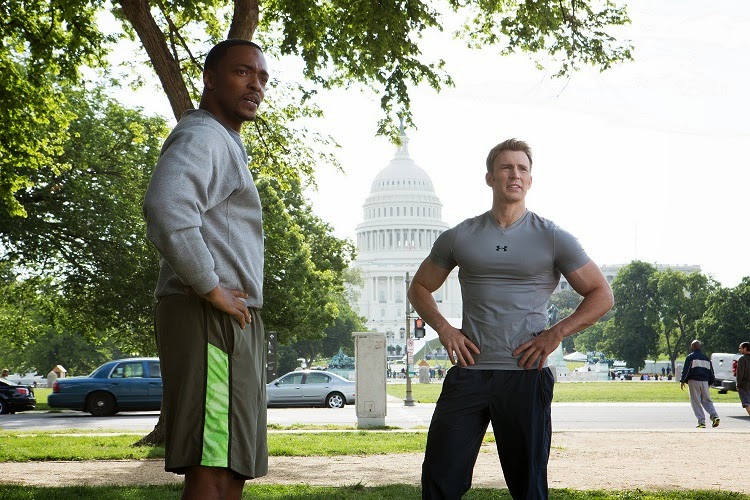
            The Winter Soldier begins with two men doing laps around the National Mall in Washington.  That’s it.  Two guys out for their morning run.  One’s a bit faster than the other, but it’s not exactly a high-tension scene.  And that’s almost the first five minutes of the movie.
            But they’re doing something.  So it’s starting with action.
            Next time… well, I have limited ideas for next time.
            Until then, go do something.
            Maybe write.
April 18, 2014 / 2 Comments

No Capes!

            Decade-old pop culture reference, but it’s still relevant.  And fun.  Especially today.
            As a lot of the book covers over on the right suggest, I’m big on superheroes.  Have been for years and years now.  They’re a popular topic these days, too.  Comics.  Television.  Movies.  I tend to get asked about them a lot, and I talk about them a lot.
            Because superheroes are so popular, people are slapping that label on lots and lots of stories. There’s a distinction that needs to be made, though, and I think it’s one some folks have trouble grasping.  And since so much of being a good writer is grasping those little details, I thought it would be worth going over.  Apologies, because this one’s going to be a little more lecture-ish.
            First… a little history.
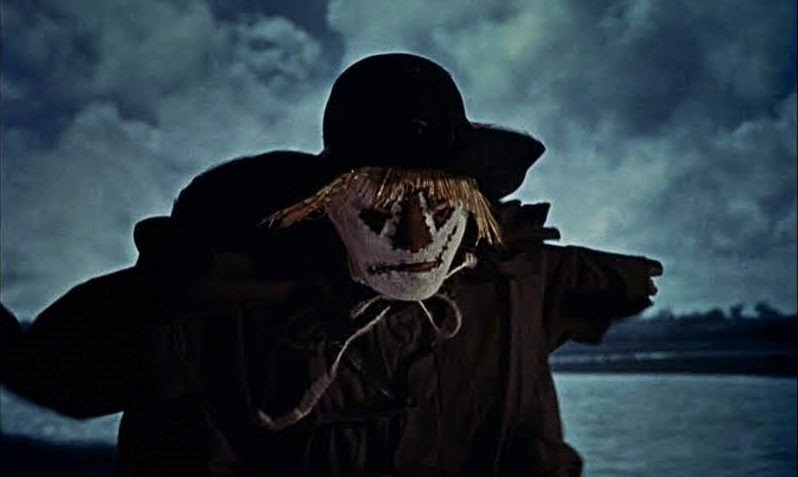
            The whole idea of masked avengers arguably started with The Scarlet Pimpernel.  There’s probably a strong case to be made for the Count of Monte Cristo, but I think for this little rant the Pimpernel’s probably the best example.  It was a 1904 story by the prolific Emma Orczy about a swashbuckler who fought for the oppressed in Robespierre’s France by using a series of disguises and a circle of secret operatives.  There was also Doctor Syn (a.k.a. the Scarecrow of Romney Marsh) in 1915, Zorro in 1919, and then a series of comic book superheroes like The Phantom and The Spider before we started seeing familiar folks like Batman in 1939 (seventy five years ago almost to the day, in fact).
            Interesting point, though…  None of these characters had any sort of actual powers.  They were just mortal men (and a few women, even back then) with a lot of training and skills who hid their true identities behind a mask or elaborate disguise.
            Now, on the other hand, stories of people with actual superhuman abilities have been around for thousands of years.  Literally, thousands.  Gilgamesh, Hercules, and Icarus all had superpowers centuries before the birth of Jesus (who, arguably, also had some powers of his own).  The regenerating Green Knight first appeared in medieval Arthurian legends.  The Grimms wrote up several stories about the strongest man in the world, the fastest man in the world, the man with the sharpest hearing, and so on.  Robert Louis Stevenson created a scientist who could change into a monster, and H.G. Wells had one who could turn invisible.  In modern day times, Stephen King started his career with a telekinetic teenager, a precognizant schoolteacher, and a pyrokinetic little girl.  Alexander Key, Dean Koontz, and Stephen Gould all wrote novels about people who could teleport.
            However… are any of these characters actually superheroes?
            My point is, superheroes and superpowers are, and have pretty much always been, two separate things.  One doesn’t necessarily require the other.  And, like a lot of story forms, if I get confused about which one I’m telling, things can go in a lot of weird ways that… well, don’t work.
            Now, some folks claim, for example, that Gilgamesh was always a superhero story.   So were all the Greek and Norse myths.  That’s what superheroes are, right?  Modern mythology?
            I kind of disagree with this.  H.P. Lovecraft once made the very clever observation that we couldn’t have true supernatural storiesbefore the 19th century because until then people really didn’t know what the naturalwas.  So trying to re-classify older stories doesn’t work.  I think the same thing applies here.  There were many tales of heroes with superhuman powers and abilities before the Scarlet Pimpernel, but I’d argue the idea of an actual superhero story didn’t exist until the early 20th century.  There was a definite split there into those two distinct forms—superhero stories and superpower stories.
            And, as I mentioned above, if I don’t know which one I’m writing, it can cause some problems.  They’re not interchangeable, and some of the concepts don’t play well together.
            Let’s go over a couple basics I’ve observed over the years…
            Right at the start, I’ve noticed that superpowers stories tend to brush over the origin of said powers.  In both Jumper and the Harry Potter books, we’re just told that this is the way the world has always been.  Some folks get the teleport gene.  Some can do magic.  That’s it.  If superpower tales do have an origin in them, they tend to lean toward the hard sciences, making it as believable as possible… but still pretty much brushing over it.

            With superheroes, though, the origin is pretty much a standard.  A writer can also get away with somewhat sillier, softer-science origin stories.  More than a few characters have gotten superpowers from blood transfusions (including one of my own).  Lots of folks stumble across magic or alien artifacts.  Radiation was a common source of superpowers for decades, despite what we learned in seventh grade science class.  Heck, Stan Lee wrote a story where someone got their powers by standing near a nuclear bomb when it went off.  Absurd, yes?  Yet here we are today and that’s still the accepted origin of the Incredible Hulk (though they’ve quietly retconned him a bit further away from ground zero).

            As far as character motivations go, a superherostory is almost always defined by a person who makes a conscious decision to publicly use their powers for a wider goal that may not benefit them (and often doesn’t).  Most of them feel morally compelled to use their abilities this way.  They aren’t doing it to show off or to get even with someone.  Obvious as it may sound…superheroes act heroically.
            This public nature also means they deal with public sentiment of one kind or another.  Iron Man’s a celebrity in just about every sense of the word.  Superman’s an iconic part of Metropolis.  Captain America’s a venerable historic figure.  Batman and Spider-Man receive mixed reviews.  The X-Men are openly considered criminals.
            In a superpowers story, the characters may have superhuman abilities, but their motivation tends to be personal, and their actions are usually behind-the-scenes.  When powers are revealed in superpowers books, it’s almost never a good thing.  Consider Carrie and Firestarter, both of which I hinted at up above.  In each book the girls hide their powers until they need them (for revenge and to rescue her father, respectively) and when their powers are revealed these are moments of absolute horror.  The Green Knight tests the character of knights on a one-at-a-time basis, and if you know that tale you know the awful way people learn about his powers.  In The Dead Zone, Johnny Smith’s trying to save the world, but he has to do it alone and secretly because no one will believe him.  Hiding your powers and staying apart from the world is a main theme in both the Harry Potterand Percy Jackson books. 
            The abilities in superhero stories tend to be much more extreme, too.  There’s Superman and the Sentry, two examples of the “living god” superhero.  For decades the Flash could actually run faster than the speed of light.  The Scarlet Witch could alter reality on a planetary scale while Phoenix could telekinetically manipulate matter on a molecular level.  The only limit to what a Green Lantern ring can do is the wearer’s imagination.
            Compare this to superpower stories, where powers are usually much more “believable” and often have limiting side effects.  In The Dead Zone, Johnny Smith hemorrhages when he uses his powers too much, and so does Charlie’s dad in Firestarter.  In Dean Koontz’s The Bad Place, teleportation can mean scrambling your body, your mind, or both.  In Limitless, the IQ-enhancing drug can (and usually does) kill you when you go into withdrawal.  In fact, the only two superpower stories I can think of where someone has overwhelming powers would be Ursula K. Le Guin’s novel The Lathe of Heaven and the film Dark City (but if you can think of others, please let me know).
             In a superhero story, I’d say a costume is almost necessary, much in the same way a cowboy needs a hat and a horse.  Mostly because it’s how my hero or heroine protects their secret identity and the people around them.  However, I will toss out the proviso that putting my main character in a costume doesn’t make my story a superhero story, just like putting them on a horse doesn’t automatically make it a western.   
            Superpowers stories involve street clothes.  Even if someone has a “uniform” way of dressing, it tends to be suits, boots, leather jackets, and other things that wouldn’t look that out of place on a city street.  Hercules didn’t have a special outfit for performing the twelve labors.  Carrie doesn’t duck out of her prom to put on a leotard and a domino mask.  On Grimm, Nick tends to just dress like a police detective, even when he knows he’s going up against Wesen or other monsters.
            I also think a lot of this difference has to do with the world a given story is set in.  More often than not, a superpowers story has a very realistic setting.  Aside from a very limited, few beings (most of whom stay out of the public eye), there’s almost nothing to distinguish it from the real, day-to-day world we read about online.  And that’s going to affect what characters know and how they react to things.  Even how they interact with each other.
            By contrast, look at the settings for some of our well-known superheroes.  In both the Marvel and DC universes, the existence of aliens—several types of aliens—is a well-documented fact.  New York was very visibly invaded by aliens in The Avengers movie.  Superman’s a known alien.  So are Hawkgirl and Hawkman.  Green Lantern works for aliens.  Magic is real in both universes, too.  Spider-Man is a common sight swinging through his version of New York, where the Avengers and Fantastic Four both have very public office building.  Heck, I think the Avengers have two or three buildings at this point.
            Needless to say… those stories are not set in the real world.  And, as I said before, the setting definitely influences my story.
            So, all that being said…
            I think one of the problems with pushing a superpowers story into the superheromold is the silliness factor.  The motivations don’t always work as well.  When someone puts on a costume in a real world setting, it tends to feel like the writer isn’t taking things seriously.  In the final chapter of the BBC’s Jekyll, when Dr. Jackman unites with Hyde to become truly superhuman, It would’ve been ridiculous if he’d stopped to pull on a leotard and cape.  There’s a well-meaning little indie film called Sidekick where the hero does just that in the third act to rescue his love interest, and it feels completely absurd.

            You get similar issues going the other way, too.  People historically read superhero comics for escapism.  We want to see Superman fly around the country, not walk across it.  When someone picks up the latest Incredible Hulk, they want to see him get angry and perform some feats of amazing strength, usually coupled with some amazing property damage.  While some of the issues Doctor Banner’s dual personality causes him are interesting, nobody opens an issue of the Hulk really hoping to see ten or eleven pages of Bruce sitting in a diner discussing physical strength vs. spiritual strength with the waitress.  I think Marvel and DC’s sales figures over the past few years will back me up on this.  The audience for superhero stories isn’t looking for stark realism.
            This is also why some things in related universes just don’t mix well.  John Constantine is part of the DC Universe, but he doesn’t really fit with in with the Superman, Captain Atom, Green Arrow crowd.  Neither does Dream of the Endless.  Marvel has zombie hitman Terror, who also is clearly in the Marvel universe but just never sat right alongside Spidey, Captain Marvel, Daredevil, and the rest.  Whenever these two types of characters interact it always seems awkward, and one or the other doesn’t really feel right.
            Now, granted, these aren’t formal rules that have been set down by tenured professors.   If we just look at a lot of fiction, though, we’ll see that this separation of powers (so to speak) has been around for ages.  I’ve given a bunch of examples here, and even more when I first talked about this idea a few years ago

            As always, I’m sure someone can dig around and find that one story where Constantine teamed up with Green Lantern and it was magnificent.  But overall, if I’m going to play with super-powered characters, it’s probably a good idea to be clear what kind of story I want to tell.  Because if I don’t… well, there might be some clashes.  Not the fun bare-knuckle kind, either.
            Next time, while I try to finish up this new draft before Texas Frightmare, I’d like to talk about drafts.
            But until then, go write.

November 22, 2013 / 3 Comments

The Four Step Program

            Probably not the one you think of when you think of professional writers…
            I’m a bit pressed for time this week, so I wanted to revisit an idea from a few weeks ago.  Hopefully in a way that may resonate with a few of you.
            There are, in my experience, four stages of being a professional.
1) Not knowing what you’re doing
2) Thinking you know what you’re doing 
3) Realizing you don’t know what you’re doing
4) Knowing what you’re doing
           I first came up with this rule set after about eight or nine years in the film industry.  I can’t remember how I came to it, but when I did I realized it mirrored my career.  As I looked around, I realized it was possible to place almost everyone on set in one of these categories.
            To explain…
            I ended up in the film industry by chance.  A guy I knew needed grunt labor and I was thrilled with the idea of working on a movie.  There was an immediate culture shock, believe me.  Different terms, different hierarchies, different expectations.  I spent my first month on set trying to soak up everything I could, because it was clear I didn’t know anything.
            Of course, by a week or two into my third project, I felt like I had it down.  I knew all this stuff, and I made sure that everyone knew I knew how to do it.  There was no doubt in my mind that I could do my boss’s job at least as well as him, if not better.   
            It was another year or so before I had the chance to be the boss… and learned how unprepared I was.  There were tons of basic things I didn’t know.  My assistant (a friend of a friend who’d offered to help) knew far more than me, and it was a minor miracle she didn’t smack me three or four times a week.  And I deserved to be smacked, believe me.  Then my next job went the same way (although I still hold that one was a 40-60 share with very unrealistic producers).
            So in the end, I sat down and decided to see what I had to do to be better at my job.  I took a good look at the tools and equipment I was going to need.  I paid attention to everything, not just the stuff that interested me.  I planned ahead.  I was more careful with the projects I chose, and the people I chose to work with.
            At which point I noticed other people were telling me I was good at my job.  I didn’t need to tell them.  It was apparent in the work I was doing.
            A while after this, I noticed this pattern applied to almost everything.  Almost any job you could name.  I saw it in many other jobs on film sets past mine.  I had a friend who was a cop, and he agreed a lot of police officers followed the same pattern.  So do programmers.  Watch a show like Kitchen Nightmaresand you’ll get to see some restaurateurs go from step two to step three and head toward four.
            Because that was the other thing I noticed.  There were some folks who weren’t that good at their job but were convinced they were.  They were stuck at step two because they never had (or never acknowledged) that slap down moment.  So they never bothered to improve.  They just stayed at those early, flawed levels.
            So why am I bringing up the film industry and cooking shows here?
            As I’m sure many of you have realized, being a writer follows this path, too.  Not knowing what you’re doing. Thinking you know what you’re doing.  Realizing you don’t know what you’re doing.  And then knowing what you’re doing.
            When I first sat down to write a story, every aspect of it was a mystery to me.  How to structure my plot, how to reveal character, how to describe action.  Hell, I barely understood what plot, character, and action meant.  But I waded in and tried to put my own twist on other stories.  And at some point I decided I was at least as good as half of these people writing for Marvel or DC or Del Rey.  And my mom agreed that I was very talented for an eleven year old.  So I started submitting stuff.  And I got rejected for some reason.  And I submitted other stuff.  And that got rejected, too.
            After many years and even more rejections, I was struck with the wild idea that maybe the problem wasn’t all those editors.  Maybe it was me.  Maybe my stories just weren’t good enough yet. 
            I went back over some of the things I’d sent out in earlier years and realized they were… well, pretty awful.  Some of the basic ideas were neat, but the stories were clumsy, my dialogue was awful, and my vocabulary was grade school level at best.
            So I decided to improve.  To write stronger stories, better characters, more believable dialogue.  I read everything I could in several genres and tried to figure out what worked and what didn’t.  And did it really not work, or did it just not work for me?
            And, well, years after that… here I am today.
            Some people never get past that second step.  Most people don’t, to be honest.  Especially these days when its easier to skip past possible rejection and claim almost anything as “success.”  These folks don’t need—or don’t want—to admit they need to improve, so they never do.
            How many steps are you down the path?
            Next week…. well, next week’s Thanksgiving, so I’ll be watching The Day The Earth Stood Still, Casablanca, and The Maltese Falcon while I make eggplant parmigiana from scratch for the vegetarians in the home, and some turkey for the rest of us. 
            But the week after that, I’d like to talk about that fantasy world you’re living in.
            Until then, go write.

Categories