
November 30, 2020 / 2 Comments

Cyber Monday 2020

This has been a brutal year on creativity, and I think it might’ve been even harder on escapism. This has just felt like the year we can’t escape from. I know my reading was way up at first, but by June I pretty much had to force myself to relax. Or if not relax, at least decrease my tension a bit. My to-read pile didn’t budge much, and I’m guessing about 2/3 of the books I’ve read this year have either been for blurbs or for the dystopian book club.

Anyway, it’s Cyber-Monday and the world is feeling a tiny bit brighter these days, and I thought I’d tell you about a couple books by other authors I did manage to read this year and personally enjoyed a lot for one reason or another. Maybe you’d like to add one or two of them to your holiday wish lists, or one of them might sound just right for that certain someone you know.

Also, these are in no particular order. They’re not even all new. So don’t read too much into where something appears. And, yeah, about half of them are by friends. Again, I real a lot of books for blurbs this year (and still have two more to go)

The Future Is Yours by Dan Frey – I’m starting the list with a cheat because this book isn’t coming out until February—it’s something I got to read early and it’s magnificent. Two guys (well, maybe three) create a machine that lets you look at the internet of one year in the future (news articles, interviews, blogs, and more), and now they have to decide what to do with it. This book seriously blew me away with its characters, its story, and how it told that story. I read the whole thing in one day. Put it on your list now.

The Children of Red Peak by Craig diLouie—It takes a lot to make my skin crawl, but Craig’s newest definitely did it. David, Beth, and Deacon are the only survivors of a religious cult’s suicide pact when they were children. Now they’re slowly facing the fact that they don’t actually know what happened back then… I called this book “Heaven’s Gate by way of IT” and I stand by that.
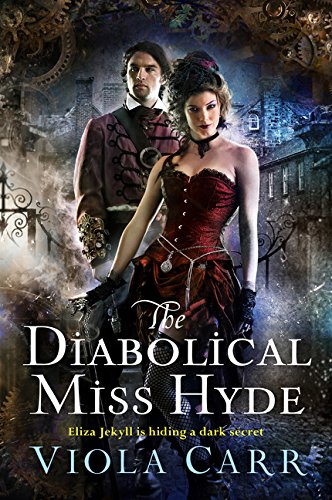
The Diabolical Miss Hyde by Viola Carr –this was the very first book I read in 2020 and I’m still not sure how it ended up on my Kindle (a sale, I’m guessing?). This is a wonderful steampunk mystery starring the daughter(s) of that famous literary pair, and it does some very clever things with point of view. Plus it’s just plain fun.

Ghost Money by Stephen Blackmoore—pretty much every year Stephen ends up on this list and it’s because every year he writes a new Eric Carter book. Honestly, the series was already great and the past three books (this is the most recent) he’s just outdone himself again and again. So pick up all of them, if you haven’t already.

Part of Your Nightmare by Vera Strange a.k.a. Jennifer Brody—this is probably the youngest-aiming book on my list, but Jennifer did a wonderful job of bringing Ursula into the “real” world as she makes yet another deal with a young woman with a dream. Plus, no joke, there’s a scene with a goldfish in this that will creep you out, no matter what age you are.
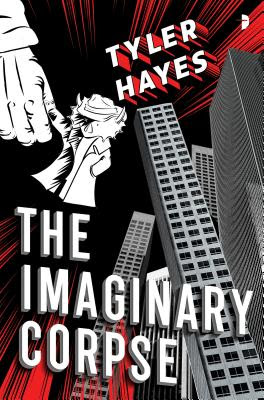
The Imaginary Corpse by Tyler Hayes—the book that answers the question, what happens to imaginary friends when you grow out of them? And the answer, of course, is that some of them become noir detectives. If they were a triceratops named Tippy, anyway. Despite the light premise, this book has a lot to say about trauma and coping and dealing with the bad things. It’s fun and sweet and I liked it a lot.

The Unstoppable Wasp: Built on Hope by Sam Maggs- also a little younger-aiming, Sam’s written an amazing book about Nadia, the newest Wasp in the Marvel Universe. It’s fun and very clever, and (much like the movies) Sam reminds us how friggin’ cool shrinking powers would be for a smart person.

The Oracle Year by Charles Soule—slightly older book, so I’m late on this one. If you don’t already know, it’s about a man who discovers he’s made hundreds of predictions (large and small) for the coming year, and then how he comes to navigate that year as they all start to come true. If you love stories of prophecy and future knowledge, this book is absolutely magnificent.
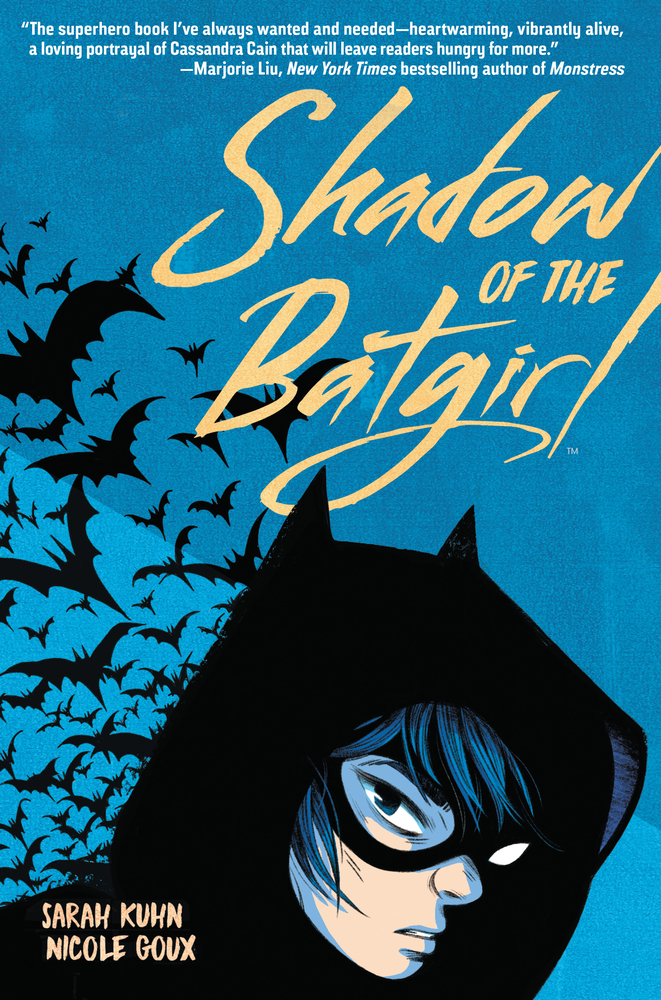
Shadow of the Batgirl by Sarah Kuhn—a reimagining of the Cassandra Cain story, which gives her an origin that’s just as dark, but maybe not as gritty. Raised by an assassin to be the ultimate weapon, she has to decide what she really wants to do with her life. It’s got action, drama, a little romance, and a few laughs (I’m still saying “Be with your sequel!” whenever a cat wants to be somewhere high up). It’s another solid pick for the comic-lover in your life.

Ballistic Kiss by Richard Kadrey—is you haven’t been reading the Sandman Slim books… jeeez, you’re missing out on so much good stuff. Richard Stark was banished to Hell and spent a decade as a living soul in the demonic gladiatorial pits, where he earned the nickname Sandman Slim. Now he’s back in Los Angeles and fighting evil. Or anyone he just doesn’t like. This is the penultimate book in the series and he’s already finished writing the last one, so if you’re one of those people who *sigh* won’t start reading a series until you know it’s “finished”… well, you’ve got no more excuses.

And there you have it. Ten books I really enjoyed. I may add one or two more in the comments depending on when I get done with them. And please feel free to add anything you’ve particularly loved this year down there, too.
Also, I’ll remind you again (shamelessly) of all of my own books you could grab as gifts, plus the Black Friday offer I make every year

Happy Holidays, take care of yourself, be safe, please wear your mask.

And go write.

November 12, 2020 / 3 Comments

Not THAT Kind of Action…

How’s everyone’s week been? Anything interesting going on in the world?

Today I’d like to dissect one of those chestnuts of bad advice that keeps floating around the internet and showing up in different writing-related groups. Well, it’s not so much bad as really misunderstood. Which is what happens when a lot of these things get distilled down to quick little buzzphrases instead of, y’know… explained.

So, an explanation.

The advice in question is start with action. I’m sure you’ve heard it once or thrice before. I’ve mentioned it here a couple of times and why it isn’t the best rule to follow.

Because starting my story with action doesn’t mean explosions and automatic weapons firing.  We don’t need to have dinosaurs in mech suits fighting vampire kaiju while SEAL team sixteen  (the best of the best of the best) blows up the Washington Monumentto take out the ninja lizard men trying to steal the Declaration of Independence. No boxing matches, no car chases, none of whatever other type of wild action scene might grab the reader immediately.

Just to be clear, there’s nothing inherently wrong with any of those things. But it should be clear there’s a lot of genres they won’t work in (although I do think a lot of Hallmark’s Christmas rom-coms could be improved by introducing kaiju). Heck, even in genres where this kind of high energy intro could work, they might not fit in the particular story I’m telling.

Trying to force these high-action openings into every story is the misunderstanding I mentioned up above. It makes for a lot of clumsy openings that often don’t match up with the tone or plot of the actual narrative. When we say a story should start with action, what we’re really saying is that characters should be active from the beginning. A story should start with something happening.

But… and this is why I’m revisiting this…

I’ve had a few people point out to me (with a few different tones to their voices) that lots of things count as something happening. Right now I’m typing. And pausing to re-read a bit as I go. And digesting lunch. And breathing. I mean, technically, sleeping is me “doing something.” So is walking from room to room. Taking a shower. Lying in bed staring at the ceiling, deep in thought. Yeah, those are all actions, no question. But none of these make for really compelling openings. They’re not exactly what I’d use to kick off a book.

So we don’t need to begin with gigantic, all-caps ACTION, but we also don’t want to begin with a light breeze making a few strands of my character’s hair drift side to side while she naps. 

I’ve been trying to think of a simple way to explain this better, that level of action that falls between explosions and mundane. And the other day I came up with what I think is a pretty solid one. With two small provisos.

So here’s your new rule to replace start with action.

Start with someone’s life changing.

This sounds big, but hear me out. It doesn’t need to be a permanent, scarring change. It doesn’t need to be gigantic. It just needs to disrupt the flow of their life to some level. It should be something that they notice happening if it’s going to be worth us using it as a starting point for the story.

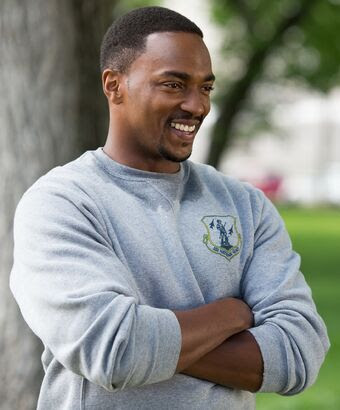
Wakko finding out he’s got a flat tire when he’s heading into work is a change to his life—it’s going to affect his whole day. Same with Dot spilling her coffee and having to stop and clean it up. Phoebe finding out her ex thought she was “comfortably dull” (yes, no matter what they were doing) is going to change her life. And to use an example I’ve mentioned before, Sam Wilson realizing the guy he’s trying to run laps against is Captain Americais definitely going to make some ripples in his life.

Keep in mind—the big change in Sam’s life comes much later, when Steve and Natasha show up at his place looking for a place to hide and learn Sam has some skills of his own. But the action of that opening scene… Sam’s just met an actual living legend and had a moment of bonding over their experience as returning combat vets. If nothing else ever happened, if Sam and Steve never saw each other again, we still know this moment would’ve had some effect on Sam, for the rest of that day if nothing else.

Simple enough, yes?

Okay, here are my two little additions/provisos to this rule.

One is that this life changing event doesn’t need to be connected to my main plot in any way. Or even a subplot. It can be, sure, but it doesn’t have to be. It’s more about giving us a first impression of the character. Wakko’s flat tire doesn’t need to lead to the bigger overall story. The opinions of Phoebe’s ex don’t have to tie into a larger arc about relationships. And honestly, if you snipped that morning jog scene off The Winter Soldier and just began with Cap rescuing the ship at sea… what would really change, plot-wise? 

Two is a little trickier, but… it’s definitely worth keeping in mind. I’ve blathered on a couple times about the idea that characters should be used to things in their world. To the point that what would be amazing to us might be almost boring to them. With that in mind, I can start with something that might not be life-changing for the character as long as it would definitely be for the reader. Taking a gravity elevator-shuttle to the Moon is normal for Caliand Kurt, maybe even boring, but we can still appreciate the idea of kids bouncing around the cabin as people glide through the aisles and over seats. It’s nothing to them, but it’s something to us.

And one more time, just to be clear, there’s nothing wrong with explosions, car chases, and vampire kaiju. There’s absolutely nothing wrong with dinosaurs in mech suits. But these big action pieces need to work with my story as a whole. They shouldn’t be something I just wrestled into place so I can say my story starts with action.

Look at the opening of your book. Does it change somebody’s life? Because that’s the big goal here, right…?

Next time, I’d like to hit you with a rock.

Until then… go write.

May 12, 2020

ProTip

September 12, 2019 / 1 Comment

Name Brand

Oh, hey, have I mentioned Dead Moon lately? It’s out. It’s available. You should check it out if you haven’t already. It’s got zombies on the Moon, and you know you like zombies on the Moon.
But moving on…

I wanted to blather on about names a bit, because I read something a few weeks back that kinda went overboard with them. It’s a recurring issue, I think. Pretty sure I’ve talked about this before.

There was a school of thought a while back that every character should have a name. Every single character in my manuscript needs a proper, given name. I read through and I know the given name of the cabbie, the intern, the homeless guy at the freeway exit, the woman  ahead of the main character in line at Starbucks, the barista at Starbucks.  It doesn’t matter how important—or unimportant—they are to the story  They get a name.

I don’t know if this was something somebody was “teaching” somewhere or if it was just telephone-game advice run amok and gaining life and sentience and trying to conquer the internet. I saw this “rule” show up often on general writing forums and a LOT on screenwriting boards. Essentially, it makes things more real. Gives every character a little more dimension and life.

Thing is… this isn’t a rule. It’s just awful advice. I should never do this. Seriously.

Names are a form of shorthand—in real life and in fiction. It’s a quick label we slap on that collection of motivations, dialogue quirks, and physical descriptions we call the social-web-intersectionsthat are Wakko. But like any sort of shorthand or label, too many can get confusing. Two or three post-it notes around my computer can be helpful. Two or three hundred probably means I can’t see the screen and anything I need to remember is lost in the chaos.

That’s the other way names are shorthand. They let us know which characters are important. Yes, everyone’s important and special in real life, but within my story—within this fictional universe where I am a wise and powerful God who controls everything—are they really that important? Does some aspect of the story rely on my readers seeing them and noticing them and remembering them?

My personal rule is this–a character’s name in my manuscript should be what my main characters refer to them by.  If my main character doesn’t know their name, has no reason to, and never will… it’s a safe bet my readers don’t need to know it.  If they’re just “the cute barista” then odds are pretty good we, the readers, don’t need to keep all those quirks and descriptions in mind. We can devote that mental space to other things.

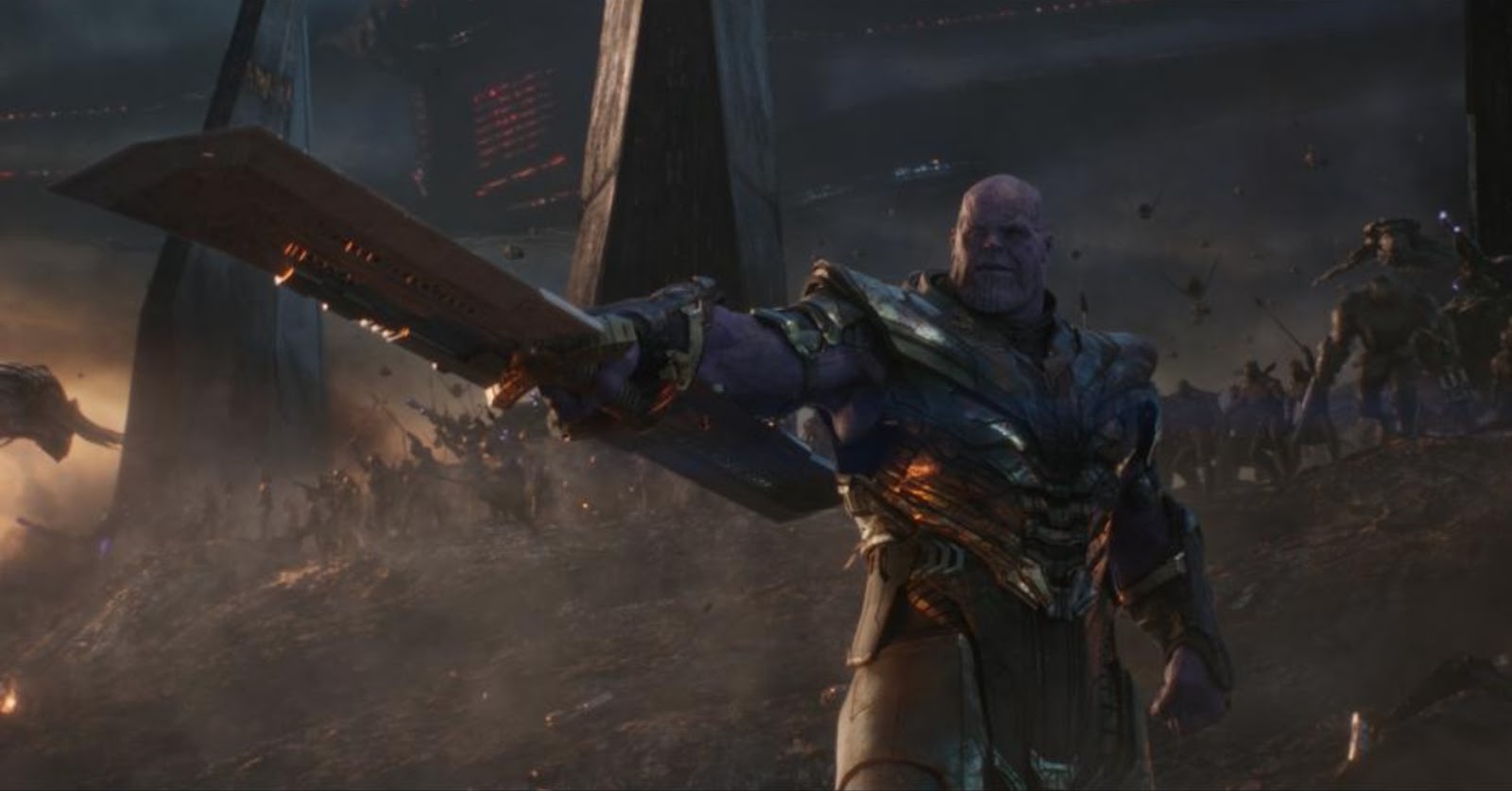
Lemme give you an example. A little indie arthouse film came out this summer called Avengers: Endgame. Not a lot of people saw it. On the off chance you were considering it sometime in the future, I’ll warn you that I’m going to drop a few spoilers in the next paragraph or three. Well, the same spoiler spread out across them. One point, discussed to some degree.

You may want to skip ahead, that’s what I’m getting at. Everyone else…

There are a lot of people in the final scenes of Endgame. Hundreds, maybe even thousands. That big battle? I mean, pretty much every superhero we’ve ever met. A bunch of sorcerers. Several tons of Asgardians (seriously, think of the bone density those people must have). And that’s just on our side. The big bad has two or three different alien armies, plus his little inner circle of specialists

So… what were their names?

I mean, sure there’s Cap and Tony, Thor and Hulk. Valkyrie, Captain Marvel, T’Challa, Shuri, Ant/Giant-Man, Wasp, Winter Soldier, and yeah, okay, there’s a bunch of them.  Plus all of Thanos’s people.  Proxima Midnight and Ebony Maw and….Urban Sprawl, I think, was the big guy? We never really got properly introduced to them, did we?

But what about everyone else? Can you name all the sorcerers who open portals? Any of the Asgardians who come through? That big space worm thing that Giant-Man slams into the ground? Surely they call it something, right?

Thing is, we don’t know. And we don’t need to know. Cap probably doesn’t know most of them past “more folks on our side” and “all of those things with Thanos.”

Hell, can you imagine if every one of those characters got a close up and a quick chance to introduce themselves? Seriously, how long would that take? How many would we actually remember? It’d be like speed-dating, except you’d know from the start a lot of them were going to die. Okay, so it’s a lot like speed dating. You get the point.

How about a non-spoilery version. I’m betting most of us here have worked some kind of basic retail/food service job at some point in our lives. Something where we had to deal with customers. I did both.  That said, how many of those customers can we name? Or if somehow this doesn’t apply, we’ve all been to a store or restaurant. Probably in the past two weeks. How many of the clerks or cashiers can you name? How many of the other customers?

And the reason we can’t name any of these people (Asgardians to waitstaff) is because they weren’t important to our personal story.  They weren’t relevant to the main plot (which was our lives, naturally). In the end, if my main character doesn’t know who someone is, there’s nothing wrong with just calling them the second mechanic or the doctor in the lab coat or even just the cute barista.

This isn’t to say we (or our characters) will never, ever come across someone who stands out but ultimately has no real effect on our story. Someone with an interesting name or appearance that elevates them a bit above the crowd. But those folks are the few and far between. They’re the exception, not the rule.
Y’see, Timmy, giving every character a name may feel like it’s showing how well-thought-out my world is, but in the long run it just breaks up the flow of my story.  It’s making my readers juggle pages and pages of potential characters instead of letting them focus on the ones that are actually going to be important.
Next time… we’re all going to get our revenge. Finally. It’s going to be glorious!

Until then… go write.

Categories