
September 24, 2016

Re- Formatting

            Not so much a pop culture reference as a tech reference.  Came up with that title and then remembered working with my first computer when I was… nine?  I remember having to format floppy discs before you could use them.  Anyone else remember that?
            Very sorry I missed last week.  Deadline crunch. Which I’m still in, really, but I didn’t want to miss two solid weeks in a row.
            Anyway…
            I was rewatching some episodes of an old show recently, and it struck me that it had a major format problem.  And as I mulled on it, it struck me I’ve seen this problem a few times before. Sometimes firsthand, happening right in front of me.
            I want to point out something… well, I’d say it’s obvious, but I don’t think it always is. I think it’s been muddled by a lot of would-be gurus and experts spreading bad information.  And since that’s what led to the ranty blog in the first place, well…
            Anyway, let me throw some wisdom at you.
            Novels are not comic books.
            Comic books are not television scripts.
            Television scripts are not movie scripts.
            Movie scripts are not stage plays.
            Stage plays are not novels.
            As I said, should be obvious, right?
            Thing is, each of those storytelling formats is unique unto itself.  Seriously. I can rattle off at least half a dozen inherent differences between any of them.
            We always hear people complain about changes when something is adapted from a book into a movie, but the simple fact is things have to change.  I cannot tell a story in a screenplay the same way I’d tell it in a book.  And I can’t tell a story in a motion picture script the same way it’d be told in an episodic television script.
            Let me give you some examples.
            Based off my own experience—as a crew person, a contest reader, and a screenwriter–I’d guess that 99.9% of all film, television, and stage work is done from the audience point of view.  The only parts that aren’t are the very limited POV shots that sometimes crop up in horror movies or thrillers(usually outside windows, inside closets, or across parking lots) and the rare experimental film like Hardcore Henry that was funded entirely by the powerful carsickness/nausea lobby.
            Contrast that with a book, where the author, with full control, can shift to any point of view they want. I can make the reader see, hear, and experience everything through one character’s senses, knowledge, and memories… and then shift to a different character.  There’s no real way to do that on film.
            However… a book is, for a lack of a better term, a one-source format.  I have to write things out.  There’s no way for the reader to know George has blond-brown hair without me putting “George has blond-brown hair” down on the page.  I might be able to get a little subtle with it, maybe pull some literary sleight-of-hand, but at the end of the day all I can do is put words on the page.  That’s it.  I can’t slip in some details in the background, because everything in a book is presented in the foreground—right there in front of my reader on the page.
            If I’m writing for television, I also need to be aware of the very specific format that most television writing requires.  Episodic shows are usually done with a four or five act structure (not to be confused with three act structure, which is kinda-sorta something else) which requires my story to have a series of mini-cliffhangers where the commercial breaks will be.  If it’s a show with an arc, it also needs to address that a week’s passed since the last episode, and some story points may need to be repeated or re-addressed to cut down on audience confusion.

            Of course, if I’m writing for, say HBO or Netflix, then that doesn’t apply and I have a bit more freedom, structure-wise.  These episodes are almost more like mini-movies.  Except that now I need to be clear people may be binging these stories, watching them back-to-back-to-back, and take that into account.

            Stage writing is also unique because it’s happening right in front of us. There’s an inherent storytelling conceit that we’ll accept these actors don’t see us.  Or that they’re not actually in a forest.  Or they can’t hear that guy behind the tree bellowing his lines out to the back of the theater. This is a different kind of storytelling mechanic, and that’ll be reflected in my writing.
            And none of these are like comic books. Comics are this fantastic medium where we can have an active, flowing story that’s being told completely through static images.  So my comic script has to reflect this. Each panel has to be a single moment, and it has to be the right moment to convey the most impact and information while still flowing smoothly into the next moment I choose to continue the narrative.
            You’re wondering why I’m talking about all this, yes?
            These days it’s not uncommon for a story—or a storyteller—to jump mediums. As I mentioned above, we’ve all seen a ton of books and comics adapted for the movies.  I know several novelists and screenwriters who’ve worked in comics.  I’ve worked with theater directors and playwrights on film projects.
            Thing is, a story can’t go directly from one format to another.  The devices and mechanisms I use here won’t always work here.  Usually won’t, in fact. And I need to be able to make those adjustments.  A really common mistake I’ve seen is when people just yank a story from one format to another with no changes.  Or when they start using the conventions of one format in another
            That show I mentioned up at the top?  In one episode it had three reveals. Thing is, each one was essentially revealing the same thing.  But the filmmakers had assumed since Yakko was the main character for that scene, and Dot was the central figure in that scene, and Wakko was the focus of the final scene… well, they could do the dramatic, big music reveal for each of them.  Alas, it just doesn’t work that way, because—as I mentioned above—we can focus on different characters but it’s all really audience POV.  So the second time around it was more eye-rolling than dramatic and the third time was… well, laughable.
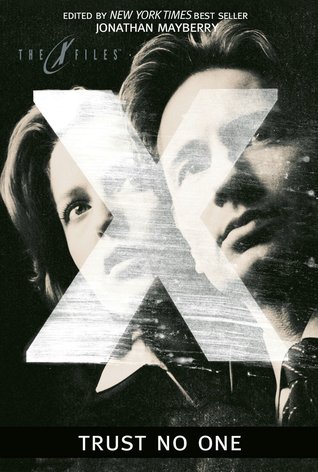
            Last year I had a chance to be in an X-Files anthology.  Truth is, though, the main spine of my short story actually came from a spec script I’d written for an old TV show called The Chronicle.  And I had to make adjustments for that.  Most notably, all those mini-cliffhangers in the story had to be smoothed out.  Some things had to be described much more than they were in the script, because now all those details actually had to be on the page.
            Y’see, Timmy, if I want to shift a story from one format to another, I better understand the conventions and limitations of each one.  And if I want to write in a different format. I need to learn that format as well as I know my current one.  I can’t just go in assuming it won’t matter, or that I’ll be the exception who gets to slide.
            So know what you’re writing.  And how you’re writing.
            Next time, I’d like to talk about some artsy character stuff.
            Until then, go write.
October 23, 2015 / 4 Comments

Yeah, That’s True, Except…

            Okay, this is late.  A week and a day.  Do you want excuses?  I was away at New York Comic Con and then came home to layouts I needed to go over, on top of all the things I just needed to get caught up on. 
            So, that ate up some time.  Sorry.
            Anyway, I’ve mentioned this idea before, but a few recent blog posts and comments I’ve seen made me want to bring it up again.  If we’re going to talk about writing, we need to agree that any such discussion is going to get broken down into either rules or advice.  Or drinking, but that’s not relevant right now.
            Right now, I’d like to talk about the rules.
            Rules are things that all of us, as writers, have to learn.  No questions.  I need to learn what words mean and how to spell them.  I must have a firm understanding of grammar.  A solid grasp of structure is required.  Characters have to hit certain benchmarks. You may notice these things come up again and again when discussing good writing.  There’s a reason for that, and it’s not that professional writers and publishers and editors are all jerks.  Learning the rules means study and practice and failure and more study and more practice and more failure. 
            Why do I bring this up?
            See, I brought up the rules because they’re a good lead in to what I actually wanted to talk about.  Exceptions.  Those cases where the rules don’t apply. Some people love exceptions.  They approach them two different ways, but usually to get the same result.
            Allow me to explain.
            The thing about rules, as so many people have said, is that I have to learn them so I can understand when and where and how to break them.  Because all the rules are breakable.  Never doubt that.  Pick any rule I mention above, or any other rule I’ve ever blabbered on about here.  Mention it in the comments and I’m sure some of the other folks here can give a dozen examples
            Now, some folks think if the rules can be broken anyway, well, why should I bother learning them?  Richard Matheson and Daniel Keyes wrote stories with lots of spelling mistakes. Cormac McCarthy and Peter Stenson don’t use much punctuation.  If they don’t need to do all this, why should I bother learning it?
            Y’see, this mentality means I’m looking at the exceptions, not at the rule.  Yeah, I can point to a handful of stories that break the rules, but I can also point to tens of thousands that don’t.  More importantly, I can point to hundreds of thousands that broke them and were rejected for it.
            Here’s another way to think of this.  Driving a car means following the speed limit.  The exact numbers vary from state-to state, but we all acknowledge that driving in a school zone requires that I travel at a certain speed. So does going through a residential area or traveling on a freeway.  Makes sense, yes?
            An experienced driver knows there are situations where I can flex those rules, though.  There are times I can go a little faster through school zones or residential areas and not worry about it.  In all honesty, I’ve driven over seventy on the highway next to a police officer and only gotten a raised eyebrow.  A lot of you probably have similar stories.
            And yet… none of us are assuming traffic laws and speed limits no longer apply to us.  We just know how to work within the framework of the laws and when we can step outside of it.  We know the rules and we know how and when to break them.
            Contrast that with the guy who goes roaring through a residential area at 70mph in the middle of the day… and then gets annoyed with the officer who pulls him over.  He’s assuming he’s the exception.  He’s doing the same thing I did, but… he’s really not, is he?
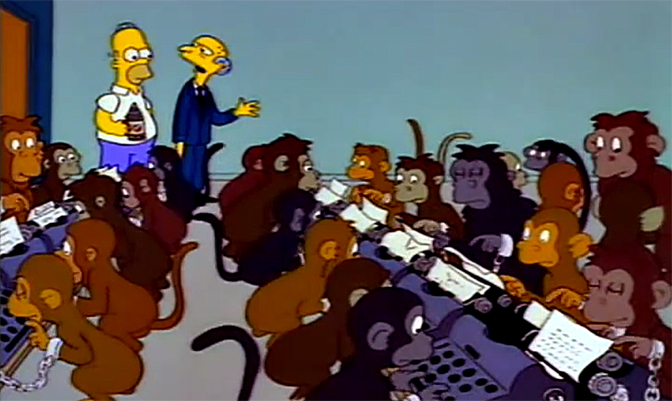
            I can’t start with the assumption that I’m the exception.  That the rules or requirements don’t apply to me.  I’m always going to be bound by the same rules as every other writer, and I’m going to be expected to follow them.  Until I show that I know how to break them.  If I don’t know what I’m doing or why, I’m just a monkey pounding on a typewriter, unable to explain how or why I did something and also probably unable to do it again.
            Also, monkeys do not get paid well.
            Now, there’s another mentality I’ve encountered a lot of online.  This is that other way of viewing exceptions that I was talking about.   They’re the folks who use the exception to the rule as a means of dismissing the rule as a whole.  For example, you say every writer needs editing.  Except, I say, Yakko published his book without editing and it did very well.  Ipso facto, writers do not need to edit.  That rule’s out the window and can be ignored. I could probably give a dozen examples of this without trying, I just don’t feel like writing them all out.  Besides, you’ve probably seen them, too.  Everything I mentioned as a rule up above—and dozens more—there’s someone, somewhere right now arguing that’s a stupid rule that this exception proves doesn’t matter.
            Now, to be clear again, I’m not saying these exceptions don’t exist. That’d be silly—they clearly do.  But it’s important to understand that they are the exception. They’re the unusual rarity, not the common thing.  That’s why we’ve heard of them.  Just because there were a hundred news stories about a writer who turned in a handwritten manuscript on yellow legal pads and got it accepted does not mean the publishing industry prefers handwritten manuscripts or legal pads.  We’re only hearing about it because it’s such an oddball thing to happen.
            Now, I try to point out such things when I can, and I think I’ve been pretty open all along on the ranty blog that exceptions do happen.  But I don’t really push them. Honestly, if I had to offer or explain every exception to every rule, this blog probably never would’ve made it past the second or third post.  And each one would be the equivalent of thirty or forty pages long.  This is kind of a teaching 101 thing.  As I said above, you learn the rules, then you learn the exceptions to the rules. 
            Y’see, Timmy, exceptions don’t disprove the rule—they prove it.  Always.  If not editing or handwritten legal pad manuscripts actually demonstrated that these rules don’t matter, then shouldn’t we be seeing hundreds of examples?  Maybe thousands?
            And yet, we don’t.  The majority of our examples are still people following those basic rules.  And flexing them here and there where they can.
            So why do some people do this?  Why do they convince people to ignore the rules?  We could probably debate that for a while.  Regardless, it’s kind of like looking at a thousand cancer patients, finding that one person who spontaneously went into remission, and then loudly declaring no one needs chemo or to get those growths removed—cancer cures itself!  First, it’s just plain wrong. Second, it belittles the 999 other people who are all struggling to do things the right way and undermines the folks trying to help them.
            Exceptions are great.  They’re why all of us can do so much as writers.  But exceptions can’t be my excuse not to learn.  All these rules have developed over the decades for a reason, and they apply to all of us.
            No exceptions.
            Next time, I’d like to take a quick minute to reveal something.
            Until then… go write.
September 25, 2014 / 2 Comments

The Muse and Cake

            Okay, I’ve had a couple of deadlines shift, so I’m not going to be able to talk about Clint Eastwood like I planned.  Instead, I’d like to share a few quick observations about the muse that crossed my mind a few days ago.
            There is no muse. 
            The muse is a lie. 
            There is only you. 
            Writing is work.  The muse is not going to do the work for you because the muse, as I said, is a lie.  The muse is not going to sort out that plot snarl or polish that dialogue or put down those one thousand words today.  The only person who will do that work is you.  That’s the ugly truth.
            The idea of the muse has been pulled from mythology and perpetuated by modern writing classes and gurus to excuse lazy behavior.  It’s an artistic, pseudo-intellectual scapegoat.  People who don’t feel like writing, who don’t feel like solving problems, they blame the muse.
            Waiting on the muse is another way of saying wasting time.  Every day you wait on the muse is a day someone else is writing more than you.  A day someone is getting more experience than you.  A day that someone is getting better than you.
            Stop waiting on the muse.
            Write.  If you want to write, if you want to be a writer, if you want to become a better writer, you need to write.  You’re going to write a ton of stuff and a lot of it is going to be crap.  But that’s how we get to the good stuff.  By working at it. 
            Not by waiting for the muse.
            Next time, Clint Eastwood.  For real.
            Until then, go write.

            No excuses.  Go write.
August 30, 2014 / 2 Comments

The Plimoth Experience

            Very sorry this is so late.  I mentioned last time that I was working on a major rewrite of the new book which was due last week.  Then I looked at it again over the weekend and asked my editor if I could take another pass at the last fifty pages before he read it.  And he said I could, because he’s very forgiving of my screw-ups since I own up to all of them.  Which is why I’m late this week.
            But enough with the excuses.
            Speaking of last time, it struck me a while back that I’ve never talked about why I end every one of these little rants with “Go write.”  Is it supposed to be a clever catchphrase or something?  Encouragement?
            Let me answer that by telling you a funny story about Plimoth Plantation.           
            No, it’s relevant.  Really.
            While I mostly grew up in Maine, I spent my high school years in Plymouth, Massachusetts.  Yes, the same Plymouth as the rock and the Pilgrims and the Mayflower and all that.  One of the big tourist attractions is Plimoth Plantation, a recreation of the original colony (with original spelling) complete with actors playing specific historical roles.  You can walk in and the colonists will talk to you, answer questions, and usually ask about your odd (modern) clothes.
            Every year in Plimoth Plantation is 1627.  It replays again and again, following the historical record.  Births, deaths, marriages, and so on.  A friend of mine worked there for a few years with her parents, and because of her age she was assigned a specific role.  Part of her role was getting married at the end of the summer to another historical  character, Experience Mitchell (ahhh, have to love those Puritan names).  The catch was that my friend was kind of interested in another Pilgrim.  So on “the big day,” one of her co-workers gave her a wedding gift in the changing room, a t-shirt that said…
            Experience is what you get when you don’t get what you want.
            I laughed when she told me about it, but the phrase stuck with me.  Mostly because it’s true.  If you talk to anyone who’s considered experienced, it’s because they failed or screwed up.  A lot.
            Now let’s jump forward a bit.
            Comic writer and artist Brian Michael Bendis has a new book out called Words For Pictures.  We happen to have the same publisher (well, where this book’s concerned) and the director of marketing slipped me a copy while I was at San Diego Comic-Con last month.  I read it as soon as I got home.  It’s great, you should buy a copy.
            Words For Pictures is mostly (as the title implies) about writing for comics.  But there’s a lot of solid advice in there for writing in general.  In fact, it was interesting to see that Bendis addresses a lot of the same points in his book that I have here on the ranty blog.  In pretty much the same ways.
            One of them is this.  To be a writer, I need to write.  I need to write a lot.  You’ve probably heard this before.  Many people have said the same thing.
            Here’s the part you probably haven’t heard.
            The reason everyone says to write a lot is that we’re all going to put out a lot of crap. 
            Tons of it. 
            I believe it was Neil Gaiman (in one of his books) who said that everyone has at least three great stories in them.  While I believe this is true, I think there’s an unspoken corollary there which is just as important.  All of us have lots and lots of bad stories in us.  Dozens of them.  Maybe even hundreds.  We have contrived plots, weak characters, awful dialogue, and  terrible structure
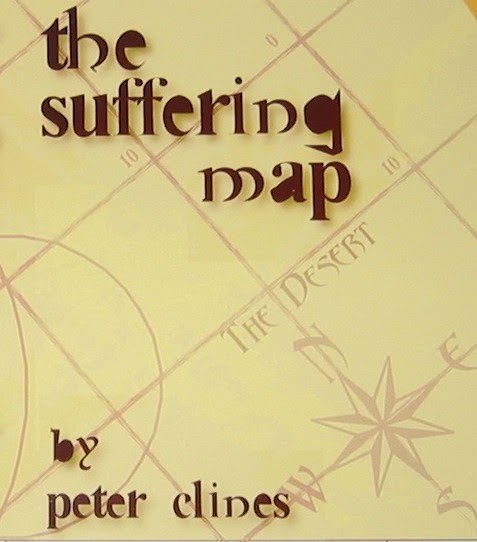
            I wrote a ton of bad stuff that none of you ever have—or ever will—see.  I spent about twenty years getting out all my bad stories and habits.  My first attempt at a novel (in third grade), Lizard Men From the Center of the Earth.  My Doctor Who and Boba Fett fan-fiction.  My middle-school sci-fi novel.  My junior high fantasy novel.  My high school werewolf-detective novel.  My college novel, The Trinity.  My after-college-moved-to-California novel, The Suffering Map (which went through eight or nine full drafts).  Plus a ton of comic scripts, short stories, screenplays, and I think even one or two attempts at stage plays.  Thousands of pages.  Thousands of hours of work. 
            Some of you may have noticed I’m in no rush to self-publish these, despite the constant assurances from some quarters of easy money. 
            Why?
            Because, pretty much across the board, they suck.
            My early work sucks.  It’s bad.  I spent days and days writing stuff that should never see the light of day.  I have no problem admitting it.  In fact, it was being able to admit it that let me move from being a random dabbler to a serious writer.  I dug through all the bad stories and found the good ones underneath.  Maybe even one or two great ones.
            Writing all those stories was my experience.  Whenever you hear about an overnight success or an amazing “first” novel, odds are that writer really has a long string of work—and a lot of failures—behind them.
            We accept that in every field of work someone needs a certain level of mastery and experience before they’ll be considered a professional.  Taking an auto shop class in high school doesn’t make me a mechanic, and taking a CPR class doesn’t make me a doctor.  Home Ec didn’t make me a chef, and oddly enough the White House hasn’t called me about any foreign policy decisions, despite my B+ in history. 
            And these people have screwed up, too, on their path to being a professional.  Ask your mechanic and she or he probably broke a couple cars while learning how to fix them.  Lots of doctors misdiagnose patients, and some patients die from these mistakes.  Your favorite chef cooked a lot of really bad food over the years.  Some of the better politicians are the ones who admit they were wrong about an earlier position they held.
            And we understand that in all of these fields, these mistakes are part of the learning curve.  I don’t get the success, but I get the experience.  It’s why it takes so long to become a doctor or a chef or even a mechanic.
            Or a writer.
            This is one of the reasons I harp on spelling so much.  It’s an easy-to-spot symptom that usually implies bigger problems.  If my manuscript is loaded with spelling mistakes and misused words, it means I don’t know how to use my tools.  And it also means I didn’t really spend a lot of time (if any) on my drafts and polishes.
            Y’see, Timmy, at the end of the day this is all up to me.   It’s not someone else’s responsibility to make my book good.  It’s mine.  If I can’t spell, have a weak vocabulary, poor plots, thin characters, flat dialogue… that’s all on me.  Which is why I asked my editor to hold off reading this new draft so I could fix some things.  Part of being a professional is knowing how to do all this stuff and, well… doing it.
            There’s an all-too-common belief that just finishing something means it’s good.  That the act of struggling to finish that first novel is the experience I need to call myself a good writer.  I mean, I made it all the way through to the end of a novel on my first try.  That’s a lot of writing.  That novel must be worth publishing and being read, right?
            But the truth is, the vast majority of first novels are awful.  The second ones are pretty bad, too.  The third ones are at least tolerable.  Ex-Heroes might’ve been my first novel that was published, but it was my seventh-and-a-half attempt at writing one.  And, as I mentioned above, I’m really glad it was the first one people saw.
            Because that junior high fantasy novel… man, that was embarrassing.  On so many levels.
            Next time, I’d like to hit another problem right on the nose.
            Until then… go write.

Categories