
So, hey, now I’d like to alter the mood a little. Let’s talk about this whole Black Friday thing and the holidays and being poor for a couple of minutes.
Because being poor at the holidays absolutely, completely sucks.

Being poor’s just a constant feeling of tension.  Of being painfully aware of what you don’thave and what you can’t do.  And for the past ten or fifteen years, a lot of folks have made it painfully clear that they judge you because of that. They find you lacking as a person because of your poverty.

And it’s even worse at the holidays. So much of the holidays is about giving, and when you’re poor you just… you’ve got nothing to give. It doesn’t matter how much you care about that person, it doesn’t matter how much you want to.  It doesn’t matter because you’ve got nothing.
And again… you can feel people judging you over it.  At every office party or gathering of friends or family dinner.  You get judged for being trapped and powerless. Hell, you end up judging yourself, and it just becomes this endless cycle of guilt and resentment and desperation.

It sucks.

And, yeah, as some of you know, I’m speaking from experience. I’d saved a little money before I became a full-time writer, but two or three random-but-normal problems—car repairs, a sick cat, a pay cut at the magazine I wrote for—and wham I was poor. I mean… nothing. Cards maxed out. Stretching every paycheck until it was tissue thin. The phone got shut off. My partner and I didn’t turn the heat on for three winters in a row. We stole toilet paper from the library. Pretty much everything we ate came from the 99 Cent Store. Frikkin’ Shane Black offered to sit down and talk with me over coffee for an article I was working on. And I had to turn him down ‘cause I couldn’t afford the gas to get me across the city to where he was. Hell, I didn’t have enough money to buy a coffee.
Look, some folks just love to snort and blabber about “entitlements” and “nanny states,” but the simple truth is that the vast majority of poor people don’t abuse the system. They’re way too busy just trying to survive with their health and maybe just a shred of dignity. And I say that as someone who spent three years constantly on the edge of panic and feeling sick with despair.

And holy hell I hope that none of you reading this are there right now, feeling helpless and sick with despair. Because like I said before, it seriouslysucks to be in that position.


But if this is where you are right now—if you’re in that same crappy place I had to be in for three Christmases in a row—maybe I can help.

If you  can’t afford gifts for your friends or family, get in touch with me at my old business email–PeterClines101@yahoo.com. I’ve got about two dozen books here, I think, that I’ll autograph to whoever you want and mail out to you. Or to someone else, if you need it shipped. I can even gift wrap if you need it (seriously, I am a fantastic gift wrapper). Most of these are paperbacks of Paradox Bound, but there’s six or seven other things in here, too. Think I might still have two or three of those big audiobook CD sets, too. If audiobooks work better for your special someone, just say so. You can request a specific book but I can’t promise anything.

Past that, though… I’ll send them out for as long as the books last. If you need some help this season, just ask

Again, this is only for those of you who need some help getting gifts for others. The people who are pulling unemployment, cutting back on everything, and feeling like trapped because they can’t afford gifts for family or friends.  It’s not so you can recommend someone who might like a free book.  You could do that for them, too—go get them a book. They’ll love you for it.
Speaking of which—look, whenever I do this folks offer to chip in and help out. Like I just said, you don’t need me to do that. You can go be fantastic people all on your own. Seriously, I’m willing to bet cash money there’s a toy bank or a food bank or some kind of program within ten or fifteen miles of you right now.  You could help out with that.
Also, I’m also doing this on the honor system, so if you’re just trying to save yourself some money or score an autographed book… well, I can’t stop you. But let’s be clear—if you do, you suck. You’re a deplorable person who’s taking a moment of peace and relief away from someone who really needs it this holiday season. Don’t act surprised when karma kicks you hard in the ass over New Year’s.
Anyway, Happy Holidays. Let me know if I can help out
November 26, 2019

Word. By. Word.

Thursday’s Thanksgiving and my parents are coming into town tomorrow, so I’ve got a lot of cleaning to do. No post on Thursday. But I had a simple idea I’d been meaning to toss out to you for a while now and this seemed like a good time.
Random theory of mine, probably not all that original. I think we tend to batch-read words. We tend to look at larger text elements—the clauses and phrases and sentences, rather than the individual words that make up those elements. I mean, you’re doing it right now. You’re not picking out the individual words, you’re reading this as a whole. And that’s a good thing. It’s what we want readers to do. It means my writing has a great flow to it.

But…

By the same token, this can make us kind of blind to things in our own work. Once we’ve written a sentence, we tend to gloss over it. Especially after reading it three or four times. We get overly-familiar with it. Even when we’re re-reading it in an edit draft, a lot of the time we’re just taking in the big picture and not looking at what’s actually there on the page.  It’s how we can read a sentence a dozen times and never notice that glaring typo in the middle of it. Or not notice there’s a word missing altogether.  Or that twice on this page we refer to Stu as Ted, but we don’t think about it because we know Stu was called Ted in an earlier draft and so they’re the same person in our heads.

That kinda thing.

So here’s my quick tip for you.  Do at least one pass where you  don’t read your story. Read the words on the page. Actually look at each individual word there on your screen  and. Read. Each. One. Of. Them.

Yeah, it’s slow. And it’s tough. That sounds silly, I know, but it is super-tough to go through a story this way. Especially a story we know. You need a ton of patience and focus. But I guarantee you’ll find dozens of things that were missed on earlier passes.

In fact, here’s a tip for that tip. Before you do this pass, change the font on your whole document. If you normally write in Times, switch it over to Courier. If you normally write in Courier, switch it over to Times. If you normally write in Wingdings, what the hell’s wrong with you? Seriously, nobody’s going to be able to read that. Put it in Times, make everybody’s life easer.

Anyway… remember what I said about how we get overly-familiar with things? Well y’see Timmy, by changing the font, I’ve just made the whole document unfamiliar to me. The spacing’s different. Things will sit on each page in new ways. Which means I’ll be looking at it with fresh eyes, and things will be a little easier to catch.

And there you go. This writing tip has been brought to you by cranberry sauce. And by Nana’s special holiday rolls.

Next time… well, look. Black Friday’s coming up, and if you’ve been here for any amount of time you know what I’ll be talking about. And then there’s Cyber Monday, plus NaNoWriMo will’ve been wrapped up for a couple of days. I’m going to be blabbing about a lot of stuff for the next week or so. Check back often.

Until then, go write.

November 21, 2019

Do You Think I’m An Idiot?

No, no… don’t rush to answer that. I’m pretty sure I can guess how most of the comments section would go.
However…it is an important question, whether I’m writing books or screenplays. The folks who just bought my new Lovecraftian techno-thriller aren’t expecting a long lesson about how memes work. If I’m billing myself as the next Dan Brown, the clue “man’s best friend” better not leave half a dozen codebreakers baffled as to what the three letter password is for the doomsday device. Heck, even if I’m hired to pen the next Pokemon movie, I probably shouldn’t spend a lot of screen time explaining all the medical reasons why little kids shouldn’t drink paint.
Cause let’s face it—nobody likes to be called stupid.  Not even kids.  Heck, especially not stupid people.  We all hate being condescended to and having things spoon-fed to us at a crawl. We get angry about it. At best we get frustrated with the person throttling the speed we can absorb things at.
So, having established that nobody likes being considered an idiot, it stands to reason most people like to feel smart, right? And that includes my readers. I want them to like my stories, not feel angry or frustrated because of them.
But a lot of stories assume readers are stupid. They spell everything out in painful detail. They drag things out. They repeat things again and again and again. These authors think their readers won’t know or understand or remember anything, and they write their stories accordingly.
So here’s a few easy things I try to do so my readers feel smart and they’ll love my stories…
I know what my audience knows
I’ve talked a couple times here about empathy and common knowledge. It’s stuff I can feel safe assuming everyone knows. Grass needs water and sunlight to grow. Captain Americais a superhero. Nazis are still the bad guys. Maybe you noticed that a few paragraphs back I rattled off Lovecraftian, Dan Brown, and Pokemonwithout bothering to explain any of them. I know the folks reading this would have—at the very least—an awareness of these words and names. Knowing what my specific audience knows is an important part of making them feel smart, because this is what lets me judge what they’ll be able to figure out on their own.
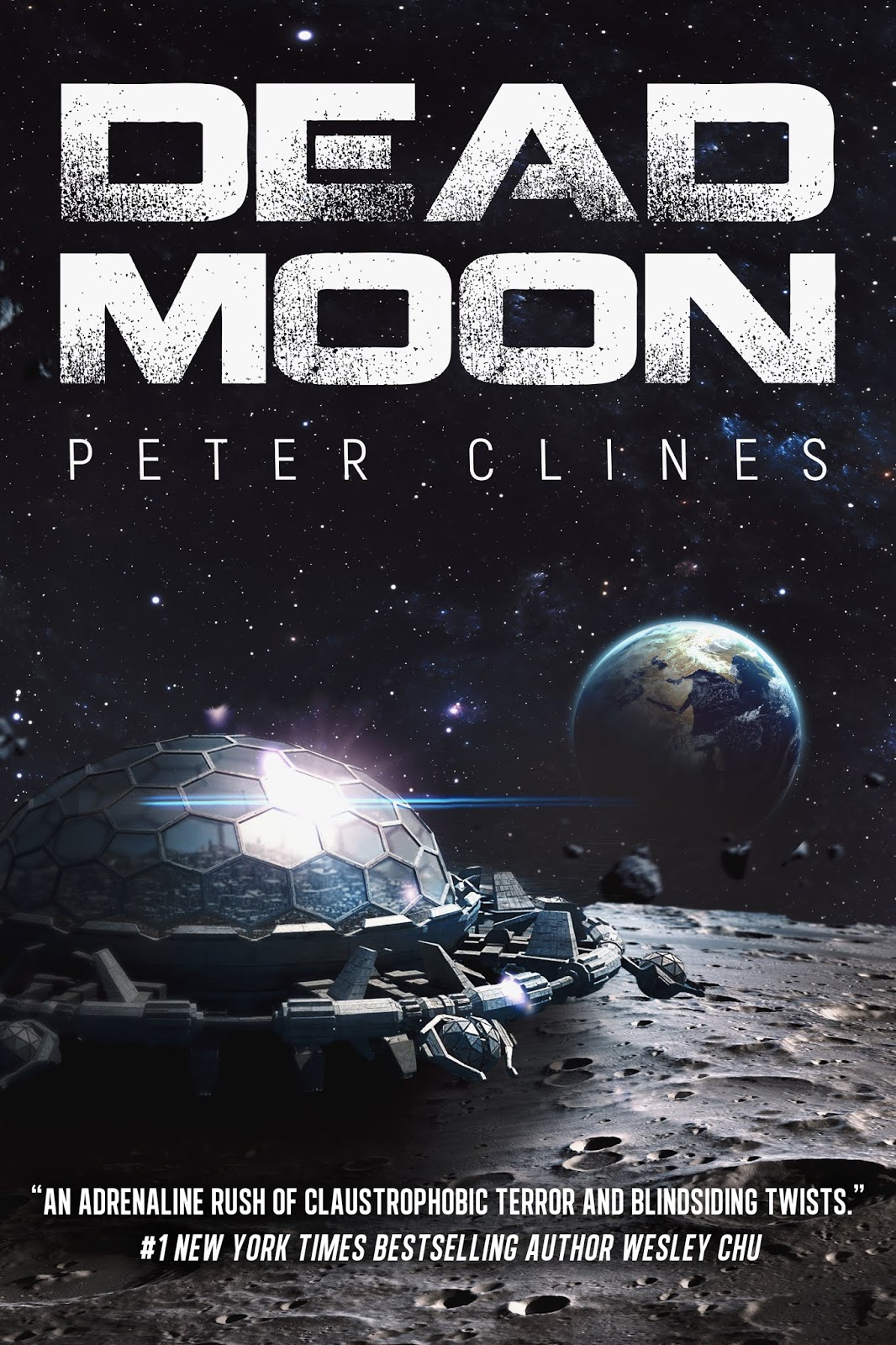
This goes for things within my story, too. Yeah, odds are nobody’s ever heard the term Caretaker used precisely the way I use it in Dead Moon, but I don’t have to keep explaining it. I can make a couple references at the start and then just trust that my readers will remember things as the story goes on. It’s a completely made up word, but I bet most of you know what a Horcurx is. Or a TARDIS. Or a Mandalorian. They don’t need to be explained to you again and again.
I try to be smarter than my audience
There’s an agent I’ve referenced here, once or thrice, Esmund Harmsworth. I got to hear him speak at a writing conference years ago and he pointed out most editors will toss a mystery manuscript if they can figure out who the murderer is before the hero does.
Really, though, this is how it works for any sort of puzzle or intellectual challenge in a piece of writing. If I’ve dumbed things down to the point of simplicity—or further—who’d have the patience to read it? It’ll grate on their nerves, and it makes us impatient when we have to wait for characters to figure out what we knew twenty minutes ago.
I don’t state the obvious
Michael Crichton got a very early piece of writing advice that he shared in one of his books. “Be very careful using the word obvious. If something really isobvious, you don’t need to use it.  If it isn’t obvious, than you’re being condescending to the reader by using it.”
Of course, this goes beyond just the word obvious. Revisiting that first tip up above, should I be wasting half a page telling my readers Nazis were bad? When Yakko staggers into a room with three knives in his back just before collapsing into a puddle of his own blood, do I need to tell anyone that’s he’s seriously hurt? I mean, you all got that, right?
I take a step back 
When something does need to be described or explained, I think our first instinct is to scribble out all of it. We want to show that we thought this out all the way.  So we put down every fact and detail and nuance.
I usually don’t have to, though. I tend to look at most of those explanatory scenes and cut it back 15 or 20%. I know if I take my audience most of the way there, they’ll probably be able to go the rest of the way on their own. People tend to fill in a lot of blanks and create their own images anyway, so getting excessive with this sort of thing rarely helps.
I give them the benefit of the doubt

This is the above tip, but the gap’s just a little bigger. Three-time Academy-Award-winning screenwriter Billy Wilder said if you let the audience add 2+2 for themselves now and then, they’ll love you forever. That’s true for writers of all forms. Every now and then, just trust they’ll get it. Not all the time, but every now and then I just make a leap of faith my audience can make a connection with almost no help whatsoever from me. Odds are that leap isn’t as big as you think it is. 

Y’see, Timmy, when I spell out everything for my audience, what I’m really telling them is “I know you won’t be able to figure this out on your own.”  My characters might not be saying it out loud, but the message is there.  You’re too stupid for this—let me explain.
And that’s not going to win me a lot of return readers.

Hey, next week is Thanksgiving here in the U.S. and my parents are coming  to visit for the holidays and hahhaaaha I’m not stressing about it YOU’RE STRESSING HOW IS IT THE END OF NOVEMBER ALREADY OH CRAP

…sorry, that was a typo. What I meant to say was it’s Thanksgiving so I’ll probably just do something quick on Tuesday or Wednesday. And after that… well, if you’ve been following the ranty blog for any amount of time you know what I’ll be talking about on the day after Thanksgiving.

Until then, go write.

Categories