December 10, 2010

A Brief Interlude

I’d hoped to have time for a little rant on drafts this week, but it just hasn’t worked out that way. I blame The Green Hornet. If it hadn’t been so good, I wouldn’t’ve had to do more work on the article.

Anyway…

So, I’ve got nothing for you but this little gem my lady love discovered. Full credit goes to creator David Kazzie who runs a nice blog called The Corner. I’m sure everyone reading this has been in this conversation before, either in person or somewhere here online.

The real question is, which side of the conversation were you…?

Next week, the draft.

Until then, go write.

December 3, 2010 / 3 Comments

Going Over The Wall

This week’s title is one of those references that only works if you watch a lot of prison movies. Or maybe if you remember living with the Berlin Wall. Or if you’re a 1200 year old Mongolian.

Okay, I guess it works for a lot of people.

You know what gets skimmed over a lot? The paragraph. No, I’m not making a writer joke. Think about it. In school you learned about simple sentences, complex sentences, sentence components, sentence structure, and more. As someone who came pretty close to being a high school English teacher, it wouldn’t surprise me if you ran the numbers and found out half of all English and grammar instruction revolves around sentences.

Now, granted, the sentence is one of the basic building blocks of all writing. Words may be your electrons and protons, but until they’re in a sentence they’re not really doing anything (unless you have some sort of literary particle accelerator, but that would be dangerous and reckless to use). They’re vague abstractions on their own. Once you start linking them together, that’s when the fun begins. That’s when you get to express thoughts and ideas and memories and dreams. So learning about sentences and how to construct them is an invaluable skill. Without it we’d all be muttering “fire bad” or “Hulk smash” and gesturing a lot.

The next step up–in both construction and in skill–is the paragraph. It’s a group of sentences that have related ideas behind them and they come together to express bigger thoughts and more complex ideas on a given topic. As such, it’s kind of sad that the paragraph only gets a small amount of attention from most instructors. Heck, I’ve got a baker’s dozen of writing books that I’ve collected over the years and you know how many of them have “paragraph” listed in their index? Two.

Let’s go over a couple of the basics of paragraphs. Most of you probably remember these from grade school, but it’s probably not a bad refresher for all of us. Including me.

First off, as I mentioned above, a paragraph revolves around an idea. It’s almost always a single topic. Keep in mind “a topic” can encompass a lot of things. For fiction purposes, think of it as a single step or beat. Solving a mystery is a topic. So is realizing you’re in love. Kickboxing with the enemy, downloading MP3s, reading a book, getting eaten by one of the Elder Gods– these are all topics. Any one of these simple ideas can get fleshed out into a paragraph with more description and additional details (and sometimes into more than one paragraph)

This brings us to the topic sentence (yeah, your skin’s starting to crawl a bit, isn’t it? That fifth grade English class is coming back to you now). In simple terms, the topic sentence sums up the rest of the paragraph. It sets the stage, so to speak. The topic sentence gives me, the reader, an idea what the paragraph is about. For example, look back to the first sentence of this paragraph. It lets you know that this block of text is going to be about topic sentences. Make sense?

More often then not, the topic sentence is the first sentence of a paragraph. It doesn’t have to be, mind you. In more casual, conversational prose it can end up as the second or third sentence. If you’re presenting facts, it might even come at the end, like a lawyer summing up his or her case for a jury ( “…and that’s why Superman could beat Mighty Mouse in a fight.”).

You should also have some kind of a closer. It doesn’t need to be “Now I am done,” but it should be apparent that this particular bundle of information is now complete. As I mentioned above, sometimes your closer can be your topic sentence. The important thing is that a paragraph just doesn’t drift off at the end. One simple way you can prevent that is this.

Of course, the real question here is… so what? Are paragraphs really that important? If they were, more than two out of thirteen books would talk about them, right? They can’t be that big a deal.

Stop. Did you catch that two paragraphs back? Awkward as hell, wasn’t it? It stumbles because it ends with a sentence that should be leading directly into another one. Not only that, but said sentence is actually expressing a separate idea. The main paragraph is about the need for a closer, but the last sentence is about a method of preventing awkward endings. It should really be the first sentence of the next paragraph, with further explanation coming after it.

There is no simple method of prevention, by the way. Well, there’s “don’t do it,” but that seems like kind of a cop-out answer.

Anyway…

If you don’t have paragraphs, what you have is a wall. We’ve all seen them. In books, sometimes in scripts, and probably a fare share of time here online. Heck, I dealt with it here on the ranty blog just a few weeks ago. It’s when the page is simply filled with words. No breaks. No pauses to breathe. Every single line hits the left hand margin for as far as you can see. It’s intimidating. It makes us cringe back almost instinctively. The reader’s overwhelmed by this monster block of text that incorporates four or five or more topics.

Y’see, Timmy, paragraphs make a story easier to read. In the same way that punctuation slows and regulates the flow of words, making sure the reader gets the words at the pace the writer intended, paragraphs break the story up into bite-sized bits. You don’t want to eat all the food in a meal at once (which is why you have sentences) and you also don’t want to eat all your meals for the day at once (which is why you have paragraphs). The wall of text is one of those horrific force-feeding fetishes, where the author is just cramming more and more and MORE and MORE down the reader’s throat.

When used correctly, paragraphs help tease the reader on. One sentence leads into the next. Each paragraph leads into the next. Chapters complement each other (but never, ever compliment each other). This is what gets readers hooked on your writing, and once or thrice here I’ve referred to it with the term flow. Well-constructed paragraphs are a huge element of flow.

Paragraphs can also help with dialogue. In this case your topic is usually what Yakko is saying, and perhaps what he’s doing while he’s talking. When you cram multiple speakers (or thinkers, or action-ers) into a single paragraph, you become more dependent on descriptors, and that can slow things down. While there’s no hard rule that says every speaker needs a new paragraph of their own, in my experience it usually makes for a cleaner, easier read.

And that’s what we’re all going for. A clean, easy read that will keep our audience turning pages when they should be cooking dinner, folding laundry, or doing their homework. So the next time you sit down to fill a page, maybe you’ll think of some of this. And maybe you won’t actually fill the page.

I might need to miss next week while I finish up this draft. Once I’m back, though, I thought it’d be a great time to talk about drafts.

Until then, go write.

November 25, 2010 / 3 Comments

Naming Your Heroes

I thank all of you who dragged yourselves either out of a triptophan-induced coma to read this right after I posted it or for taking the time to check in while you’re in line for a Black Friday sale.

I’ve talked once before about names for characters and ways to come up with them and how much meaning needs (or doesn’t need) to be given to them. I thought it would be a good time to revisit that train of thought, especially since I’ve had two books come out since then. One of which has become unexpectedly popular.
If you’ve listened to or read any of the different interviews I’ve done over the past year, you know a lot of the characters in Ex-Heroes first came to be back during my grade school years. At the time, my big goal in life was to make comic books, even though I didn’t know the art and the story were done by two different people. I made up tons and tons of characters when I was supposed to be diagramming sentences, and I’d sketch them out in one of the art notebooks my mom would get me. In all fairness, about 70% of them were either crap or completely derivative of existing Marvel or DC characters.
A few had solid ideas behind them, though. So here’s how some of their names developed (or just fell) on the page. And because I’m not above self-depricating humor, here are some of the sketches of the characters that eventually, well, grew up into the ones in the book.
By the way, a little warning right up front– all the images you’re about to see are close to twenty-five years old. They were so faint I had to use my camera because the scanner couldn’t pick up the images. The artwork is not spectacular. Neither is the sense of proportions. The sense of light and shadow is non-existent. God forgive me, much of it is influenced by mid-late ‘80s fashion.
All that being said, unnecessary cruelty will not be tolerated and shall be stomped out post-haste.

St. George got his name a bit circularly. I knew early on I was going to be using a lot of the old characters I’d made up in middle school and junior high, and one of these was the Dragon (originally created as a fresh teenage recruit for Marvel’s New Mutants). I also knew I wanted the post-apocalyptic heroes and civilians to be on a more casual, even level with each other. I figured it wouldn’t be uncommon for many of the heroes to have given up their secret identities. The catch here was that I still felt the Mighty Dragon, as my ‘alpha’ hero, would be a person of great respect in the community.
As it happens, I’ve loved the story of St. George and the Dragon since I was a kid, and this solved a number of issues in one fell swoop. It also didn’t take long to go from there to making his real name George Bailey, just like the lovable martyr Jimmy Stewart played in It’s A Wonderful Life. This helped give St. George a bit more of a “Superman” feel to him (the phenomenally powerful hero with the goofy, clumsy secret identity) and humanized him as a guy trying to deal with the very-recognizable name his parents hung on him. It also immediately tied him to a figure with a solid moral code and strong ethics.
Here’s a fun fact. Stealth was originally a man. He was one of my oldest characters, originally called Night Stalker, first made up in Mr. Berenson’s fifth grade class at York Middle School. That’s kind of an overused name, though, so I played around and came up with Stealth, which is kind of self-explanatory.  At the same time, I was noticing the rarity of female characters in my early oeuvre, and I liked the idea of a woman as the uber badass of the Mount.
I didn’t want to give Stealth’s real name for a few reasons. Her backstory was actually the second one I wrote for the novel, and as I polished it over four or five more drafts it became apparent she was the most obsessed and driven of all of them. She holds herself to such an impossibly high standard and feels like she has to prove something. Considering how she decided to become a hero, it made no sense for her to give up her secret identity, despite the conditions they were all living under. This also firmed up her character even more, because what kind of woman refuses to remove her mask when there’s such a small number of people left in the world?
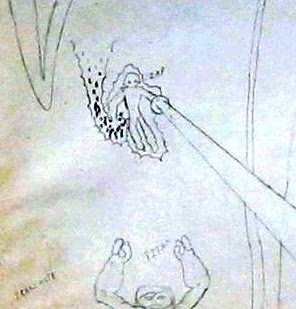
Zzzap is, by far, the most powerful being in the story, and it’s only his own personal limitations which hold him back. He gets queasy and his mental reactions are a lot slower than what he’s physically capable of doing. I wanted a very plain, average name. Dare I say it, a Joe Six-Pack name.
I also admit I wanted to evoke the sense of a classic comic book secret identity with at least one of my characters. So many of those heroes have alliterative names. Peter Parker. Wally West. Reed Richards. Susan Storm. Bruce Banner. Matt Murdock. Stephen Strange. Heck, people have written essays on Superman’s LL fixation with his supporting cast. So Zzzap became Barry Burke.
For the record, the actual name Zzzap, with three Z’s, was inspired by an old Hulk villain called Zzzax. I read somewhere that writer Steve Englehart wanted someone who’d always come last in any alphabetical listing. So I followed in his footsteps with Zzzap.
Actually, one more fun fact. I was digging through the old sketchbooks for pictures to go with this post and came across this one here with the very tiny picture of “Zap” amidst a swarm of heroes. I seem to remember this as a very early experiment in starting a picture with stick-figures (which I think I learned from Draw Comics The Marvel Way or some such book). If the date on the cover of the sketchbook is to be believed, it means this is probably one of the oldest pictures of any of these heroes, from 1982. So Zzzap predates Return of the Jedi.
When I first came up with the idea for Gorgon, I freely admit it was a prepubescent idea for a character who could touch Rogue from the X-Men without getting zapped. I made him an energy-vampire off the rationale that similar powers would cancel each other out, and once it was optic-based (he hid his eyes behind sunglasses) Gorgon seemed like a pretty straightforward name to use. His vague backstory was created just for the novel, as was the idea of his custom, camera-iris goggles.
For the record, this was long before most people pictured Rogue as Anna Paquin, and even longer before Anna Paquin was getting in on with vampires on a regular basis. That was all just a bit of serendipity.
His real name of Nikolai Bartamian came from a desire to show off a bit of LA’s melting pot. There’s just a ton of different populations here. Mexican. Korean. Armenian. Chinese. Japanese. I didn’t want it to feel like a pile of male white Anglo-Saxon heroes. And Bartamian is the last name of a friend of mine.
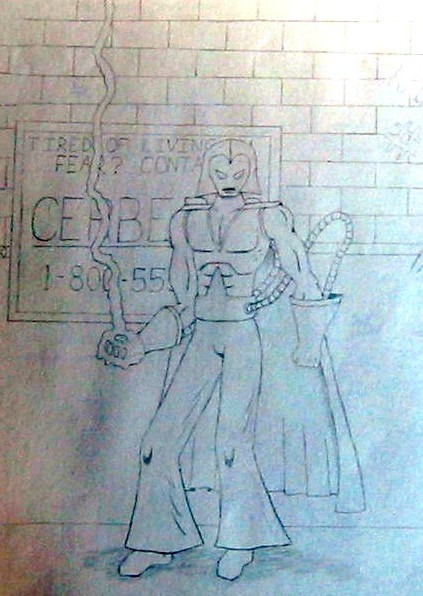
In my original collection of sketches and index cards, Cerberus wasn’t so much a suit of armor as a technological weapons array you wore with regular clothes (kind of like Whiplash in Iron Man 2). It even had a cape and flared gloves. The name came from its ability to throw three types of energy beams. And he was a villain (yep, another he-becomes-she), or at least such a dark, zero-tolerance anti-hero/ mercenary-for-hire that he served as a villain in all respects.
For Ex-Heroes, since Cerberus is this huge, powerful, armored machine, the person inside had to be contrasted as much as possible to stand out. Danielle is a great name which even looks feminine on the page. I also liked the idea of a woman who wants to be feminine, for the guys to look at her, but really has no idea how to make that happen. And it doesn’t help that she’s usually wearing this monstrous battlesuit and has a code-name which makes people mistake her for a man. Morris, in all honesty, I just picked out of the air because it sounded good with Danielle.

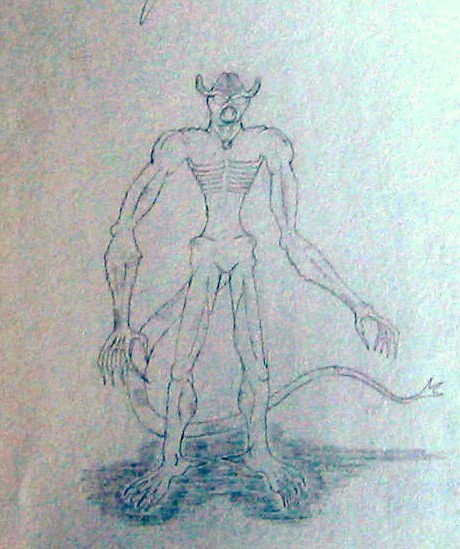
Cairax Murrain was always a monster, always a villain. Originally he was a cape-and-robed sorcerer (named John Carracks) who turned into the demon through a big long ritual (and a sticky, Alien-esque cocoon). The name Cairax was just a bunch of hard syllables, meant to sound a bit alien. Murrain is an archaic word for plague (anyone who’s sat through a full Seder probably knew that already). Together it’s a pretty good name for a demon. The two part name also hints at a certain level of self-awareness and intelligence, because I wanted it clear that the demon itself wasn’t just some slavering beast. Being a little older, I liked the idea of evil slaved to good through this magical “partnership” and then effectively becoming a villain again because of the ex-virus.
His real name of Maxwell Hale came from two places, so to speak. Max ties back to Cariax, sound-wise, and let me hint the demon isn’t entirely responsible for Max coming across as a bit ruthless and self-centered, no matter how noble his motives were. On the flipside, Hale is a very simple name. It may not be common but it sounds common, which helped ground the guy who was supposed to be this amazing sorcerer and make him a bit more relatable.
And that, I think, covers most of the bases for now. I could go into Regenerator, Midknight, Blockbuster, and dear little Banzai, but this is kind of long already and most of the points I wanted to make have been covered.
Next time, I’ll probably go on for a dozen or two paragraphs about something else.
Until then, have a Happy Thanksgiving. And try to do some writing after the pecan pie.

More pop culture references for the old folks.

Yeah, I’m running late. Very sorry. I hit the home stretch on the first draft of Ex-Patriots and I had to give my attention to that.

Check it out, though. The blog counter passed 10,000 hits. And it did it on a week I didn’t post anything.

Anyway, I haven’t prattled on about characters in a while, so I figure I’m due…

I may have mentioned once or twice before that characters are key to a successful story. Non-stop action with flat stereotypes can be diverting in a film for a little while, but in a book (and in a good movie) characters are your bedrock. If the reader doesn’t have someone they like, someone they can relate to, a story can be dead in the water by page five.

Now, there are three common ways people try to make their characters come to life and become real on the page. I say “try” because all three are based off a simple misunderstanding of why certain aspects of characters work. Let’s go over what they are, the problems with each one, and how you can work around it.

The first method is to describe these characters in amazing detail. The writer introduces us to Phoebe and tells us her hair color, eye color, height, and weight. Then come descriptions of her hairstyle, body type, the shape of her face, and possible tattoos (visible or not). There’s a list of her measurements and shoe size. In the next sentence we get the name of her lipstick, the name of her perfume, the designer for her jewelry, the designer for her shoes, and the style of her manicure. Phoebe gets described to us in such exacting detail there’s no way we can picture her any way except how the writer envisioned her.

The second way is for the writer to give pages of background on the character. We’ll get lengthy flashbacks to Phoebe’s first day of school, her first kiss, her first sophomore English class at Prestigious University. Sometimes she’ll start talking to friends, family, or complete strangers and tell them about the last time she baked cookies with her mom, the awkwardness of losing her virginity in the back of a pick-up truck, or the day she realized she wanted to be an Oscar-winning screenwriter. Sometimes these historical revelations won’t even be a flashback or dialogue, they’ll just be straight prose from the writer.

The barista gave Phoebe her double-whipped half-mocha latte with whipped cream, just the way she liked it, just the way she had it every day. He was a handsome man, and part of her wanted to ask him out. He wore plaid flannel shirts a lot, though. It was a silly thing, she knew, but plaid flannel always made her mind go back to her grandfather’s heart attack. He’d always worn plaid, too, and he’d been wearing it the day she and mom were visiting and he grabbed at his chest and made that awful noise. Young Phoebe had been so determined not to look at his pain-stricken face she’d just stared at the plaid shirt. So for now the barista would just have to stay behind the counter.

The third way, thankfully, is the least common, but it happens enough I feel the need to mention it. Real people have irrational quirks, sometimes do nonsensical things, and often go against their own best interests. Sometimes we even up and die in awful, unexpected ways (statistics say most people do at least once in their life). It’s the way we’re all wired. We’ve all seen people do things like this. We’ve all done things like this.

The logic here is if the writer has the characters act illogically, they’re acting more real. If Phoebe is a bundle of odd behaviors, then she has to be believable. It’s almost a challenge to the reader. Since real people do this, how can anyone say Phoebe isn’t real if she’s doing it? Heck, if Phoebe randomly gets hit by a car in the last few pages, that’s so much like life it almost counts as art, doesn’t it…?

Now, here’s why these three methods usually don’t work. I won’t say they never work, but if you’re the gambling type you should consider the odds here.

The problem with using tons of details to describe your character is it breaks the flow of your story. Events come to a screeching halt while the writer has this infodump. If you look back up there, I bet you started skimming just while reading that list of potential descriptions, didn’t you? If a list of general examples can’t hold your attention, what’s going to happen when it’s a list of specifics two or three times long?

The other catch to this is that a lot of the time readers form their own mental images of what a character looks like. For example, if you look over the past few paragraphs you’ll see I haven’t actually described Phoebe at all, but you’ve probably got some mental image of her when I use the name, don’t you? If you know what this character looks like with no description, then two pages of description is just pointless excess.

In a similar vein, a writer can add in a hundred pages of biographical facts and anecdotes and it’s still not going to make a character seem real. More likely, the story’s going to suffer from the same expositional infodump I mentioned above, and it’s going to come to a crashing halt again. The problem is relevance. While there’s no question these past events shaped Phoebe’s life and the person she is today, the reader’s going to wonder what do they have to do with this story. No matter how good a particular element is, if it doesn’t relate to the story the writer’s telling it’s just bulk filler.

The other problem here is no matter how much raw data you pour out on the page, there’s always more which isn’t out there. There are shaping events we forgot or didn’t want to mention. There are people we probably never realized how influential they were to our lives.
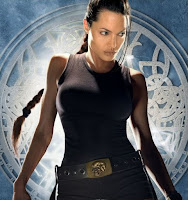
Consider Angelina Jolie or Barack Obama. Here are two people who’ve had their entire lives put under a microscope and studied by the whole world. And the whole world’s continuing to study them today. Thing is, though, there’s still tons of stuff we don’t know about both of them. Common sense tells you that. I’m not talking about that birth certificate nonsense or any of that. I mean simple things. No matter how much you know about someone–about anyone–there’s always more you don’t know.

(Yes, I needed a picture of something to break up the wall of text, so we’ve got Tomb Raider. There it is.)

The problem with the third method, randomness, is that fiction is held to a higher standard than real life. Nonsensical, illogical, unbelievable things happen in real life all the time, but life isn’t scripted. When I pick up a book, I know John or Jane Doe is the writer behind it. There is no randomness, because every word on the page was deliberately chosen. And that means any apparent randomness has to be serving the purposes of the story. Because if it’s not, well… why is it there?

So, with all that being said, is there any way to make these three methods work?

If not, this hasn’t been terribly informative, has it? Hardly worth the two-week wait. I should probably come up with something…

Okay, the big trick to all of these, as I mentioned above, is relevance. Like adjectives or adverbs, if character elements aren’t serving a purpose they shouldn’t be there. Strip away all the noise and clutter and just give the reader what they need.

For example…

Let me tell you an ugly secret. Phoebe lives in a fleabag apartment infested with rats and roaches, always buys her bread from the day-old rack, and eats peanut butter sandwiches for lunch every day of the week. She always has immaculate hair and designer clothes, though, especially on the weekends. I’ve just told you something about her, haven’t I? More than just the words on the page, too. You’ve got a sense of who Phoebe is and where her priorities are. Maybe even a mental image of her. All in just a hair over three lines.

See, I don’t need a lot of details, just the right details. Did I need to tell you about Phoebe’s anklet or her lipstick or how tall she is for that little character sketch to work? I just need to pick the right details to create the image and imply the person I wanted you to see.

Here’s another example for you. When I was just a ten year old kid I used to walk a mile-long paper route in the snow seven days a week, usually four or five months out of the year. No, seriously, I did. I grew up in Maine– of course it snowed a good chunk of the time.

What does this have to do with what I’m getting at?

Nothing.
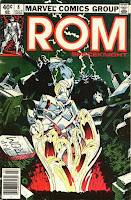
However, once a week I would also walk almost three miles down into York Beach to Garfield’s Newsstand. Wednesday was the day new comics came in, so from about age eight on I would trudge down there– rain, sleet or snow– and work through the wire racks looking for new issues of Spider-Man, ROM, Star Wars, Hulk, and more. If it was really cold and I needed more time to warm up, I’d go through the tiny section of genre paperbacks in the back of the store. That’s how I first came to know John Carter of Mars and the old Han Solo novels. And it wasn’t too long before I was copying all of these tales on one level or another.

Y’see, Timmy, the backstory of me delivering newspapers is crap. I’m also not going to waste time retelling the story of my dog Flip and my dislike of ketchup. None of them have anything to do with anything here.

The second story, though, shows some of those first seeds of me becoming a writer. It’s relevant to me as the person behind the ranty blog, so it’s especially worth mentioning in this little rant. If you’re going to add in stories about a character’s past, they should somehow relate to what’s going on in the “now” of your story. Or your blog post.

The randomness issue is the easiest one to deal with. It’s okay for seemingly random things to happen in a story–key word seemingly. At the end of the day, the writer is in charge and the events in this story are happening for a reason which benefits this story. I can tell you, from a narrative point of view, why Duke Perkins dies at the beginning of Under the Dome, why the unnamed comedian’s wife dies in The Killing Joke, and why Ben Kenobi dies in Star Wars. All of these are seemingly random events… but they’re not random, are they? Each one drives the plot and character development in a certain way and in a specific direction. That’s the kind of “randomness” which should be in a story– the kind that serves the writer’s purpose.

So make your characters. But really make them real.

Next Thursday is Thanksgiving. Wow, this year has flown by. I think I may put a name to something I’m thankful for.

Until then, go write.

Categories