December 9, 2011 / 3 Comments

Counting the Minutes

            It’s Christmastime.  Of course we’re all counting the minutes.

            I’m also counting the minutes until John Carter comes out, but that’s another story entirely.
            You know who else counts minutes?  Script supervisors.  It’s one of those credits you see in film and television that a lot of non-industry people don’t really know what it means.
            Very simply put, the script supervisor (often called the scripty)  keeps track of things.  He or she’s the one who notes exactly what’s been filmed (what shots and sizes and angles and lines) from each scene.  Like lots of other key folks on set, the script supervisor does their own breakdown of the script.  And the scripty’s breakdown is all about time.
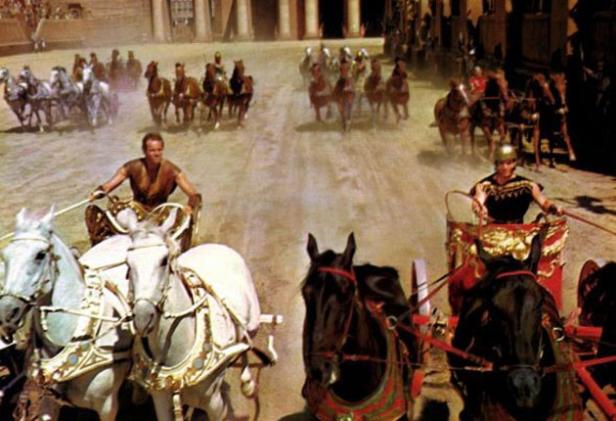
            The standard estimate for a screenplay is a page a minute  If you talk to most script supervisors, they’ll tell you it’s actually closer to fifty-odd seconds (I want to say fifty-three), but a page a minute is a solid estimate.  There’s always going to be some wiggle room, of course, especially when you’re dealing with action.  As I’ve mentioned here before, the lobby scene in The Matrix is less than half a page.  According to Hollywood legend, the chariot race in Ben Hur was just one line in the script.
            This is why most professional readers groan when they get a screenplay that’s 140 or 150 pages long.  That’s two and a half hours.  Any script that long has a major strike against it before the reader’s looked at page one.  I read two scripts this year that the writer had “squashed” to make them shorter, but I could tell they were both over 200 pages, easy.  That’s close to three and a half hours.  Possibly even more if they’d had action sequences in them.  Which they did.
            If you’re a screenwriter, look at your script.  If you’ve got a solid page of dialogue, that’s a minute of talking heads.  A minute is a brutally long time in a movie.
            Don’t believe me?  Try this.  Look up at the ceiling and count off ten Mississippis.  Don’t cheat, don’t rush… just look up and count them out in your head nice and steady like you’re supposed to.  Go on.  I’ll wait.

            That was ten seconds.  Oscar-winning screenwriter Bruce Joel Rubin pointed out once that ten seconds can be an eternity on screen. 
            So think about how long some of those character monologues are.  It may be brilliant on the page, but there’s a good chance it’ll be torturous to watch.  It’s important to understand the distinction between how long something takes on the page and how long these actions and conversations will actually need (or not need).
            This goes for prose writers too (just so you don’t feel left out).  I’ve mentioned the pacing issues that can happen if action gets stretched out too long.  Certain things happen at certain speeds, and if they get slowed down with dialogue, descriptions, or excessive action they’re just going to look silly.  Not in the good way.
            And when something reads silly, people put your manuscript down in the big pile on the left.
            Next time, I wanted to tell you a story about telling you a different story.
            Until then, go write.
December 2, 2011 / 5 Comments

Simon Says, One Step Back

            Okay, first off… more shameless pandering.

            My publisher’s doing a big sale for the holidays he’s calling Black December.  The ebook versions of ten best sellers and new releases are marked down to a mere $2.99 for the whole month.  That includes my own Ex-Heroes, available over in the right hand column here.  He’s also got five ebooks for free.  No strings, no tricks, absolutely free.  Five books he’s just giving away.  Go check it out.
            Oh, and The Eerie Adventures of the Lycanthrope Robinson Crusoe isn’t part of the sale, but the ebook version’s still marked down to half the paperback price.  Just saying…
            Now, with that out of the way, I’d like to talk to you about Pitch Black.
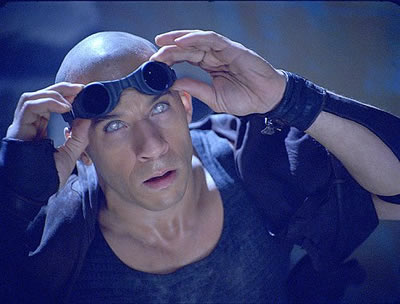
            If you haven’t seen the film, I highly recommend it.  Sharp dialogue, good characters, a lot of action, and a damned clever story backing it all up.  It’s the movie that really launched Vin Diesel’s career as “the guy you do not mess with,” and if you watch it with the commentary you’ll learn he also had a fair amount to do with shaping the script.
            There’s a wonderful bit early on when our assembled heroes need to make a break across a stretch of open ground.  As it turns out, Diesel’s character, Riddick, has superhuman vision and can see in the dark.  He peers out, announces it “Looks clear,” and the group of survivors dashes for cover.  But then things come soaring down out of the dark sky and… well, not everyone makes it.  One of the other survivors immediately blames Riddick—“You said it was clear!”
            “I said it lookedclear!” Riddick snaps back.
            This bit usually gets a dark chuckle from the audience.  It also points out something I’ve mentioned here once or thrice before, and I thought it was worth blabbing on about in a bit more detail this week.  As our heroes learned the hard way, “It looks clear” is not the same thing as, “It isclear.”  Riddick knew they’re not synonymous, and that difference is very important.  “It looks clear” implies there’s a bit more to be said.
            This is a construction I see come up a lot, where writers put an additional step between the story and the reader.  Usually they do it by adding an extra layer of verbiage that relates to something internal.  Other times it’s an attempt to do something clever with the description.  It seems to show up a lot in high fantasy writing because people mistakenly use it in the elaborate, purple-prose descriptions that genre tends to attract.  I’ve also seen people follow this route when they’re trying to be mysterious and imply a lot of spookiness that might not actually be there.
            And, to be honest, it’s something I used to do a lot myself.
            Let me give you a few examples…
            He thought about trying to be a writer
            We’ve all seen this one somewhere, right?  Nothing wrong with it on the surface.  But let’s stop and break it down for a moment.
            The act of thinking implies this isn’t happening, it’s just a possibility.  So if my character’s thinking about trying to do something, it means this is a possibility of a possibility of something happening.  Unless he’s specifically thinking about the actual attempt instead of the end product, this is just excess words.
            He thought about being a writer.
            See?  Cleaner, clearer, and two words shorter.  Here’s another one.
            She decided to write her blog post.
            This is fine if she decided to—but that was as far as she got because something kept her from doing it.  But if she decided to do it and then she did it, the writer’s just eating up words again. We all make hundreds of decisions and choices every day, but most readers want to hear about the actions, not the decision to take an action.  I wouldn’t write Peter decided to make a turkey sandwich, made the sandwich, and then chose to sit at the table to eat it. Well, I wouldn’t write stuff like that any more, at least.  Why would I want to waste all those words on mundane stuff?  Peter made a turkey sandwich and sat at the table to eat it.  Likewise, the sheer act of writing tells us our lovely blogger made a decision.
            She wrote her blog post.
            See?  Nothing else needed.  Now check out this one…
            Phoebe appeared to be a shapely blonde who stood six feet tall.
            Appeared to be is one of those phrases I got in my head and used to use all the time.  Sometimes I’d swap in one of its kissing cousins, looked like, seemed to be , and a few wild combinations we shouldn’t discuss in polite company.  Problem was, I didn’t understand these phrases.  Y’see, Timmy, they don’t get used alone.  This sort of phrase is the first part of a construction where the second half is either an actual or implied contradiction.  That sentence up above is really saying something more like this—
            Phoebe appeared to be a shapely blonde who stood six feet tall, but she actually bleached her hair on a regular basis and made a point of always wearing spike heels.
            There’s nothing wrong with that sentence, of course, whether it’s written out or left implied.  None of us will fault Phoebe for thinking that blondes have more fun and wanting to be a few inches taller.  The problem is that a lot of the time I wasn’t trying to establish a contradiction, I just wanted artsy sentence structure.  What I really wanted to say was this–
            Phoebe was a shapely blonde who stood six feet tall.
            So I was subtly pushing the reader back for no reason with extra words, while also showing that I didn’t really know what I was doing.  If a writer isn’t trying to establish that contradiction, using appeared to beand its bastard stepchildren isn’t just wasted words– it’s wrong. 
            Now, there’s nothing wrong with an elaborate sentence now and then.  Most of us love a good turn of phrase—it’s the kind of thing that made us want to be writers.  Just remember that like any other element in your writing, there has to be a point to that long string of words, and they have to be used correctly. Because if they’re not, I’m just eating up words and wasting everyone’s time.
            Speaking of which, next time I was going to rant about something for about a minute.
            Until then, go write.
November 17, 2011 / 5 Comments

Our THREE Secret Weapons Are…

            Pop culture reference.  Overdue.

            Okay, so what I wanted to blather on about today has its roots in screenwriting, but it’s a lesson that can get applied to short stories and novels as well. Simply put, it has to do with boring your readers.
            Some of you may have heard of the “rule of three.”  It’s  a good screenwriting rule of thumb that you should never do something more than three times in a movie because it starts wearing on the audience.  By the third time you’re showing me something, I’ve either got it or I don’t.  And if I don’t, it’s not my fault…
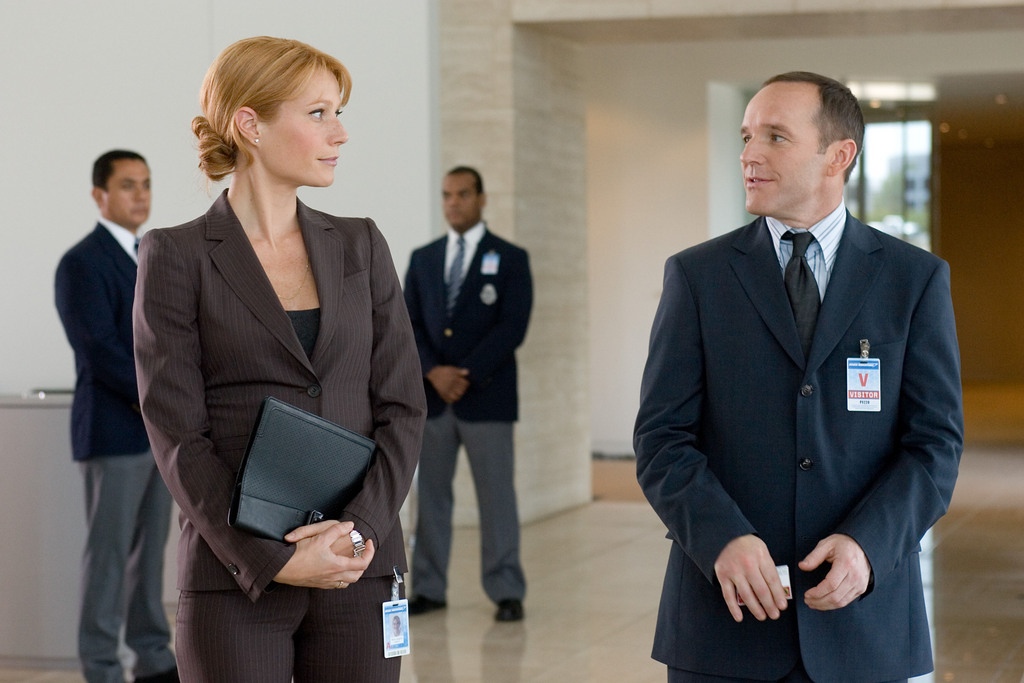
            For example, in the movie Iron Man we see three big examples of Tony Stark’s playboy lifestyle before something happens to make him change (blowing off the award ceremony, sleeping with the hot reporter, and partying on his private jet).  He then goes on to design three versions of the Iron Man armor, which also involves taking three test flights (one of them very, very short).  While all this is going on, we get three examples of what a great guy Obadiah Stane is, three of what an evil jerk he is, and the ever-loveable Agent Coulson asks three times about debriefing Tony and we get three jokes about the overly-long name of his government division before the payoff most comic geeks saw coming. 
            Seriously, pick up almost any movie you like and you’ll be stunned how quick the threes add up.  The Hulk goes on three rampages in his last movie.  In Highlander we see three other immortals die before the final battle.  In Aliens there are three major attacks and three examples of Burke being a slimebag.  In the movie Severance, the bear trap slams shut three times (and if you haven’t seen it, I’m not explaining that any further).  In Casablanca, Victor and Ilsa ask for the letters of transit three times.  Heck, in The Princess Bride, how many challenges does the Man in Black have to overcome to claim Buttercup (I’ll give you a hint—Inigo, Fezzik, Vincini)?  And there are three great swordfights in that film—all involving Inigo.
            Now I’m sure some folks reading this are thinking three’s just an arbitrary number, right?  It could be the rule of two or the rule of four.  That’s very true, and you can find some examples of both.  In Charlotte’s Web, for example, the children’s classic by E.B. White (he of the awful style guide), there are four words that get spun into webs and none of us were screaming “get on with it” when our parents read that book to us.
           In a script I just read, though, there were over a dozen examples of how low the single-dad main character had sunk.  It starts with him late for work (as a waiter—historically a job of high pay and great respect) where he had a party dine-and-dash so he has to cover their bill.  Then his car breaks down and he has to walk home in the rain.  Then he gets a collections notice. Then he has to go grocery shopping and doesn’t have enough money.  Then the babysitter demands more money because he’s late again.  Then his power gets shut off.  Then anotherparty dines-and-dashes on him and he gets fired.  Then he gets an eviction notice.  Keep in mind, this is only the first twenty pages of the script or so, and there’s still more examples coming.
            At what point did you get the idea this guy’s at rock-bottom?  Halfway through that list?  A third?  Check which note you got it on and count backwards.  Was it on the third example?
            I bet it was…
            Here’s the thing.  Each time we get exposed to information or events, it changes our understanding of them.  And a writer needs to be aware of how the reader is going to be seeing these facts or events.
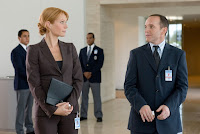
            The firsttime we get exposed to a piece of information—and only the first time—it’s something new.  We, as the audience, didn’t know this or haven’t seen it before.  Agent Coulson’s introduced as yet another guy who needs to schedule a meeting about Tony escaping from Gulimar.  We brush him off the same way Pepper does (well, those folks do who don’t recognize the initials of his agency).
            The secondtime we see this happen, on the page or on screen, it establishes a pattern.  Now we know the first time wasn’t an isolated event or a fluke, and it gives us a little more information about things and characters.  Coulson shows up again and hasn’t forgotten about this meeting and he isn’t going away.  There’s also the unspoken question of how did some low-end, government flunky get into this extremely high-end exclusive party.
            The thirdtime confirms that pattern.  These behaviors or incidents are a definite element of the character or story.  Coulson shows up to remind Pepper of his loosely-scheduled appointment and she grabs him to use as a shield against Obadiah.
            When I start going past this point, things start becoming less informative and more… well, boring.  Once the information’s been established, continuing to repeat it is just noise the reader’s going to tune out.  And eventually—quickly, really—they’re going to get annoyed that I’m just repeating stuff they already know rather than moving forward, because storytelling is all about forward motion.
            Now, as I said above, there are always exceptions to the rule of three.  One of the easiest ways is when a writer is very subtle about something and the reader doesn’t realize they’ve gotten that first exposure.  They may be on their third or fourth before they notice it, so the pattern forms around the fifth or sixth time—and is all the cooler when they look back and realize the pattern was there all along.  When we finally notice the Observer on Fringe, we discover he’s been there all along, in every episode.  Another good example is Jason Hornsby’s Eleven Twenty-Three, where a town is suffering from brief outbreaks of extreme violence. It happens twice before the characters realize the outbreaks always occur exactly at the titular time, and then they suffer through three more of them before the end of the book.
            On the flipside, there are times we only need to see something once or twice to establish them.  This works best for real-world things that most people can relate to.  Neo only gets chewed out once by his boss, at the beginning of The Matrix, and we all immediately realize what kind of employee he is.  In Dean Koontz’s underappreciated Fear Nothing, we only need to see one of Christopher’s parents die to understand his sadness and loneliness.
             You can also change the dynamic.  Establishing something with the rule of three doesn’t mean you’re stuck with it.  One of the standards of good storytelling is conflict that forces things to change.  Once we’ve seen three examples telling us who  this character is, it’s a good time to start working that arc to change them into something else.  Yes, that third time asking about the appointment makes Coulson look like the ultimate paper-pusher, but right after that point we discover just how calm and collected he really is.  This is a guy who doesn’t just have a sidearm, he carries around shaped explosives just in case he needs to open a locked door.
            Look back over some of your writing and see how many times you give examples of something.  Character traits, recurring events, whatever.  Could some of them go away to tighten your novel or give you more space in that script for something else?  Or can you restructure things to hit one of the exceptions I mentioned above (three exceptions, for those of you keeping score).
            Next time, I wanted to take a step back and explain why you should avoid taking a step back in your writing.
            Until then, go write.

Blatantly stolen from a much cleverer writer than me (Jason Hornsby, author of Eleven Twenty-Three), here are a dozen cool facts you should know about The Eerie Adventures of the Lycanthrope Robinson Crusoe that will make you want to run out and read it.

Or run out and buy it, then run home and read it.

 I suppose you could just order it from home and not run anywhere.

 You get the idea…

1)  The ongoing rivalry between Daniel Defoe and Jonathan Swift described in the Foreword is completely true.  Defoe and Swift had a relationship that swung back and forth between bitter rivalry and open hatred.  Swift’s book Gulliver’s Travels was specifically written to be a one-up on Defoe’s The Life and Adventures of Robinson Crusoe Of York, Mariner.
2) According to the dates given in Defoe’s original novel, the title character was born the day after a full moon.
3)  Defoe names almost no characters in his original novel, so most of the names in this version were created or came from Lovecraft works.  The shipmaster from Crusoe’s first sea voyage is named Martense.  H.P. Lovecraft’s story “The Lurking Fear,” centers around a mansion built by a wealthy merchant named Gerrit Martense.
4)  The words “werewolf” and “lycanthrope” are never used in the book.  When Crusoe is studied by Moorish wise men, he is told the Arabic name for the beast is almustazeb.  After escaping the island, Crusoe himself references the loup garou of France.
5)  The wise men tell Crusoe many conflicting stories about their reference book, including one which claims it was written by a sorcerer who was driven mad by writing it.  Lovecraft claimed the Necronomiconwas written by the “Mad Arab” Abdul Alhazred.
6) According to the dates given in Defoe’s original novel, the title character was shipwrecked on the night of a full moon.
7) The nightmare of a vengeful god, the mist-shrouded valley, the cannibal savages, and Friday’s wooden sword are all elements of the original Robinson Crusoe and were not created for this book.
8) Friday’s father is named Walla-Kay, which Crusoe is told is both a name and a title.  In H.P. Lovecraft’s “The Shadow over Innsmouth,” the narrator is told the story of Obed Marsh who discovered an island of halfbreeds ruled by a priest-chief named Walakea.
9)  When mutineers land on the island and abandon the captain and his loyalist crew, there is one passenger among them, a young man named Wade Jermyn.  In H.P. Lovecraft’s “Arthur Jermyn” the main character references a great-great-great-grandfather, old Sir Wade Jermyn, who was an explorer.
10) The leader of the mutiny is the ship’s boatswain, a Moorish pirate by the name of Slaader.  In H.P. Lovecraft’s “Beyond the Wall of Sleep,” the subject of the story is a Joe Slater, a “strange, repellent scion of primitive Colonial peasant stock” who alternately spells his last name as Slaader.
11) After Crusoe’s party is attacked in the mountains between Spain and France, he spends time recovering in Gevaudan, France.  Gevaudan is the home of the legendary “Beast of Gevaudan,” a monstrous wolf that roamed the countryside.
12) Crusoe’s children are named after famous werewolves from film and television–   Lawrence Talbot (The Wolf Man), David Kessler (An American Werewolf in London), and actress Kate Hodge (who played Randi in The She-Wolf of London).  Crusoe’s wife, Guinevere, is named after a college friend of mine who wanted a character named after her (Guinevere is an early spelling of Jennifer).

Categories