
May 11, 2012

Activity Time

            I’ve been talking about general stuff for a while, so I thought it might be a good time to be a bit more active.

            Of course, being active is just good advice in general, don’t you think?
            Active can mean two different things in writing.  We can be talking about my writing in and of itself.  We can also be talking about what’s happening in the story and who’s doing it.
            First things first.  You’ve probably heard the term “active voice” tossed around a lot by guru types.  It refers to how I’ve structured my sentence.  Simply put, active voice is when my characters are doing stuff.
–Yakko mixed the soup and added pepper.
–Dot lit up the room with a flashlight.
–Wakko eviscerated the minotaur with his sword
            If you want to be a bit more grammar-oriented, when I’m using the active voice my characters should be the subject of my sentence.  They’re the ones doing things and making things happen.  They’re the movers and the shakers.
            Passive voice, on the other hand, is when stuff is being made to happen by my characters.
–Pepper was added to the soup as it was mixed by Yakko
–The room was lit up by Dot with a flashlight.
–The minotaur was eviscerated by Wakko’s sword
Wakko celebrates his adjective status.

            See, all these sentences convey the same information, but my characters are all objects now.  The focus has shifted to the soup, the room, and the minotaur. Heck, to keep things simple, Wakko the character was effectively removed from that last sentence.  He’s just a possessive adjective describing the sword (the real object).

            Another advantage of active voice is that it tends to be clearer.  Passive voice is an element of purple prose, which sounds nice sometimes but often gets confusing with all of its twists and turns, breaking the flow of the story.  Active voice is also usually more concise, which is great for pacing and word counts.  It just feels more dynamic.
            Now, you’ve probably heard a lot of gurus rant on about how you’ve always got to use the active voice.  Always, always, always, no exceptions.  Never use the passive voice for anything..
            This is wrong, of course.  There are plenty of times it’s fine to use passive voice.  It’s the same with having non-stop action or focusing exclusively on my main characters and ignoring the secondary ones.  It’s a way to alter the tempo or tone a bit in a story.
            The passive voice could be a quirk of a particular character’s way of speaking, especially in first person.  It could be used to “step back” in a moment of drama or mystery.  In screenwriting, it’s a clever way to change the visual of a moment without including camera angles or stage directions.  Done right, passive voice can even be used to increase horror—what could be worse than a character getting reduced to an object in all ways?
            So while  there are some good reasons to phrase things in the active voice, you don’t need to avoid the passive voice like the plague.
            However…
            It’s not just enough to phrase things in an active way.  My characters actually have to be active.  They need to make choices.  They have to face challenges.  They must take action.  Not in a gun-slinging, sword-fighting, car-chasing way.  Just in the simple sense of doing something.  On one level or another, my characters need to be the ones making things happen in a story.
            I honestly couldn’t tell you the number of stories or scripts I’ve read where the main character doesn’t do anything.  They just sit there as the story flows around them.  Other people tell them what to do and make their decisions for them.  They don’t take any action unless they’re dragged/ kicked/ forced into it.  A lot of them are little character-study “indie” things, but I’ve seen action movies done this way and horror novels, too.  Heck, I saw the film adaptation of a Harry Potter-esque book and it was almost halfway through the movie before the title character did a single active thing.  Up until then he was just a sock monkey getting handed off to different characters.
            Keep tabs on the voice of your story and make sure you’re not being too passive with your writing. And by the same token, you don’t want to have a lot of active writing about a character who doesn’t do anything.
            Next time I’d like to share a little idea I had about reverse-engineering.
            Until then, go write.
May 3, 2012 / 4 Comments

Zombie Hoarders

           This is a pet peeve that’s been building over the past year or so.  Like many of my pet peeves about writing, it finally gave birth to a rant.  A small rant, but still…

            I also admit, this is one of those recurring misused words that, because of my particular niche, I probably see a lot more that the average reader.
            There are few things more terrifying than a horde.  Just an overwhelming tide of opponents.  In history, Genghis Khan had hordes of warriors.  If you play Warhammer 40,000, you know Orks are often called the Green Horde.  He-Man fought an enemy army called the Horde, led by a guy named Hordak (no, seriously).
            And, of course, zombies come in hordes. Great, sweeping, endless hordes.  Something about the word just loans itself to a sort of mindless savagery, doesn’t it?  In most stories, if I’ve got a zombie horde on my hands, odds are I couldn’t carry enough ammunition to deal with it.
            If I have a zombie hoard, though, it means I’ve got an unhealthy obsession with the undead.  I’ve actively collected far more zombies than one person could ever possibly use.  I won’t get rid of the broken or spoiled ones, either.  They just pile up in the basement, the closet, and eventually in the corners of every room of my apartment.
            Hoard is a verb, you see (to hoard), although it can also be used as a noun to describe the thing I’ve been hoarding.  So a pirate horde is a bunch of guys with swords and eye patches, but a pirate hoard is usually gold and treasure chests and stuff like that.
            So, also, nine times out of ten, if I have a zombie hoard it means I’m an idiot who doesn’t know how to spell and never bothers to look anything up.  I might be a nice, well-meaning idiot, but I’m still an idiot. 
            And I’m definitely not a writer.
            (In all fairness, there’s a zombie news/collectors website called The Zombie Hoard, but they openly acknowledge that their title is a play on words).
            Remember, Genghis Khan conquered most of Asia with his hordes, but they traveled light so he’d never end up on Hoarders.
            Oh, and if you’d like to hear a little extra ranting this week, check out the fan page on Facebook where I just put up some thoughts about the comic book industry.  
            Next time, speaking of Genghis, I’d like to talk about getting active.
            Until then, go write.
April 26, 2012 / 3 Comments

The Nine Alcatraz Events

            Pop culture reference.  Sort of.  More of a portmanteau, really.

            Anyway, please bear with me.  This one’s a bit long, but I think it’s worth it.  And there are extra pictures.
            Some of you may remember a little show called LOST that aired a few years ago (yeah, we’re just a couple weeks away from years–plural).  I’ve mentioned it here a couple times because it completely redefined the one hour drama for television, and it also offered many brilliant lessons about executing mysteries and twists in a story.  It inspired thousands of writers, in film and in prose.
            It’s only natural that networks would want to duplicate the success of LOST.  Television is a business—it’s their job to be as successful as possible.  If X works, it’s only natural to try more X.
            Of course, it’s not quite that easy when we’re talking about storytelling.  Sometimes a story works, sometimes it doesn’t. The smallest tweak in structure, tone, or character can flip something from phenomenal to average or even trite.
            After watching another one of these would-be successors to the throne tread water for a few weeks, I though it might be time to address what a lot of these storytellers are doing wrong.  Not that any of them will ever see this or listen to me if they did.  But there’s something here that all of us should keep in mind, no matter which format our tale of eerie puzzles and mysterious strangers happen to be written in.
            So here are three shows that were all an attempt to cash in on the mystery/genre success of LOST
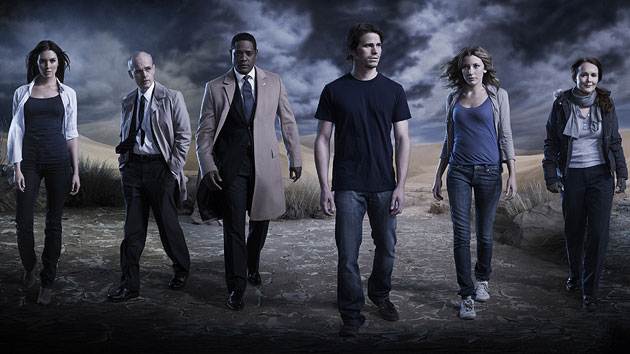
            The Ninefollowed the lives of the survivors of an extended bank hostage crisis.  When the police stormed the building after fifty-two hours, these eight hostages and one captor were the only ones still alive.  And despite having a huge impact on their lives, plus the lives of their family and friends, all of them are remarkably close-mouthed about what happened during those almost-three days.  Husbands, wives, and others are left wondering why these nine people are so changed, and why the only people they seem to be able to relate to anymore are each other.
            The Event was about three parallel plotlines.  One was the story of a resourceful young man whose fiancé is kidnapped while they’re on a cruise and his ongoing attempts to find her.  One covered a newly-elected President who’s learned the US government has been holding extraterrestrials in an Alaskan prison for the past fifty years and has decided to open negotiations and release them.  The last thread is about the aliens themselves and the long-term secret plan they’ve been trying to carry out, even while imprisoned.

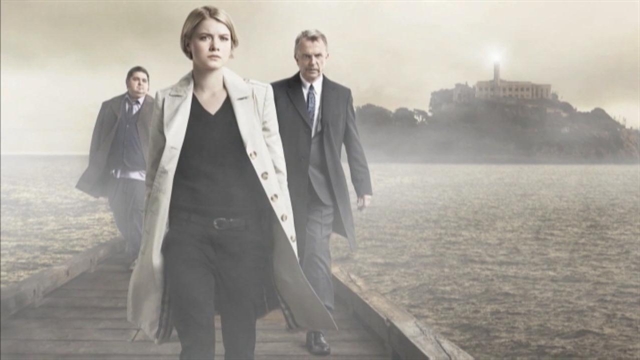
            Last but not least, we’ve got Alcatraz, which just finished airing a few weeks ago.  And I feel pretty confident when I say it finished airing, but I still might be proved wrong there.  It focused on San Francisco police detective Rebecca Madsen who gets pulled onto a special government task force.  It seems all the stories about America’s greatest prison being shut down fifty years ago aren’t exactly true.  All the prisoners weren’t transferred, they vanished.  And now they’re reappearing, one by one… and some of them seem to have missions.

            Seems like a decent array of shows, yes?  Now, here’s the really interesting thing.  All three of these shows failed for exactly the same reason.  They all had the same flaw.  Perhaps even more interesting is that the one that was the most blatant example of it, The Nine, was the first to air.  The others followed and still repeated the same mistake.  And to be honest, I see this mistake crop up in prose manuscripts a lot of the time, too.
            Allow me to explain
            The core idea of The Nine—the unconnected people who share the same mysterious experience—is interesting, but here’s the catch.  The narrative wasn’t about all their friends and family trying to figure out what happened to these folks during their two-plus-day captivity.  It was about the nine survivors.  They were the characters the show focused on as they approached the world with new attitudes and unknown motivations… yet still refused to talk about all those hours inside the bank.
            The Event also had a very interesting idea, but you probably spotted the same issue just in the synopsis.  Much of the ongoing plot circles around this secret alien mission, and the aliens are a third of the show’s cast.  Of course, if the aliens discuss their plans the mystery goes away, so they always speak in vague generalities rather than, y’know, talking about anything.  
            And then there’s Alcatraz.  Our big mystery is these time-shifting prisoners.  How and why are they doing it?  Since the show’s split between present and past, though, we see what our heroine doesn’t.  It’s evident early on in the run that the Warden’s behind it all, or contributing heavily at the least.  Not only that, it’s clear Rebecca’s new boss, Hauser, knows a lot more about it than he’s letting on.  Part of the show’s “mystery” is that he isn’t telling her things she needs to know in order to do her job.
            Everyone see the common link here?
            Consider this—is it a mystery what day my brother’s birthday falls on?  Sure, almost no one reading this knows the answer.  Some of you might even be surprised to hear that I have a brother.  But does that make this a mystery
            The problem with having a story that hinges on something like this is that there really isn’t a mystery.  A real mystery depends on the characters and the audience looking for an answer.  But when a story’s falling back on withheld information, the characters and the audience know right where the answer is.  They’re just being told to sit and wait for it to be revealed.  And since the characters are supposed to mirror the audience, this means everyone’s just getting frustrated.
            This is the real problem all these shows had.  They each had a couple other problems past that—every first season show does—but this was the crucial mistake they couldn’t get past.  All three of them are just cases of characters who are deliberately withholding information from either the character or the audience.
            Yeah, that’s right.  The audience (or the readers, depending on your situation).  My lovely lady made the observation once that any time the narrative of The Event shifted to the aliens, they always spoke like they thought the room they were in was bugged.  In a way, she was right.  There was someone listening to those conversations that wasn’t supposed to be—us.  The aliens can’t talk freely because we’d hear the answers to all the “mysteries” on the show, so instead their leaders had conversations like this…

            “We’re going to have to do it.”
            “You mean…?”
            “Yes.  Just as we discussed.”
            “But what about–“
            “I’ve considered it.  I think the potential risk to our people is acceptable.”
            “All the risks?”
            “Even back at the beginning, we knew something like this might happen.  We can’t back out now because we don’t like the options that have been forced on us.”

            I know this sounds a bit silly, but… well, I’m not the one who was writing it.  You could see the same thing on The Nine, when the former hostages would either have conversations just like that with each other, or repeatedly tell their friends and loved ones they wouldn’t understand because “you weren’t there.”   And it happened on Alcatraz, too.  The Warden would constantly dodge questions or try to bury answers under pseudo-philosophic homilies.
            Let me give you an example of doing this sort of thing correctly.  One you’d heard of long before LOST.
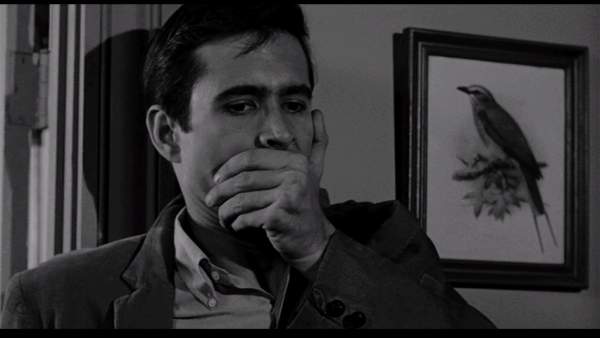
            I’m sure most of you are familiar with Psycho, the Robert Bloch novel that was adapted into the famous Hitchcock film.  Even if you haven’t seen it (or the pointless shot-for-shot remake) you probably know the general plot, yes? 
            So… who’s the main character of Psycho?
            If you said Norman Bates, you’re wrong.  He doesn’t even show up until half an hour into the story.  The truth is, Psycho is almost an anthology of three different stories connected by the theft of a large sum of money and the motel where the supposed thief vanished.  Our main characters are—in their respective tales–the thief, the police detective, and the thief’s sister.
            Y’see, Timmy, this is why Norman’s secret is so powerful.  We’re never seeing it with him, we’re always seeing it through the other characters—the one’s the story’s actually focused on.  If Norman had been one of the main characters, the story would be required to focus a certain amount of attention on him—while at the same time trying not to let us see or learn anything about him.  Instead he’s relegated to a supporting role in the story, even though he’s the character we’re most interested in.
            The Nine, The Event, and Alcatraz (and more than a few other stories I’ve read) all tried to put the mystery front and center while also trying to keep it a secret.  They wanted us to be interested and invested in characters who didn’t want us to know anything about them. 
            And that just won’t work.
            Next time, I want to talk about my collection of zombies.  Sort of.
            Until then, go write.
April 20, 2012 / 3 Comments

Why Do We Like These Guys…?

            Sorry there wasn’t a post last week.  I got the galley proofs for my new book, 14 (available in June from Permuted Press), and I spent about six days going over them line by line.

            There’s a weird trend in advertising lately.  Have you noticed that most of the people we’re supposed to be rooting for in commercials are kind of… well,  jerks?  They’re rude.  They’re smug.  They do obnoxious things that are supposed to be cute.
            Of course, unlikable characters are nothing new on television or in books.  There are hundreds of characters who are jerks to an almost criminal degree, but we still like them.  You can trace it back for decades.  Centuries, even.
            Let me give you a few examples.
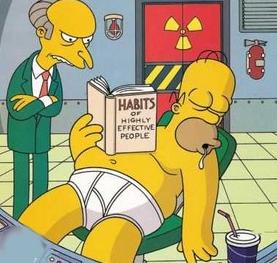
            Presented for your approval is one Homer J. Simpson.  He’s an alcoholic.  He’s rock-stupid.  He’s self-centered.  He subjects his kids to physical and emotional abuse.  He’s lazy to the point that he’s endangered countless lives in his hometown of Springfield, and a fair amount while traveling abroad, too.
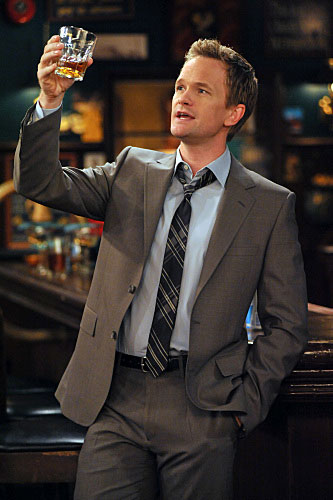
           Here’s another one.  Barney Stinson from How I Met Your Mother.  Barney’s rude, misogynistic, very manipulative, and openly cruel sometimes.  When you consider the political climate these days, it’s worth noting that Barney is also a one-percenter who’s gleefully acknowledged eliminating jobs to increase profits at the multi-national corporation he works for.
            And, lest you think I’m not taking this seriously with all the sitcom references, let’s also add in Doctor Hannibal Lecter (the version from the novels, to be clear).   He’s a monster.  No two ways about it.  He’s a murderer who’s killed people in some truly horrific ways.  He’s tortured people.  And there’s his defining trait, of course… cannibalism.
            How could anyone possibly like any of these characters?  Heck, how is it that people end up rooting for them?  We laugh when Homer throttles his son, we cheer when Barney abandons the woman he just slept with, and we approve when we realize Lecter’s tracked down the asylum director who treated him like an animal for years.  Is there something wrong with all of us?
            Not really.  If we look at all of these folks, there’s certain key traits they all share that make for great characters.  More to the point, theses are traits that are almost always missing from characters that frustrate and annoy readers and/or audience members.
            Firstand foremost is honesty.  One of the main things we love about these characters is that they’re all true to themselves.  They know who they are and they see no need to hide it.  Nobody likes a hypocrite or someone who keeps switching sides.  It’s why we all grind our teeth over politicians who say one thing on Tuesday and then say the complete opposite on their next campaign stop.
            If Barney was constantly telling us what a sweet, caring guy he was we’d find him slimy at best, reprehensible at worst.  Part of what makes his womanizing acceptable—to us and his friends—is that he doesn’t deny it in any way.  He has no problem admitting what he does and even admits it may hurt some women … but he’s not there to deal with it, so what’s the big deal?  Homer’s almost gleeful about his alcoholism and has frequently fought the idea of trying to learn anything new.  Lecter doesn’t see any moral difference between eating a person and eating an animal, so he has no problem discussing the appetizers he set out for his unexpected guests.
            One mistake I see a lot of writers make is when their characters are telling us one thing but showing us another.  Yakko says he’s taking time off and trying to get his head together, but really he’s out cruising and screwing around every day.  Dot tells us she’s loyal to her husband but sleeps with three different guys from her office.  Wakko insists that he follows the rules to the letter, but we catch him cheating a dozen times during the game.  There are times this type of thing can work, but this kind of dishonesty can turn a reader against a character very quickly if it’s not handled right. 
            A similar problem is when writers think ambivalence is a character trait.  They have characters who are constantly unsure or second-guessing themselves or their actions.  That kind of self-doubt can work in small doses, but it gets annoying real quick.
            The secondthing that makes us like these horrible folks is that, despite all their unlikable characteristics, each of them tends to be a pretty decent person at the core.  Often in each of their respective stories, we’ll see these characters do something or make a gesture that doesn’t really benefit them, but it gives us a glimpse of who they really are when they’re not trying to score points or keep up appearances.  There’s an old saying you might’ve heard that sums this up well–someone who’s nice to you but not nice to the waiter is not a nice person.  In screenwriting this sort of thing is sometimes known as the “saving the cat” (thanks, Blake Snyder), and it makes us—the audience—like these characters a little more.
            When Homer gives up his dream job at Globex to make his family happy, it’s showing us that he really does try to be the best father and husband that he can.  When Barney flies cross-country to tell Lily she needs to wise up and get back together with Marshall, it lets us see what’s really important to him.  If you’ve read any of the books by Thomas Harris, it’s pretty clear that Hannibal Lecter, despite some of his more gruesome dietary preferences, is kind of a classy guy.  He’s polite.  He’s generous.  He appreciates fine art and fine music.  He has a very good relationship with his orderly, Barney, born out of professional courtesy for one another.  Just because he sometimes does awful things to people doesn’t mean he’s needlessly cruel.  In fact Lecter never kills randomly or without purpose, and there’s a fair list of people in the books he doesn’t kill who he easily could have.
            Even if you’ve only seen the films, you may remember that one of his defining traits very early on is that he despises rudeness.  Lecter makes for kind of an interesting twist on saving the cat.  When his hallmate, Miggs, is exceptionally “discourteous” to Agent Clarice Starling, Lecter kills him for it.  After the good doctor escapes, Starling’s confident he won’t come after her because “he would consider it rude.”  If he was just a cannibal, Lecter would be no different than Leatherface from The Texas Chainsaw Massacre.  It’s this underlying decency that elevates him above a schlock-paperback slasher.
            I see this get messed up a lot in books and scripts.  The writer presents an unlikable character or characters that I’m clearly supposed to like on some level, but I’m never actually given a reason to like them.   A lot of horror storiesfail because of this.  If I don’t like a character on some level…why would I care what happens to them?
            That bit a moment ago with Miggs brings me to my third and final point…wish fulfillment.  While these characters are doing unlikable things, they’re all doing things that—on one level or another—we all wish we could do.  It would be awesome to goof off at work and drink every night and never get punished for it.  We’d love to sleep around and have no emotional fallout from either our partners or ourselves.  And, much as we’d like to deny it, there are times we’d all really like to see obnoxious idiots dead for the things they’ve done to us and to the people we like.  Preferably dead in a really horrible way.  The condescending doctor.  That jackass supervisor at work.  The guy in the insane asylum who throws bodily fluids. 
            A lot of times I see people trying to do the unlikable-but-likeable thing, and the real problem is that they’ve made a character who… well, just isn’t likeable.  There’s almost no way to put a positive spin on someone who stomps puppies to death or molests schoolchildren.  Personally, I find it really hard to get behind a bigot.  There are times that even saving a whole cat shelter can’t make up for a character’s unlikable traits because too many lines have been crossed.
            Yeah, I know the cannibalism thing is a little beyond what any of us want to do, but here’s an interesting point—you barely ever see Lecter’s eating habits in the books.  We hear about them, but in the first three books there’s only one incident where we actually see Lecter eat part of a human being (and it’s at the end of the third book in the series).  So it’s a character trait that’s inexcusable, but it’s also carefully kept at arm’s length.
            And that’s some of the reasons why so many of us can’t help but like the bad boys and girls.     
            Next time, I’d like to talk about a trio of failed television shows and why they failed.  There’s a good storytelling lesson in it for all of us.  Honest.
            Until then, go write.

Categories