March 21, 2013 / 4 Comments

Vocabulary 101

            Yep, you’ve had some time off from my rantings.  Now it’s time to get back to basics.

            I keep coming back to spelling.  There’s a reason for that.  Talk to any editor, publisher, contest director, or producer and they’ll say the number one problem they see in writing is spelling and grammar.  No matter what the story is, lots of manuscripts get rejected because the raw number of mistakes make them look amateurish and unprofessional.  It’s not the only reason they get rejected, granted, but I’d put money down that it’s a major factor in most rejections.  There’s a reason I lump such things into the 50% rule.
            I can’t be a chef if I can’t distinguish between chicken and turkey.  If I can’t tell an alternator from a carburetor, my career as a mechanic is going to be very short-lived.  And if I want to succeed at this writing thing—not in a spiritual way or a making-Dad-proud way or an I’ll-show-my-ex way, but in a serious, financial, this isn’t just a hobby way—I need to know how to use words.  There’s no way around it.  None.
            So here are some words that get misspelled—or misused—a lot.  And the writer doesn’t know, because they don’t know how to spell.  They just use a spell checker, because they thing it will never, ever mace a mistake… even if they did.
            The list is going to be a bit shorter this time around.  One of my regular contest-reader sources cut back on his hours a bit, and I haven’t read as much as I wanted to the past few months.  But my regular rules still hold—pretty much all of these words come from major websites, screenplays, or manuscripts.  Two of them are from published books.  My definition is for the word they thought they were using.  So if you’ve got a good vocabulary, you’ll probably get a chuckle or three over these.
            Pick up your signaling devices and….
solid and soiled – you only want to step on one of these things
foul and fowl – one of these tastes like chicken
balaclava and baklava – only one of these should be on your head
grisly and gristly – one of these is a tough piece of meat
grizzly and grisly – one of these is a bear
bear and bare – one means to endure or tolerate
passed and past—one of these means you didn’t get the promotion
definitely and defiantly – one of these is absolutely correct
succeed and secede – one of these means your state ends up alone
succession and secession – one of these is the process of ending up alone
due and do – one of these you pay
capital and capitol – one of these is money in the bank
            Did you know all of them?   
            Bonus round.  Which of these words get applied to a horrific scene?  Which one’s a tasty dessert?  If I owe money, which two of these words will probably be on my next bill?
            As I’ve mentioned many times before, it’s not enough just to know the words I’m asking about.  As a writer, I need to know all of them.  These are the tools of my trade, and I can’t be half-assed with them.  Knowing three ingredients in a recipe and winging it with the rest just doesn’t work.  If I’m going to call myself a chef, I’ve got to know them all.
            Because if I don’t know my words, my story starts to become muddled and unclear.  And I can’t be lazy and say “people will understand it from the context,” because using the wrong words changes the context.  If Phoebe decides togrin and bear it, it means she’s not going to let on how much the current situation is getting to her.  If she decides to grin and bare it, though, it means she just pulled her shirt open in a moment of naughtiness.  That changes the whole tone of the scene, and it could really change our view of Phoebe as a character.  So to speak.
            I need to learn to spell.  Me.  Not my spell-checker, not Dictionary.com.  Me.  The more I depend on someone else to do it for me, the weaker I am as a writer.  And if I’m a weak writer who’s decided to partner up with an idiot, well…
            Next time, I’d like to offer a quick tip I came up with while down at ConDor a few weeks ago.
            Until then, go write.
March 14, 2013 / 4 Comments

Groovin’

            First up, my sincerest apologies.  Again.  Two weeks missed in a row is not a good habit for me to get into.  I could make a bunch of excuses about the Ex-Heroesre-release and all the publicity work I’ve been doing, plus last week was ConDor con down in San Diego and I think I was on half a dozen panels over the weekend (including a writer’s workshop and an editing class).  Not to mention I’m trying to finish the fourth Ex book during all this…

            Actually, those are pretty good excuses.
            So, while I finish getting caught up, Thom Brannan has offered to step in with a post about scheduling your writing time.
            (maybe I should’ve read this two weeks ago…)
* * *
            Hello is all right.
            I know, I know. You came here to glean some of Peter Clines’ wisdom, and what the hell is this? Right? I’ll do my best to keep your disappointment to a minimum.
            My name is Thom Brannan, and some of you know me from Cthulhu Unbound, some from Survivors, some from Pavlov’s Dogs, and some from filing restraining orders. Some of you don’t know me from Adam. This should help.
These are Adams.  I am not one of them
            I’m here in Pete’s blog to help you with your writing. I’m not a guru, and if you’ve read my work, you’d probably agree. I’m probably only a notch above “adequate.” But one thing I do well is produce. I am a productive individual for someone who does not write for a living. And the reason for this is scheduling. So, I’m here to talk about scheduling and its importance for writers (and for any other creative endeavor, really) in my experience.
            (It should be worthwhile to note, for the rest of this blog entry, whenever I say “it’s this way,” or “this is what works,” I’m speaking of what I’ve experienced for myself and through others. I have no guru hat.)
            The first thing to realize is we are creatures of habit, all of us. Good habits, bad habits, everything in-between. It’s hard to break habits, so rather than suggesting you alter something about yourself that may require the assistance of a psychiatrist, let’s talk instead about forming good habits, which will hopefully be just as hard to break.
            Pete has hammered home the point: to be a writer, you must write.  I agree wholeheartedly. I’ve found that doing it at the same time every day helps the process. Your body and mind know when it’s time to do something. There are things you do so often and so insistently that you feel off if you’re not doing them. Liken the creative process to a workout, and you’ll see what I mean.
            These things are part of your daily routine, and if you are fortunate to be able to carve out a niche in your day for writing, you should definitely do so. Allow me to share with you my experience.
           After finishing work on Survivors, I had the opportunity to write a novel for the same audience. I leapt at the chance, and after wrestling with several ideas (and gathering input from friends) I chose one and got started.
            I’d written before, but always for myself, or to have a Cthulhu Mythos story in my back pocket for whenever an anthology opened, or what have you. I had never written with a deadline before. Now, I know myself pretty well, and I know this is how I am: if you give me a deadline, that’s when I’ll turn it in. If you wanted it earlier, you’d have made the deadline earlier. Right? Right. That’s kind of crappy, and I want to change that.
            So, to that end, I tried something new and scheduled myself some writing time. And, to keep myself honest, I tracked my daily and weekly progress in an Excel file. The first week, I averaged about twelve hundred pages a day, say five pages in standard manuscript format.  That seemed pretty good to me, and in keeping with Robert B. Parker’s self-enforced rule.
I felt like one of these, kind of.
            My second week of writing at the same time every day yielded slightly better results: eight pages a day. By week three, I was up to thirteen pages a day. By the last week of working on the novel, I was churning out eighteen pages a day.
            I leaned to take the weekends off, which allowed the grey matter to decompress, and it kept me from burning out. I also only do this four weeks at a time, with four weeks off in between.  
            To date, when working on a solo project, I write an average of twelve SMF pages a day. Slightly less when collaborating, but that’s to be expected. Compared to a powerhouse wordfount like Eric S. Brown, it’s not very much. But if I compare it to my previous output of one or two pages a week, it’s a vast improvement.
           I’ve also found that if I sit and play my guitar for five or ten minutes before writing, that primes the pump, so to speak. But that’s me. Everyone has something different to get them started when it comes to write. I’ve read that Hemingway would leave off in the middle of a sentence. The proprietor of this very blog makes sure he has something left over from today’s writing time so he can write tomorrow.
            So, there you have it. My 2¢ on scheduling. If I’m back at some point, I’ll likely blather on about collaborating.
            Until then… well, you know what Pete says here.
February 23, 2013 / 2 Comments

How To Lose A Screenplay Contest

             My apologies for being a bit late, but I think this is worth it

            This is going to be one of those screenwriting-centric weeks, although you could probably find some helpful hints.  If nothing else, I’m feeling a little slappy this week so you’ll probably find it very entertaining.
            It’s that time of year again.  The big-gun screenplay contests have opened their doors and are accepting entries.  Thousands of scripts are pouring in, ready to be judged, all with the hope of winning fortune, fame, and possibly a whole new life.
            Really, who needs that kind of pressure?
            It’s so much easier not to win, isn’t it?  Less work, less effort, and less responsibility.  Nobody really wants to deal with the money or the buzz or the constant calls from agents and managers and studios, right?
            As I’ve mentioned before, I’ve watched this play out from both sides.  I used to read for a few contests and spent long days and nights going through script after script, often seeing the same mistakes again and again.  I’ve also placed in a bunch of contests– and when I say placed I don’t mean I got the honorary quarter-finalist position that was given to everybody who entered.  I’ve won prizes and been singled out a few times. 
            So I know the kind of things that make a reader cringe and shake their head.  The things that make them shout and scream.  In one or two cases, only the timely intervention of booze kept me from gouging my own eyes out.
            I’m going to share those secrets with you right now.  Here are eight insider tricks which will help you ensure that your screenplay never makes it past the first round. In fact, if you can manage all of these, your script will go down in flames.
            And that’s what we all want, right?
Don’t Worry About Spelling
            Spelling is one if those outdated, elitist things that pretty much every contest uses as a general guideline, even when its painfully abhorrent whit some won meant too spill.  That makes this then easiest way to fail.  All I need to do is trust in my idiot spellchecker and never bother to look anything up.  A dozen or so misspelled and misused words in the first ten pages of my script will make sure any reader is biased to think I have no idea what I’m doing, and that means any good stuff that accidentally slipped into my story later on will be viewed with a much, much more critical eye.
Don’t Bother With Punctuation
            When I screw up my punctuation, it really grates on a reader’s nerves because it affects how they take in the story?  This is a slow, cumulative, thing that can really kill my chances and help swing the vote if someone’s on the fence, about my manuscript!  And anything, that can help lower my chances of moving on, is a good thing, right.
            A fantastic, screw-turning punctuation mistake is not knowing how to use apostrophe’s.  Yeah, they’re almost always used to show possession, almost never plurals, but it’s easy to forget that simple rule and use them for lot’s of thing’s.  Not knowing it’s or its is a great one that will make sure the reader can’t take me seriously as a writer.  That’s one of those easy mistakes that will make the odds of winning inch away little by little until it’s a good, safe distance away.
  
Ignore the Rules
            Contest have a lot of weird, arbitrary rules and requirements.  Some only want to see certain genres or themes.  Others won’t take adaptations.  A few of them will even put certain requirements on me as the screenwriter. 
            Ignore all of this.
            I make a point of sending torture porn scripts to competitions that are looking for  strong family themes and morals.  I submit romantic comedies to sci-fi contests.  If it’s for feature films, I send them the television pilot I wrote in college.  I make it a point to go at least ten pages past the maximum acceptable length.  If the competition is only for women or minorities, I make sure there’s a picture of my pasty-white junk on the cover so the readers know beyond a shadow of a doubt that I’m an Anglo-Saxon male.
            Doing something completely unacceptable like this takes a little more effort on my part, but it’s a pretty much guaranteed way to make sure I fail.
Don’t Sweat Formatting
            Hollywood is like any industry, and “industry-standard” is a term that shifts and changes all the time.  Learning the current, proper script format is tough, and can require typing things into Google and then looking at the results.  I don’t know about you, but I just don’t have time for stuff like that.

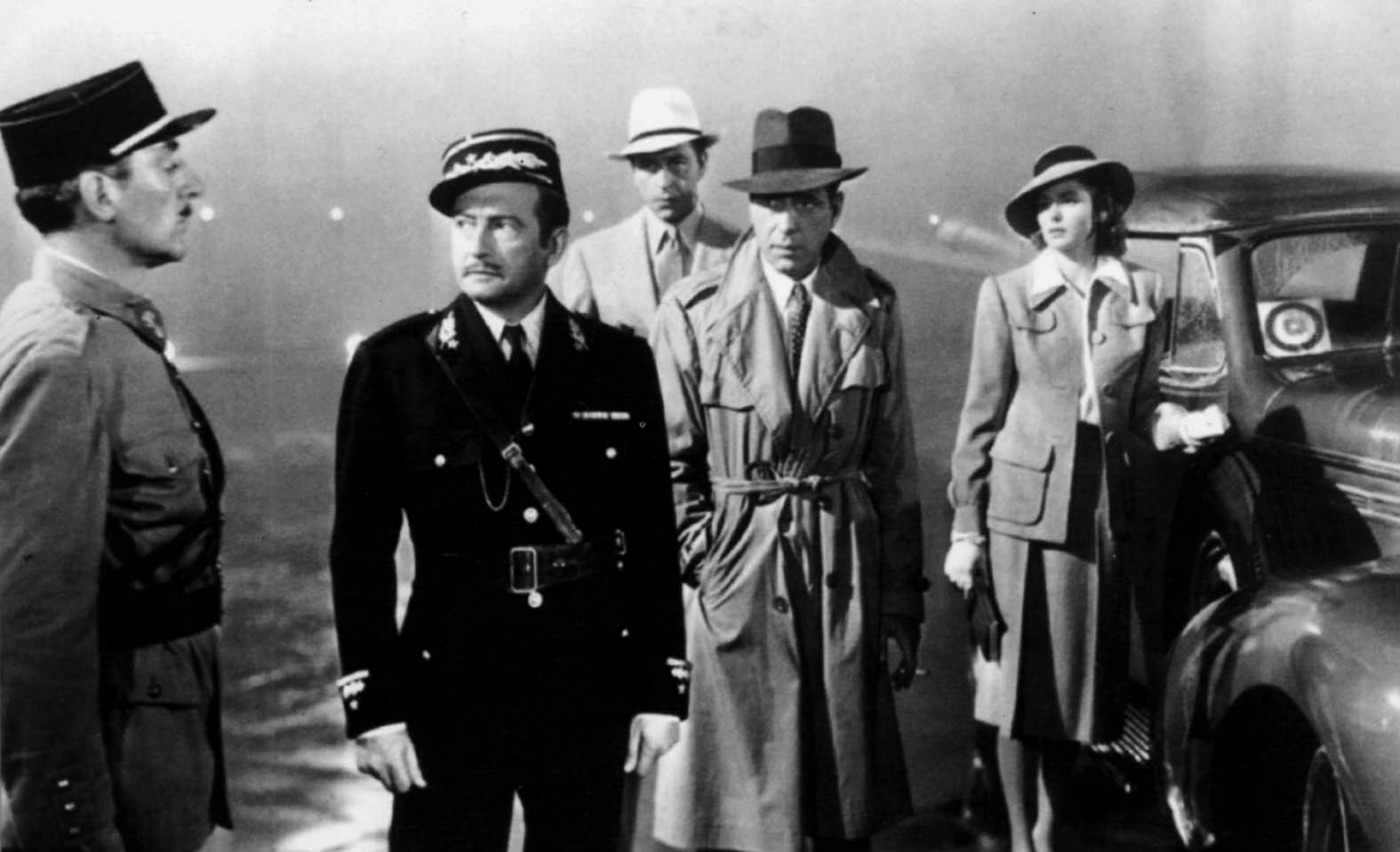
            As I see it, all these rules about headers and sluglines are just as arbitrary as spelling and grammar.  If I must format something, I like to use classic screenplays from the ‘40s and ‘50s as my guideline.  After all, if that page layout was good enough for Casablanca it’s good enough for people today. 

            Casablancawon an Oscar, you know. 
            I’ve even submitted stage plays to a few screenwriting contests.  Because at the end of the day, it’s still going to be a story in front of an audience, right?  I’ve never been clear why this gets some readers so frustrated that they start marking down for it.  The important thing, from our point of view, is that we can depend on them to do it and keep us out of that semi-finalist round.
Submit A First Draft
            The people who want to win often do a second draft.  Sometimes even a third.  They cut and rewrite and restructure and a bunch of other stuff that… well, you’d need to be a screenwriter to understand.  It’s a lot of work to get into that very uncomfortable position of being the winner.
            I prefer to go off the assumption that my work is perfect and needs no alterations or adjustments of any kind.  It’s like a diamond in the rough, just without the rough part.  It doesn’t even need polishing.  This is a great mindset to be in, because when my script gets rejected it casts all the blame squarely on the reader.  Because my script was perfect.
            Bam.  How great is that?  No work.  No pressure.  No winning.  It’s  a screenwriting trifecta.
  
Submit the Script You’re Going to Direct
            This method succeeds in getting me kicked out of the contest for a few reasons.  I don’t need to learn formatting, because it’s just going to be for me, Colleen, Patrick, and Sam.  I don’t need to explain a lot of stuff or go into detail because we all know what we’re talking about.  And it saves me time because I don’t need to take out all the stage directions, camera angles, parentheticals, editing notes, and other things cluttering the script.  You know, the stuff I added in to help me out when we shoot this next summer in Marcus and Gillian’s garage.
            See, readers are going to get hung up on all this stuff and say it’s not relevant.  That’s just a bonus.  Now when I get rejected, I’ve got proof Hollywood doesn’t recognize my genius. And probably that the contest is rigged.  In favor of people from Hollywood.
Base It On A True Story
            Okay, if I want to use this method to lose, one of the first things to do is make sure the reader knows this is based on a true story.  I need to put it on the cover, preferably as part of the title.  Opening monologues that explain this is all based on real events are good, closing monologues are better.  If I can figure out how to do both, that’s great.  Being very clear about this up front puts all the pressure on the readers, because now they must find my story believable.  Because it’s true.
            The next thing is to make sure the true story I’m basing this on is very boring and common.  If it’s something that happens to, say, half the people on earth in a given year, that’s excellent.  A quarter of the population isn’t bad, but I really want my true story to be as banal as possible.  It’ll improve my chances of failure a lot if the events can actually be dull in and of themselves, so I need to be honest with myself about how interesting they are.  I don’t want to mess up and tell a story that most people might actually want to see on the big screen.
            This one’s a bit tougher because I’m depending on everyone else in the contest to make up stories that are inherently more interesting than my true one.  Which isn’t that hard, but I don’t want my failure to hinge on someone else doing a better job than me.  So it’s best to choose a topic like cancer, a non-competitive sporting event, or maybe something about a gutsy schoolteacher.  These things will almost always drag my script right down, assuming the reader can stay awake long enough to judge it.
Make It As Hard to Read As Possible
            Last but not least, this is the knockout punch in my “losing a screenplay contest” arsenal.  If for some reason I can’t use any of the above tricks or angles, I need to actually make the script itself difficult to read.  Using a non-standard font is good for this, and only takes a few clicks of my mouse to get the script out of Courier and into something unacceptable like , Garamond, or Papyrus. 
            Another good trick is shrinking the font.  Readers see enough scripts every day that they’ll immediately notice this and it will drive them nuts, trust me.  The downside is this will actually make my script shorter, so if I do this it means I have to make my script even longer so it stays past the maximum acceptable length (as mentioned above).  If I’m not careful, this can lead to a vicious circle where I eventually end up with a 400,000 word script in 6-point font, and that’s a lot more work than I want to put into a contest I’m trying to lose.
            There are some other tricks, too, like giving lots of characters similar names (David, Davila, Danny, Danielle, Darcy).  You can also try naming every character, including bit parts and non-speaking roles.  Y’see, Timmy, this will confuse the hell out of a reader and make them waste a lot of time trying to keep things straight, and that will get them really frustrated with my script.  I can also confuse them by naming and describing as many characters as possible at the same time.  I like to call this “the dump truck approach.”
            And there you have it.  Eight sneaky tips and tricks you can use to make sure your screenplay never gets past the first round of judging.  You might like to know these methods also work if you’re submitting to agents or film studios. 
            So, take the easy way out and avoid all that extra work and stress. 
            Don’t win.
            I’m going to be taking next week off while I deal with a lot of things for the re-release of Ex-Heroes (available everywhere Tuesday the 26th).  But Thom Brannan, author of Lords of Nightand co author of Pavlov’s Dogs, is going to sit in and talk to you a bit about getting stuff out of your head and onto the page.  Then I’ll be back the week after to talk about one of my favorite topics.
            Until then, go write.

            Ahhh, Valentine’s Day.  A day when love and romance should be the first thing on everyone’s mind.  Even when we’re not dating anyone,  we can’t help but brood over such things today.  Okay, love, romance, and maybe massacres.

            Anyway…
            I’ve got plans, so I won’t be here for long, but I wanted to take a moment to address a common issue I see with love stories, whether they’re the main thrust of the story or just a subplot. 
            The weak triangle.
            I’ve mentioned triangles here before.  They’re an easy form of conflict where a character (A) has to choose between two options (B and C).  They come in a variety of flavors, but for today’s little rant I’m going to talk about one of the most common ones—the romantic triangle.
            We’ve all seen romantic triangles before.  Wakko (A) has been lusting after the head cheerleader (B), but then comes to realize that his best friend Phoebe (C) is really the person he should be with.  Dot (A) is all set for her reliable-and-boring boyfriend (B) to propose on their trip to Europe…until she meets the bohemian artist (C) who just moved in across the hall.
            Sounds familiar, yes?
            Here’s something else that may sound familiar.  In how many versions of this story is that head cheerleader (and please pardon me for being blunt) a cruel, wretched bitch?  Not just in a “mean girls” sense, but an honestly reprehensible human being?  She isn’t just someone you wouldn’t want to date, she’s someone you wouldn’t even want to talk to.
            And yet… Wakko’s infatuated with her.  He’s totally blind to her faults, no matter how many times he’s smacked in the face with them.
            Now, granted, in this scenario Wakko’s a high school boy.  High school boys are notorious for overlooking things, especially when it comes to high school girls.  It’s a hormone thing.
            But we’ve seen this situation reversed, too, haven’t we?  Where Dot is smitten with the quarterback—an arrogant jock whose dream is to start up a Hitler Youth program at their school because he thinks it will look good on his college applications.  And we all know girls mature faster than boys soooo… what’s her excuse?
            Really, there’s a dozen versions of my B character (B referring to the point of the triangle, not the sophistication of my writing).  The Bridezilla.  The condescending executive.  The fixer.  The person who’s nice to you but rude to the waiter.  The all-too plain Jane.  The Mister-so-Right-it’s-kind-of-creepy.  Everyone reading this can probably name a dozen examples from a dozen different stories, yes?
            Now, in this particular triangle scenario (and all the variations of it), the big problem is the actual integrity of the A-B line of the triangle.  When B is such an overall undesirable person, we can’t understand why that relationship even exists in the first place.  Why would Wakko be involved with someone like her?  What does Dot possibly see in him?  Surely either of them could do better, right?
            See the problem here?  If it’s that obvious to all of you that my character is with the wrong person, then said character looks kind of stupid, don’t they?  Maybe really stupid, depending on how much of an ass I’ve made B look like.
            More to the point, going with C isn’t much of a surprise in this scenario, is it?  It’s the only sane choice.  If they don’t go with C, they look even dumber than they do for being with B.  To paraphrase Eddie Izzard, when the choice is cake or death, we’re not really surprised that most people choose the cake.
            If I’m using a triangle for conflict, especially a romantic triangle, B and C both have to be valid choices.  If they’re not, then my triangle doesn’t have any strength to it.  It’s weak, and that means my conflict is weak.  And if my plot or subplot is based on that conflict… well…
            Mind you, B doesn’t need to be perfect.  He or she should have pros and cons, like any good characters.  But there need to be enough pros—even if they’re shallow ones—that they somehow outweigh the cons.  As I mentioned above, there are times that a pretty face or really great sex can override a lot of negative qualities in a person.  So can a lot of money or material goods.  But these things can only make up for so much.  At the end of the day, the relationship between A and B has to be a solid one.  Not rock solid, but it has to take some weight.
            Making this decision between B and C needs to cause some turmoil for A.  Not gut-wrenching, years-of-therapy turmoil, but it should require a bit of effort.  It has to be a challenge.
            At least, more of a challenge than picking cake or death off the dessert menu.
            Next time… well, it’s that time of year again.  It’s contest season, and I wanted to offer a few tips to the screenplay-centric folks so you can make sure that your script goes down screaming in a ball of flames and never has a chance.
            Until then… well, okay, tonight your mind shouldn’t be on writing.
            But tomorrow, go write.

Categories