
August 15, 2013

Admissions Board

             This is going to be one of those posts that sounds a bit harsh at first, but hopefully you’ll stick through ‘till the end before posting those angry responses.  If you’re feeling a bit thin-skinned, maybe you should come back next week.
            Writing is tough.  It’s hard work.  I know this, because I do it for a living.  When someone tells me how easy and wonderful and fun writing is, I’m often tempted to point out that they’re probably doing something wrong.
            Instead, I bite my tongue and scribble notes for a ranty blog post or two.
            There was a point when I thought writing was easy and fun.  To be blunt, that was back when I wasn’t taking it seriously.  My plots were either contrived or derivative (some might say that hasn’t changed).  My characterization was weak and my motives were… well, whatever they needed to be at the moment to make that weak plot move along.  I rarely edited. 
            Perhaps most important of all… I thought I was a literary genius.  My stories didn’t just deserve Stokers and Hugos, mind you.  Once I got around to finishing them and sending them out, they were going to get Pulitzers and Nobels.
            Needless to say, my writing made huge leaps when I was able to admit a few things to myself.  I think that’s true of most people in most fields—if we can’t be honest about where we are, it’s hard to improve.
            That being said…
My writing sucks—This sounds harsh, yeah, but it needs to be.  Too many beginning writers just can’t get past the idea that something they wrote isn’t good.  I know I couldn’t.  It’s just against human nature to spend hours on something and then tell yourself you just wasted a bunch of time.  Why would I write something I couldn’t sell?  Obviously I wouldn’t, so my latest project must deserve a six-figure advance.
            The problem here is the learning curve.  None of us like to be the inexperienced rookie, but the fact is it’s where everyone starts.  Surgeons, chefs, pilots, astronomers, mechanics… and writers.  Oh, there are a few gifted amateurs out there, yeah—very, very few—but the vast majority of us have to work at something to get good at it. 
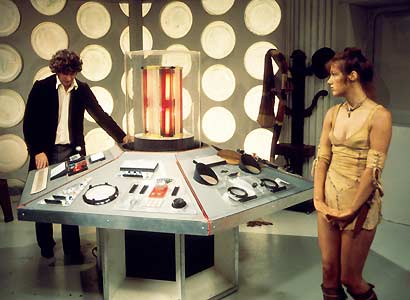
            You noticed I said “us,” right?  Lots of people think of Ex-Heroes as my first novel, but it wasn’t.  There was Lizard Men from the Center of the Earth (two versions), a God-awful sci-fi novel called A Piece of Eternity, some Star Wars and Doctor Who fan fic, a puberty-fuelled fantasy novel (which I haven’t admitted to in twenty years or so), The Werewolf Detective of Newbury Street, The Trinity, The Suffering Map, about half of a novel called Mouth… and thenEx-Heroes.  And I can tell you without question that most of those really sucked.  It doesn’t mean I didn’t try to sell some of them (we’ll get to that in a minute), but I couldn’t improve as a writer until I accepted that I needed to improve.
My first draft is going to suck—There was a point where I would fret over my writing.  I’d spend time laboring over individual words, each sentence, every paragraph.  I’d get halfway down the page and then go back to try to fix things.  It meant my productivity was slowed to a crawl because I kept worrying about what had happened in my story instead of what was going to happen.
            The freeing moment was when I realized my first draft was always going to suck, and that’s okay.  Everyone’s first draft sucks.  Everyone has to go back and rework stuff.  It’s the nature of the beast.  With those expectations gone, it became much easier for me to finish a first draft, which is essential if I ever wanted to get to a second draft, and a third draft, and maybe even a sale.
My writing needs editing.  Lots of editing—So, as I just mentioned, I’ve been doing this for a while.  Arguably thirty-five years.  Surely by now I’ve hit the point where my stuff rolls onto the page (or screen) pretty much ready to go, yes?  I mean, at this point I must qualify as a good writer and I don’t need to obsess so much over those beginner-things, right?
            Alas, no.  We all take the easy path now and then.  We all have things slip past us.  We all misjudge how some things are going to be read.  And I’m fortunate to have a circle of friends and a really good editor at my publisher who all call me out when I make these mistakes or just take the easy route when I’m capable of doing something better.
            Also, as I mentioned above, part of this is the ability to accept these notes and criticisms.  I’m not saying they’re all going to be right (and I’ve been given a few really idiotic notes over the years), but if my default position is that any criticism is wrong then my work is never going to improve past the first draft. 
            Which, as I also mentioned above, sucks.
My writing needs cuts—Sticking to the theme, if I believe my writing is perfect, it stands to reason all of it is perfect.  It’s not 90% perfect with those two odd blocks that should be cut.  When I first started to edit, one of my big problems was that everythingneeded to be there.  It was all part of the story.  Each subplot, every action detail and character moment, all of the in-jokes and clever references.
            The Suffering Map was where I first started to realize things need to be cut.  I’d overwritten—which is fine in a first draft as long as you admit it in later drafts.  I had too many characters, too much detail, subplots that had grown too big, character arcs that became too complex.  It took a while, but I made huge cuts to the book.  It had to be done.  Heck, with one of my more recent ones, 14, I needed to cut over 20,000 words.  That’s a hundred pages in standard manuscript format.  All cut.
My writing is going to be rejected –You know what I’ve got that most of you reading this will never have?  Rejection letters.  Actual paper letters that were mailed to me by editors.  I’ve got lots of them.  Heck, I’ve probably got a dozen from Marvel Comics alone.  And since then I’ve got them from magazines, big publishers, journals, magazines, ezines.
            But when that first one came from Jim Shooter at Marvel… I was crushed.  Devastated.  How could he not like my story?  It was a full page!  It was typed!  I even included a rendering of a cover suggestion in brilliant colored pencil.  It took me weeks—whole weeks, plural—to work up my courage to try again, and then he shot that one down, too.
            Granted, I was about eleven, and those stories were really awful.  But even good stuff gets rejected.  Heck, even with the list of credits I’ve got now, the last two short stories I sent out were rejected.  Editors and publishers are people too, and not everything is going to appeal to everyone.  I came to accept being rejected once I realized it wasn’t some personal attack (okay, once it was…), just a person who didn’t connect with my story for some reason.
            And, sometimes, because my stories sucked.
            If I can admit some of these things to myself, it can only make me a better, stronger writer.  It’s not a flaw or a weakness.  In fact, if I look at the above statements and immediately think “Well, yeah, but I don’t…,” it’s probably a good sign I’m in denial about some things.
            And that won’t get me anywhere.
            Next time, I’d like to say a few clever words about saying the word said.
            Until then, go write.
June 6, 2013 / 1 Comment

Where The Problem Is

             A quick pointer…
            Every now and then I throw open the floor here to suggestions.  What would people want to hear me ramble on about next?  What topics or elements are giving them trouble in some way, or maybe they just want a few pointers on something?  Pretty much every time I do this, someone will ask about agents or networking or publishing, and I will politely explain I don’t cover that stuff here.

            Why?

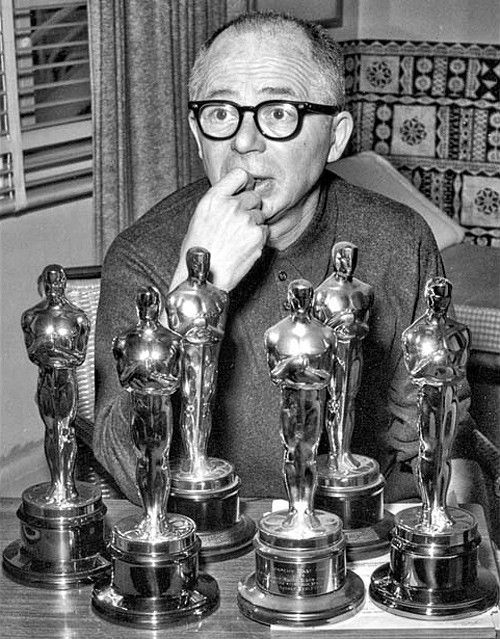
            When asked for screenwriting tips, Oscar-winner Billy Wilder would often remind would-be writers of a simple rule of thumb.  To paraphrase, a problem with your third act is usually a problem with your first act. 
            In other words, if the end isn’t working, it’s probably because of the way I did things in the beginning.  Perhaps I didn’t establish characters well or set up things for that twist.  Maybe the gruesome, depressing ending just doesn’t work after two acts of comedy and slapstick.
            My career as a writer has three acts, too.  A beginning, middle, and an end.  I learn the basics and practice a lot.  I write a good book.  Someone gets interested in the book and offers me money for it (either in a contractual or individual sense).
            So if I’m having trouble with that last part, the third act of my writing career, maybe the problem is in my first act. 
            Maybe it’s not that publishers and agents are jerks who won’t recognize my genius or try anything new.  Perhaps the problem rests in that first part of the equation.   Do I even know my basics?  Did I bother to practice and polish my skills?  Or did I declare the first thing I scribbled out perfect and leave it at that?
            It’s just possible, believe it or not, that I can’t get anyone interested because I didn’t write a good book.
            Next time, I’d like to share some thoughts about a new topic I’ve been researching.
            Until then, go write.
            Pop culture reference.  I have no idea why, but that commercial always made me giggle like a little kid.

            So… I’ve only got a couple of minutes, so let’s talk about right now.  Starting… now.
            When I used to read for a couple of screenplay contests, one of the most common mistakes I’d see would be writers loading the page with information that wasn’t being shown on the screen. 

INT: CAFE
Push in on PHOEBE, sitting at a table, sipping her coffee.  She’s young, blonde, and pretty in that girl-next-door way.  She’s also heartbroken because she just found out her boyfriend’s been sleeping with someone from his office.  They got in a fight when she confronted him and he told her to move out.  She moved here to Seattle to be with him, doesn’t have any nearby family, and has realized that most of her friends were his friends first.  So now she’s sitting here in a cafe, with all her belongings out in her car in the parking lot, trying to figure out what to do with her life.

          Now, in the scene I just scribbled out… what’s happening in the movie right now?  What do we, as the audience, see?  What actions are taking place? 

            Screenwriting is about right now.  Not a year ago, not last week, right now.  Nothing matters except what’s on the screen right now.  If it’s not on screen right now, it’s not important.  If it is important, it’ll come out on screen later (later, at that point, being right now).  If all the words on page one of my screenplay aren’t related to the first minute of my movie, I’m doing something wrong. 

            So, just to clarify, my script should only be talking about what’s happening right now
            Now, there are lots of screenplays out there by some amazing screenwriters that mention a character’s background, past relationships, all that sort of thing.  Thing is, if I really pay attention when I read all those scripts, I’d see that these elements are only brought up when they’re relevant to what’s happening on screen right now.  Because screenwriting is about right now.
            Here’s my quick little common sense analogy for you. Feel free to swap genders or locations as you like…
            If I’m out at a bar talking with Phoebe, she’s what’s important.  If I’m talking to Phoebe but thinking about Dot, it means I’m either A) a jerk or 2) focused on the wrong thing.  Because if I’m talking to Phoebe, I should be focused on Phoebe.  If I’m thinking about my boss, I’m doing something wrong.  If I’m on the phone talking with a friend, I’m doing something wrong.  If I’m thinking about my ex-girlfriend or the woman I met earlier in the evening, there’s something wrong.  And if I’m thinking about where Phoebe and I are going to be two hours from now… yeah, I’m probably still wrong.  Phoebe’s in front of me right now, so I should be focused on her. 
            Right now.
            When next week becomes right now, I think I may talk a bit about flashbacks.
            Until then, go write.
March 14, 2013 / 4 Comments

Groovin’

            First up, my sincerest apologies.  Again.  Two weeks missed in a row is not a good habit for me to get into.  I could make a bunch of excuses about the Ex-Heroesre-release and all the publicity work I’ve been doing, plus last week was ConDor con down in San Diego and I think I was on half a dozen panels over the weekend (including a writer’s workshop and an editing class).  Not to mention I’m trying to finish the fourth Ex book during all this…

            Actually, those are pretty good excuses.
            So, while I finish getting caught up, Thom Brannan has offered to step in with a post about scheduling your writing time.
            (maybe I should’ve read this two weeks ago…)
* * *
            Hello is all right.
            I know, I know. You came here to glean some of Peter Clines’ wisdom, and what the hell is this? Right? I’ll do my best to keep your disappointment to a minimum.
            My name is Thom Brannan, and some of you know me from Cthulhu Unbound, some from Survivors, some from Pavlov’s Dogs, and some from filing restraining orders. Some of you don’t know me from Adam. This should help.
These are Adams.  I am not one of them
            I’m here in Pete’s blog to help you with your writing. I’m not a guru, and if you’ve read my work, you’d probably agree. I’m probably only a notch above “adequate.” But one thing I do well is produce. I am a productive individual for someone who does not write for a living. And the reason for this is scheduling. So, I’m here to talk about scheduling and its importance for writers (and for any other creative endeavor, really) in my experience.
            (It should be worthwhile to note, for the rest of this blog entry, whenever I say “it’s this way,” or “this is what works,” I’m speaking of what I’ve experienced for myself and through others. I have no guru hat.)
            The first thing to realize is we are creatures of habit, all of us. Good habits, bad habits, everything in-between. It’s hard to break habits, so rather than suggesting you alter something about yourself that may require the assistance of a psychiatrist, let’s talk instead about forming good habits, which will hopefully be just as hard to break.
            Pete has hammered home the point: to be a writer, you must write.  I agree wholeheartedly. I’ve found that doing it at the same time every day helps the process. Your body and mind know when it’s time to do something. There are things you do so often and so insistently that you feel off if you’re not doing them. Liken the creative process to a workout, and you’ll see what I mean.
            These things are part of your daily routine, and if you are fortunate to be able to carve out a niche in your day for writing, you should definitely do so. Allow me to share with you my experience.
           After finishing work on Survivors, I had the opportunity to write a novel for the same audience. I leapt at the chance, and after wrestling with several ideas (and gathering input from friends) I chose one and got started.
            I’d written before, but always for myself, or to have a Cthulhu Mythos story in my back pocket for whenever an anthology opened, or what have you. I had never written with a deadline before. Now, I know myself pretty well, and I know this is how I am: if you give me a deadline, that’s when I’ll turn it in. If you wanted it earlier, you’d have made the deadline earlier. Right? Right. That’s kind of crappy, and I want to change that.
            So, to that end, I tried something new and scheduled myself some writing time. And, to keep myself honest, I tracked my daily and weekly progress in an Excel file. The first week, I averaged about twelve hundred pages a day, say five pages in standard manuscript format.  That seemed pretty good to me, and in keeping with Robert B. Parker’s self-enforced rule.
I felt like one of these, kind of.
            My second week of writing at the same time every day yielded slightly better results: eight pages a day. By week three, I was up to thirteen pages a day. By the last week of working on the novel, I was churning out eighteen pages a day.
            I leaned to take the weekends off, which allowed the grey matter to decompress, and it kept me from burning out. I also only do this four weeks at a time, with four weeks off in between.  
            To date, when working on a solo project, I write an average of twelve SMF pages a day. Slightly less when collaborating, but that’s to be expected. Compared to a powerhouse wordfount like Eric S. Brown, it’s not very much. But if I compare it to my previous output of one or two pages a week, it’s a vast improvement.
           I’ve also found that if I sit and play my guitar for five or ten minutes before writing, that primes the pump, so to speak. But that’s me. Everyone has something different to get them started when it comes to write. I’ve read that Hemingway would leave off in the middle of a sentence. The proprietor of this very blog makes sure he has something left over from today’s writing time so he can write tomorrow.
            So, there you have it. My 2¢ on scheduling. If I’m back at some point, I’ll likely blather on about collaborating.
            Until then… well, you know what Pete says here.

Categories