

November 7, 2014 / 2 Comments

Take It From The Top…

Musical reference.  If you were ever in band class, you already have an idea what I’m talking about.

Here’s a quick tip I wanted to toss out for a common problem…

I think most of us have some project—a novel, a screenplay, a short story—that we really loved at one point, but had to put down.  Maybe it was because of work.  Family stuff could’ve cropped up.  Perhaps circumstances forced us to move on to other things.  It happens.

Then we go back to it.  Not just to dabble with it over a weekend, but to pick up things where we left off.  And—no surprise—it’s tough to make things work the way they did before the break.
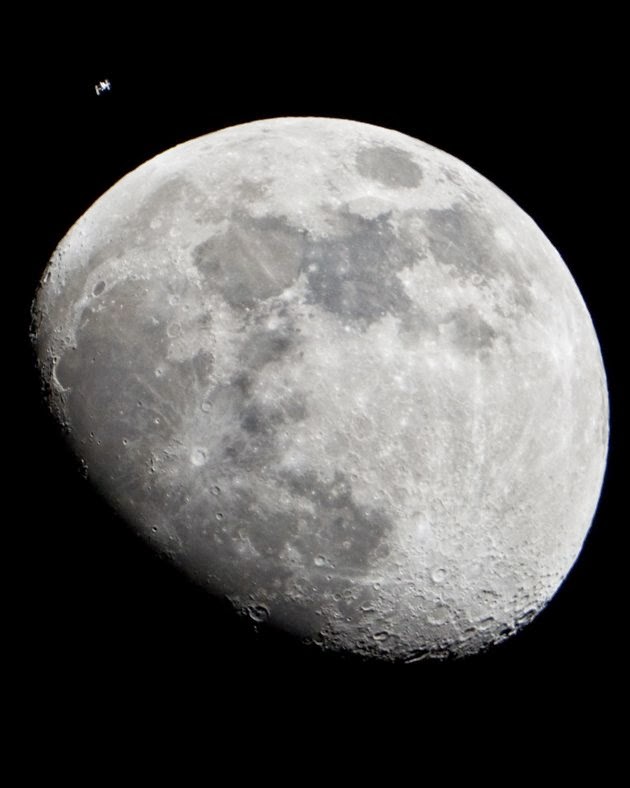
If you’ve been reading this little pile of rants for a while, you may remember me referencing a novel I started about zombies on the Moon.  I began work on it back in late 2009, but put it aside after a few months because my publisher at the time wanted me to try a mash-up novel.  When I tried to go back to the zombie idea, he’d just bought another “zombies in space” novel and warned me he probably wouldn’t want another one (I ended up writing a book about a creepy apartment building instead).  I even tried to go back to Dead Moon again two years ago, and… well, it was a struggle.  I couldn’t remember how the characters sounded in my head, or where some of the plot points were leading.  I banged my head against it for about three months and then, well, circumstances required I move on again.

My lovely lady recently had a similar problem.  She tried to finish a first person manuscript that was about 4/5 done, but she hadn’t touched it in about a decade and it was very, very voice-heavy with a very tricky plot.  That last 20% took her months.

And I made the same mistake again, even after my attempts to get back to the Moon.  One of my most recent books began as a different novel back in 2007.  It was set aside twice (much like Dead Moon), and I’d kind of given up on it.  But then I realized I could salvage a lot of the plot and characters and use them as kind of a spin-off-side-quelto that creepy-apartment story.  Which sounded great on a bunch of levels.

Except what really happened was that I tried to pick up right where I left off.  I fumbled with it for a long time before I realized I needed to forget X and start writing Y.  And I was 2/3 through Y before it hit me that the whole thing was really just clinging to X again.  I pulled it apart (now with a deadline creeping close) and finally got Z put together.

Which my editor looked at and immediately caught a bunch of Y stuff.

Y’see, Timmy, if we’re doing things right, we all keep growing as writers.  We gain experience (some good, some bad).  We learn new things.  We swear never to do certain things ever again.

And because of this, we stumble when we try to go back.  It’s kind of like bumping into an old ex and pretending nothing’s changed when… well, a lot has changed.  There’s skewed memories, things we know that we don’t want to talk about, and experiences that make casual conversations kind of awkward.  Because we’ve grown and moved on.  There can still be something there, sure, but it’ll never be what it was back then.

Final anecdote.  A month or two back I was offered a spot in a high-profile anthology.  My first thought for a story that fit was actually an unproduced script I’d written for a television show back in 2001.  But this was a themed anthology—my story had to fit this theme and these characters.

So I read through the old script twice to get the story and the beats back in my head.  Then I put it aside.  Didn’t look at it again.  I wrote my first draft in a week (about 12,000 words) and had three more drafts done in the next two and a half weeks.  The editor loved it.

So, here’s my tip.

If I’m going to go back to a half-done project that I haven’t done anything with for a significant amount of time, I might be better off just starting from scratch. Don’t try to save or salvage or repurpose.  Just start over.  This way I’m not fighting with present vs. past experience or voices or plotlines.  I’m just writing

Sometimes it’s faster to start over on a project than to pick it up after a long time away from it.

Next time, I’m going to introduce a reader request about characters.

Until then, go write.

September 29, 2014 / 4 Comments

Photo Tip

September 25, 2014 / 2 Comments

The Muse and Cake

            Okay, I’ve had a couple of deadlines shift, so I’m not going to be able to talk about Clint Eastwood like I planned.  Instead, I’d like to share a few quick observations about the muse that crossed my mind a few days ago.
            There is no muse. 
            The muse is a lie. 
            There is only you. 
            Writing is work.  The muse is not going to do the work for you because the muse, as I said, is a lie.  The muse is not going to sort out that plot snarl or polish that dialogue or put down those one thousand words today.  The only person who will do that work is you.  That’s the ugly truth.
            The idea of the muse has been pulled from mythology and perpetuated by modern writing classes and gurus to excuse lazy behavior.  It’s an artistic, pseudo-intellectual scapegoat.  People who don’t feel like writing, who don’t feel like solving problems, they blame the muse.
            Waiting on the muse is another way of saying wasting time.  Every day you wait on the muse is a day someone else is writing more than you.  A day someone is getting more experience than you.  A day that someone is getting better than you.
            Stop waiting on the muse.
            Write.  If you want to write, if you want to be a writer, if you want to become a better writer, you need to write.  You’re going to write a ton of stuff and a lot of it is going to be crap.  But that’s how we get to the good stuff.  By working at it. 
            Not by waiting for the muse.
            Next time, Clint Eastwood.  For real.
            Until then, go write.

            No excuses.  Go write.
September 4, 2014 / 4 Comments

Oh, My Nose!

            Okay, I think I’m pretty much caught up with things on my end.  Even have the next four or five weeks planned out.  If there’s something you’d like me to babble on about, though, please drop me a note down in the comments.  There’s a good chance I can fit it into my semi-themed schedule before the end of the year.
            That’s what I’m saying at the moment, anyway.
            Speaking of which…
            As I’ve said once or thrice before, good dialogue is everything.  We learn so much subtle stuff from characters by what they say and how they say it.  There are dozens of words for police, for teachers, for bosses, for jobs, and more.  Does Phoebe call Wakko her boyfriend, her partner, her man, or her boy toy?  Does Wakko think of her as his lover, his bitch, his piece of ass, his significant other, or his friend with benefits?  No matter what their relationship is, the words they each use to describe it tells us something about both of them. 
            One term that comes up a lot in criticism is on the nose dialogue.  I’ve seen it tossed out to beginners numerous times in feedback, but usually without any explanation.  I saw it a lot when I used to read for screenplay contests (and wrote it on many, many forms).
            At its very simplest, on the nose dialogue is when my character is saying precisely what they’re thinking with no subtlety to it whatsoever.  It’s the difference between “Do you want to come up for a cup of coffee?” and “Would you like to have sexual relations in my living room now?”  There’s no inference or implications, no innuendoes or layered meanings—no subtlety at all.  It’s dialogue stating the obvious, and I’ve mentioned a few times before how bad it is to state the obvious
            If I have on the nose dialogue, it usually strips away some layers of character, too.  How people avoid saying things is just as revealing as what they’re trying not to say.  If they don’t have those nuances and habits in their voices, they start sounding like robots.  Or cartoon characters. 
            Not the good kind of cartoon characters.
            In real life, people beat around the bush. We’re coy.  We feel each other out, in a verbal sense, and avoid saying things directly.  We use metaphors and similes and white lies and more.
            Here’s a couple things I should be doing to make sure my dialogue doesn’t get too on the nose…
            Casual English—I’ve mentioned before the difference between written English and spoken dialogue.  When dialogue follows all the rules of grammar it starts to get wooden and lose a lot of its flavor.  Sometimes there’s a point to this.  We’ve been taught to expect that aliens, androids, and super-geniuses tend to have very good grammar in stories.
            For the vast majority of us, though, we get a bit loose when we speak.  We use contractions and mismatch verbs and numbers.  It just happens.  Look up above where I said “Here’s a couple of things I should be doing…”  When we don’t, dialogue becomes rigid, and that’s just a short shuffle from being wooden.
            Jargon—Somewhat related to the last point.  The idea of slang has been around for a long time.  Bram Stoker talked about it in Draculaover a century ago, and it’s a safe bet printers developed their own special terminology in the workplace less than a decade after Guttenberg made his printing press.  Everyone has their own set of words and terms that gets used within their particular group, and these words spill out into most of their conversations.  In other words, doctors speak like doctors, engineers talk like engineers, and sci-fi geeks speak like Dothraki.  When my characters lose these basic subtleties, their dialogue starts getting on the nose.
            Humor—Many years back I was on a road trip with a friend and we got horribly lost on the way to meet up with some folks.  It was all back roads and single-lane highways.  When we finally found a sign I could use to locate our position, I discovered we’d somehow got about a hundred miles off-course in about an hour and a half.  No chance we’d meet up with our friends on time.  Possibly no chance of finding a gas station, leaving us stranded in the middle of nowhere.  He saw my expression as I checked the map again and asked what was wrong.
            “Well, the bad news is we’re lost.  The good news is we’re making excellent time.”
            We make jokes at the worst possible times.  Office reviews.  Breakups.  Traffic accidents.  Courtrooms.  Funerals.  It’s just the way we’re wired.  The more serious the situation, the more imperative that release valve is for us.  In fact, we tend to be suspicious or uneasy around people who never crack jokes.  Not everyone and not at every moment, but when there’s no joking at all… it just feels wrong.
            Flirting—Similar to the above, this is another fact of human nature.  We show affection for one another.  We all flirt with friends and lovers and potential lovers, sometimes even at extremely inopportune times.  It’s not always serious, it can take many forms, but that little bit of playfulness and innuendo is present in most casual dialogue exchanges. 
            Like joking, it’s impossible to flirt with on the nose dialogue because it requires subtlety and implied meanings.  Flirting without subtlety generally comes across as propositioning, which gives a very different tone to things.  If no one in my story flirts with anyone on any level, there might be something to consider there.
            Not Using Names—There’s an old mnemonic trick of repeating someone’s name after you meet them.  Great for real life, not so great in fiction. 
            If I use someone’s name every time I speak to them, it starts to sound a little mechanical.  Yeah, even nicknames.  Yeah, even in crowds. We just don’t use names that often.  Think of your last few conversations and think about how often names get used.  Watch your favorite movie and see how often people address each other by name.
            Show Don’t Tell—You’ve probably heard a version of this before, but I’m talking about it in a slightly different way here.  Yeah, it’s clumsy if I’m just using my narrative to describe what’s happening.  It’s even worse if my characters are describing what’s happening.  Especially when they have absolutely no reason for doing it. 
            To be clear, I’m not talking about when they explain what they’re doing (say, trying to perform CPR or maybe cook dinner), but when they’re just speaking their actions aloud.  If you’ve ever heard an old radio-show where the actors had to depend on just dialogue with no visuals, you know what this sounds like.
            This kind of clumsy dialogue immediately tells the reader that I’m not picturing this scene at all.  For screenwriters, this kind of thing is almost guaranteed to get my script tossed in the big pile on the left, because I’m clearly not thinking about what’s on screen.
            Talk with other characters—This may sound silly, but if someone’s talking, they should be talking with someone else.  Nine times out of ten, if a character’s talking to themselves, it’s on the nose dialogue.  All those monologues about stress, long ethical debates, Yakko psyching himself up, Dot trying to figure out how to get past the thirteen Hydra agents… odds are every bit of that is on the nose dialogue.
            I also shouldn’t try to get around this with a “sounding board” character.  Talking is communication, which means it has to be a two-way street.  If I’ve got someone who serves no purpose except to be the other person in the room while someone thinks out loud, then they’re not really serving any purpose. 
            And that’s six things I should be doing with my dialogue.  I don’t need to do all of them, but if I’m not doing any of them… well…  Maybe my dialogue’s a little on the nose.  Or maybe a lot on the nose.
            Next week, I want to talk about inflation.
            Until then, go write.

Categories