
November 30, 2017 / 4 Comments

One Of You… Is A Murderer

Sorry for the blast of posts this week.  Feel free to blame it on my love of storytelling—my own and other peoples.  Or rampant consumerism.  Or on me wanting to pay rent in January.  Any one of these answers is true.

But now… let’s get back to some plain old writing advice.

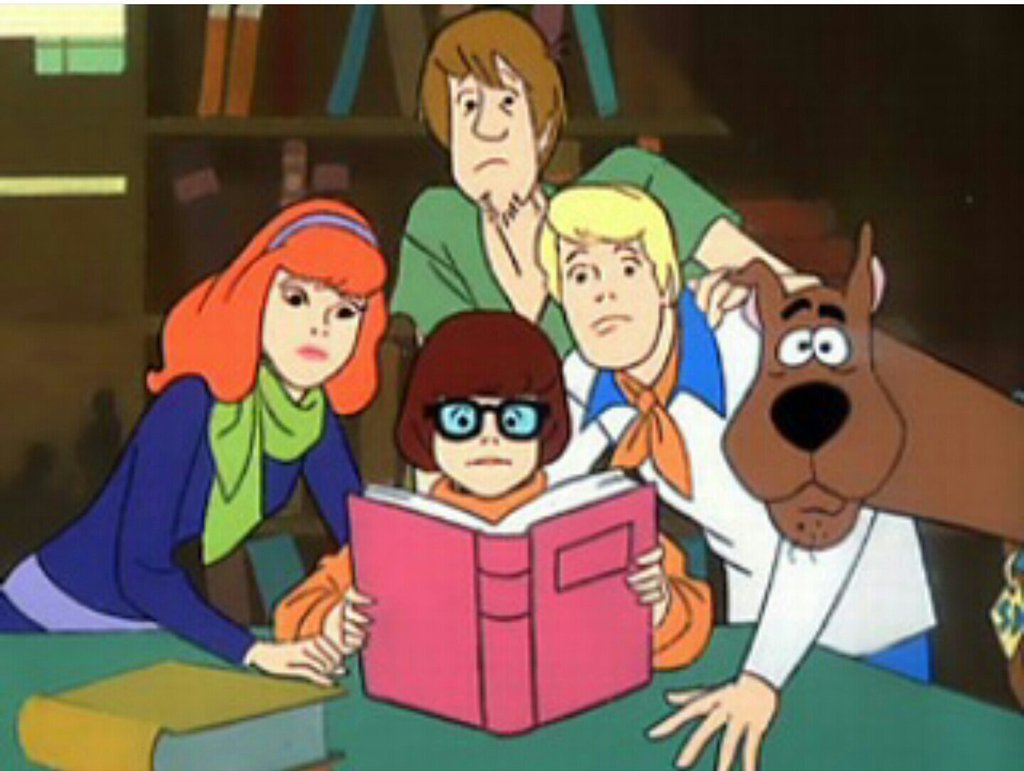
Readers tend to love a good mystery.  It’s kind of like the original VR game, where we get to see all the same clues and evidence as the protagonists and try to piece them together first.  We do it with books. We do it with TV shows.  Hell, there are some fantastic comic books you can do it with.  Alan Moore made a compelling argument once that comics are the perfect medium for mystery stories.
But…

As writers, let’s be honest.  Mysteries are tough.  They need to be in that perfect sweet spot—not so tough they’re impossible, but not so easy that my reader solves it before my character does (and then my character looks stupid for the next 150 pages for not figuring this out yet).

Plus, there’s so much to keep track of.  Who saw what.  Where they saw it.  When they saw it.  These are all super-important, because readers hate it when they get to the end of a mystery and find a gaping hole there.  It’s probably the second-most annoying thing I can do when I’m writing a mystery.

(And now I’ve got you all wondering, don’t I…?)

At the Writers Coffeehouse a few weeks back, one of our regulars, Hal Bodner, offered a brilliant tip for writing mysteries. It eliminates this issue almost altogether.  Honestly, it’s so clever… it’s the whole point of this little rant.

If you’ve ever seen or read an older mystery, they almost always have a chapter near the end when our fearless detective (or sleuths or investigators or what have you) bring all the suspects together and walk them through the crime.  They’ll go over the evidence, the clues, the alibis.  They’ll explain what each one means, which ones were red herrings, which ones they immediately discounted, and which ones pointed to…you, Widow Humphries!  Or should we call you, Isabella, the Viscount’s estranged sister!!!

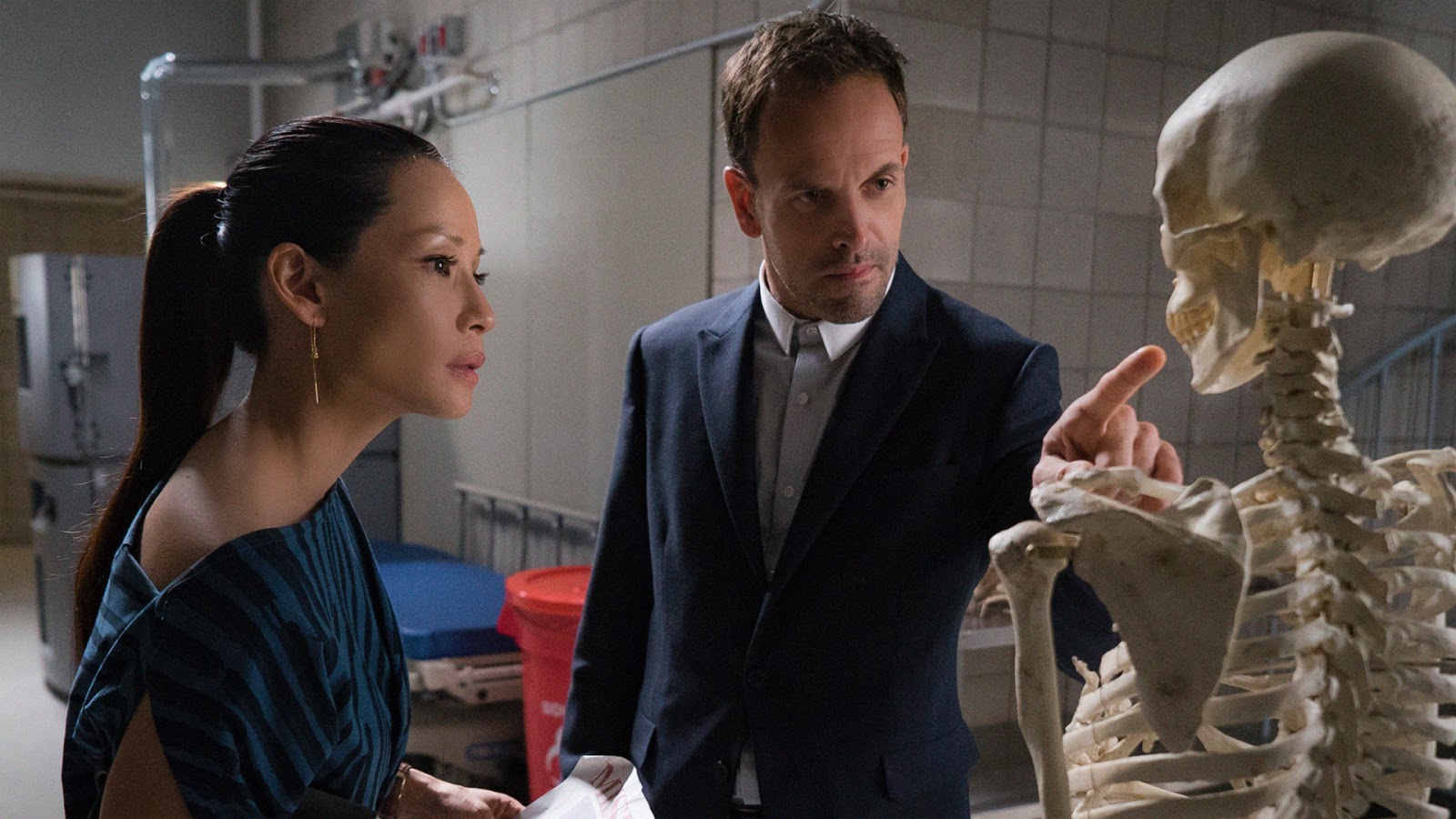
You know this scene, right?  I’ve heard it called the parlor scene, the tea room room speech, the summation gathering, and other titles along those lines.  Hal called it the detective’s speech.  You might still catch it today on shows like Elementary, although it’s often pared down to just the detective and the guilty party.

So… here’s the tip.

Write that scene.  Even if my hard-boiled action story doesn’t really call for it, I should spend a day or three and write it out before I get going.  Have my investigator pace the room and point at people and say how he noticed this and saw those and learned about this.  Explain how this theory was discarded and where that idea came from.  And then point that finger right at the guilty party and scream “J’ACCUSE!!

Or maybe your detective plays it cooler than mine and just stands there with her hands in her trenchcoat.  Maybe she gives a little nod and a faint smile when the murderer gets hauled away. And then she pulls out her flask and crawls deep inside until she can re-bury all those memories about Jenna that this case dragged up again…

Anyway…

I don’t need to keep this scene, mind you.  Very likely this will just be one of those things I write that doesn’t get used.  Probably best if it isn’t.  Like I mentioned above, it’s kind of an archaic, cliche scene, and on the off chance it shows up it’s really pared down and tight.

But once I have it written out, I have a mini-outline for how the mystery is revealed in my story.  Literally, who knows what when.  When they met the suspects.  What they see.  When they see it. When they make which connections.  It’s all right there in that speech—what my investigator needs to solve the crime.

So gather your suspects—yes, even the butler—get them all seated in the parlor, and tell us about the first thing you noticed when you saw the crime scene.

Next time, I wanted to talk about Luke’s father.

Until then, go write.
November 6, 2017 / 1 Comment

NaNoWriMo Tip

            Hey, y’know what I realized over the weekend?  It’s NaNoWriMo!  Who’s trying it this year?
            I’ll be honest. I’ve never tried it myself.  By the time I first heard of it, as it was just starting to gain popularity, I’d already been writing professionally for a year or two.  Might’ve even already been writing full time (non-fiction, but still).  For the past eleven years… well, every month’s been about word count for me.
            That doesn’t mean I don’t have some ideas and thoughts on NaNoWriMo.  In fact, a lot.  At this early point in the month, I have one very firm reassurance, and one solid tip.
            Which I shall share with you now.
            First piece of reassurance.  No matter who you are, I can tell you with absolute certainty, you are not going to sell the manuscript you write this month.  No agent will consider it.  No editor will look at it.  It’s just not going to happen.

             HANG ON!  This isn’t a kick-in-the-gut thing.  This is liberating.  It’s freeing.

            I’m not saying nobody will ever buy this book.  But what we’re doing during this month is a first draft.  A rushed first draft at that.  It’s going to have plot holes and factual errors and typos.  It will, trust me.  It’s a fantastic starting point, but it’s going to need more work after November 30th. No question about it.
            Again, this is a good thing.  Stop worrying about if an agent or editor or your significant other is going to like this. They’re never going to see it.  This draft is for you and you alone. Be selfish.  Go crazy.  This is the “dance like nobody’s watching” part of the process.  Let your creativity run wild, eat nothing but chips, drink nothing but whiskey, run naked in the coffeeshop, and don’t worry about anyone else and what they may think.  They can see the second or third draft, maybe, but not this one. Do what you want to do with it.  Do anything.  Because this is just the first draft.
            Okay, don’t actually run naked in the coffeeshop.  Yeah, I know they smile at you a lot there, but they’re paid to be nice to you.  They don’t want to see that. Especially not in a place that sells food.
            Second thing—the solid tip.
            Write.
            That’s it. Just write.
            I know that sounds kind of flip and arrogant, but stop and think for a moment.  Like we just said, this draft isn’t for anyone else.  We’re not going to worry about spelling, research, current hot genres, book advances, any of that. All that matters for this month is getting words on the page.
            Sooooo… get the words on the page.
            In my first drafts, I change character names halfway through.  I snip off plot threads and remind myself to pull them out later. I snip off some characters halfway through, and then jump to the alternate timeline version of the book where I killed them sixty pages ago (like I now know I should’ve done in the first place).  And I can do all this because this is going to get another draft.
            For now, the most important thing is to just write.  Put words on paper or on the screen or on your arm or your friend’s shirt or whatever medium you’ve decided to work in. Stop trying to filter or rein in your creativity and get it all out.
            So for now…
            Go write.
November 2, 2017

Always—Maybe—Never

No, we’re not talking about an M-F-K type game.

I don’t know. Some of you are very clever and inventive.  Maybe we are…

Big surprise, I know a lot of writers. Honestly, I’m still surprised to be accepted into their ranks. Any time I’m at a signing or a con party, I kind of feel like Jane Goodall quietly being accepted by the gorillas…

(by which I mean I’m quietly waiting to be mauled)

However, there’s one writer I don’t have that problem with, and that’s the ever-wonderful Elena Hartwell, author of the Eddie Shoes mystery series. Elena and I have, we recently realized, known each other for almost a quarter-century. We met back in our early twenties when we were freelance electricians for various San Diego theaters, and we’ve been friends ever since.

Yeah, I’m not sure how the math works, either. Met in our early twenties, pretty sure we’re both in our mid-thirties now… Maybe it’s like Reaganomics. In that it doesn’t really work.

Anyway…

I got to attend a signing event Elena did recently in my neighborhood, and during the talk she mentioned a wonderful rule of thumb when it comes to research. More to the point, when it comes time to start incorporating that research into my writing. Tattoo this one on your arm.  Or commit it to memory.  Or maybe just bookmark it…

For her books, Elena’s talked to a lot of professionals in various branches of law enforcement and other public servants. And she noticed a lot of their answer to her questions tended to fall into certain groups…

“We always do this.  No matter what, this is a priority.”

“Well, you think it’d go that way, but the truth is… well, it’s a little more flexible than a lot of people realize.”

“That never happens.  There’s a couple different reasons why, but… it just doesn’t.”

This didn’t really surprise me. As someone who worked in the film industry for many years, I was very aware of those kind of divisions. Usually when dealing with people who had a lot of textbook ideas about how the industry worked. And then having to explain to them, “yeah, here’s how that actually goes.” Or, far more often, “ha ha ha, no, that never happens…”

I think most jobs work that way. There’s stuff that always happens, stuff that never happens, and then there’s that gray area where things aren’t well defined or nobody generally talks about it. The stuff that usually happens or, y’know… it’s not unheard of.

I talked to a scientist a while back about lab equipment. What happens to stuff from old experiments or discontinued projects? And I wanted to hear it from her because—like in the film industry—I was willing to bet there was the official, rulebook way that everyone gets taught, and then there’s… well, the simple reality of it. And she laughed and told me, yeah, there’s the expected rules, and for some things you follow the rules to the letter with no deviations. But for a lot of stuff… turns out people are a bit less concerned with what happens to that case of old test tubes or the laptop from 2006.

So, what does all this mean to you, fearless writer?

When we’re doing research, it’s really tempting to bend the facts to fit the story we want to tell. We have something we like, reality goes against it… so we just choose to ignore reality. I mean, that’s what fiction is, right? Just ignoring reality to tell a good story.

Not exactly.

When I sit down to do my research—be it books, bugging professionals, or even risking the internet—I should put all the answers into one of three categories.  Always.  Maybe.  Never.

If it’s always true, I need to get it right.

If it’s never true, I shouldn’t have it happen in my story.

If it’s maybe true, in certain cases…  now I can tweak according to what my story needs.

That’s it.  Simple and quick.

Y’see, Timmy, doing this will make my story so much stronger, especially if I’m trying to set it in the real world.  Because by doing this, I’m enforcing those real-world rules. Heck, even if my story’s set in the kaiju-infested dystopia that is 2217, I should be doing this with my facts.  It’s just me staying true to the rules of that world.

Always. Maybe.  Never.

Next time, I’d like to talk about bullies.

Until then… go write.

Always go write.

August 24, 2017 / 4 Comments

The Genre-Device Mnemonic Caper

             Middlemanreference.
            Very sorry I missed the last two weeks. Lots going on, which I’ll get to in a minute 
            I wanted to toss out a couple of quick, easy genre/device mnemonics for you.  These are a couple of things I’ve heard over the years.  Sometimes—when I’m struggling with something in a story—I’ve found them helpful for getting my head wrapped around things.
            So, what is it you’re working on right now. Maybe keep in mind…
            Suspense is about what’s going to happen
            A thriller’s about what is happening
            A mystery is about something that already happened
            Granted, these are kind of broad definitions, and there’s always going to be an exception or two. But I’ve mentioned once or thrice before the problems that can crop up when I try to push this kind of story into thatframework.  And if I’m trying to write a thriller that’s about events that already happened… well, there’s probably a reason I’m having problems with it.  Or maybe my readers are having problems with it.
            It’s not a bad thing to double check what I’m writing about and what I think I’m writing about.
            Now, let’s flip this and talk about devices.

            A mysteryis when my characters are actively searching for a piece of information they don’t know.
            Suspenseis when my readers—or the audience, in a larger sense—knows a piece of information that my characters need to know but don’t.
            A twist, is when we’re talking about a piece of information that nobody even suspects exists (readers or characters), but once we learn it, it’ll change how we view a lot of what’s already happened in the story.
                       
            I think we all mess these up a lot when we’re starting out. We’re trying to use a device or write in a specific genre, but we fall into the patterns of another one.  Or we’re so focused on having, for example, a cool mystery that we don’t realize we’ve actually set up a twist.  And it’s kind of a weak twist because… well, we’re still trying for a mystery.
            Worse yet, sometimes we learn these mistakes.  They become that thing we’re convinced is right because we never learned anything different. And so we stick with these mistakes for years, focusing on other things instead fo the one clearly-wrong thing.
            Make sense?
            That’s why I like a lot of these little mnemonics.  They’re easy things to keep in the back of my mind and check my work, so to speak, every now and then. Good for starting out, good for later on, too.
            Next time…
            Okay, truth is, I had surgery last Tuesday.  Nothing super-serious, don’t worry, but it was pretty intense and the painkillers have really knocked me for a loop (and really messed with my sleep). Heck, this post was mostly done last week and I couldn’t pull it together long enough to get this up on the site.  Barely got that cartoon up the other day.
            Long story short—no idea if I’ll have a coherent post done for next week.  August might be my lame month.
            At the least, I’ll put up another cartoon. At the best… well, we’ll see how close I am to reality at the given moment.
            As always, please feel free to toss any requests or suggestions in the comments below. Or any handy mnemonics of your own.
            Until then, no matter what… go write.

Categories