People ask me questions. A lot of questions. Sometimes the same question gets asked frequently. So here’s answers to a lot of them (updated as of April 2023). Now when folks ask said questions, I can just point at this page. It’s even right at the top of the website (look, there it is right up there). The answers are all here.
Or in the books. You’d be amazed how many answers about the books are in the books. Really.
When are we going to see something new?
Next up is going to be an assortment of short stories in different anthologies. I’ve got a story in the new Joe Ledger anthology, Unbreakable, edited by Jonathan Maberry and Bryan Thomas Schmidt (and it could also be considered a Threshold story). I think that’s maybe end of summer? I’ve got a story in The Reimagined Detective, edited by Jennifer Brozek and Cat Rambo which I believe is this fall. And I’ve also got a new Carter & Kraft story in Combat Monsters from Henry Herz, coming out early next year. Some of these may be up for preorder now.
After that, probably next year (sorry) you’ll see a couple new things solely from me. Some books I’ve been calling GJD and TOS in such discussions. Maaaaybe something else. Maybe two something elses.
And I’m still hoping to put out my short story collection, Dead Men Can’t Complain + Other Stories, as an ebook. Yeah, just an ebook, sorry. It’s been an audio collection for a while, but it needs to get out more. There’s just been, y’know, a lot going on and I didn’t want to do this half-assed.
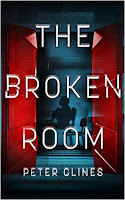
Wait, what? Did you say next year? Two years after The Broken Room? Why?
A couple reasons. One I’ve talked about before was a bad case of burnout that I’m still not sure I actually recovered from. Two is… well, despite that, I’ve actually written a ton of stuff. As I mentioned a while back, I did a massive outline for a contained series (more of a hexalogy, really) and then wrote the first book in that series. And then… that got put aside. And I wrote GJD. Then some short stories. Then a few tens of thousand of words on TOS. And now I’m back in edits on GJD, so my agent can show it to some hopefully-interested parties this summer. And then it’s usually at least a year from that point to it being in your hands, sooo… that’s next year.
Why’d you do those “Audible exclusives” a few books back?
There’s a lot of evidence that says the majority of my fan base is audiobook listeners. Audible knows this, too, so when they heard about the rough ideas for Dead Moon and Terminus they made me an extremely generous offer for exclusive rights, meaning both books would be exclusively theirs for the first six months they were out.
And I know that made some folks grind their teeth. I’m honestly sorry if you weren’t an audiobook listener (for whatever reason) and it left you out of the loop for a while. My agent and I talked a lot about the pros and cons of those deals. In the end, I really wanted to tell those stories and that was the overall best way to do it. Again, I’m sorry if it put you in a bad spot.
So still no paper version of Terminus or Dead Moon or any of the others?
No, sorry. There’s a couple of reasons for it that involve different business and PR things. If you’re interested, I went over a lot of it a while back. There’s still a chance these books could become available in print if there’s a big demand for them (feel free to tell Crown Publishing you want to read them and would buy half a dozen copies), but for the moment Terminus, Dead Moon, and a few of my other older books are only going to be ebook and audio. Again, sorry.
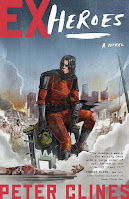
Is Ex-Isle the last Ex book?
Yeah, Ex-Tension is back-burnered for the foreseeable future. Simple truth is every series has a limited life. Book one usually sells the best, not as many folks are interested in book two, a few less show up for book three, and so on. Not a lot of people decide to start on book five, y’know? Yeah, something can happen to give that first book a boost (and then all the other books after it) but the series is still on the same downward slope, heading for the red line where things aren’t profitable. None of the Ex-Heroes books ever lost money (thank you all for that), but when the publisher looked ahead to book six… well, the math on the walls was pretty clear, so to speak.
But there may be something else. Too early to say just yet. Have hopes, but don’t get them too high.
Have you ever thought about a Kickstarter or a GoFundMe for any of this?
Okay, look, I love the Ex books. I had tons of fun writing them. I’m still amazed there are so many fans who love them so much. But the math is pretty simple—if enough people were willing to pay for another book, the publisher would be willing to put out another book. And all the numbers say that’s just not the case. Yeah, I know some of you might be willing to pay twice as much to see one more book, but I think we can all agree there’s at least as many people (probably more) who wouldn’t pay anything. And that’s the math again—it just doesn’t work out for this.
Also, if I do a crowdfunded project, I have to schedule my time under the assumption it’s going to succeed, which means telling my publishers any of those other projects I mentioned above need to be put off and scheduled accordingly. And that leaves a six or seven month hole in my schedule when the Kickstarter flops. Which—again—all the math says is what’ll happen.
Plus… look, Kickstarters are a ton of work to run. They’re even more work if they succeed. It essentially means I have to be writer and publisher and distributor. And to be horribly honest, I don’t want to do any of that. Some folks are fantastic at it, but me… I just want to tell stories. That’s all.
TL;DR—I have and the answer’s no. Sorry.
Do you get more money if I buy books in one format rather than another?
This sounds like an easy question, I know, but there’s a bunch of conditionals to any answer I give. A huge chunk of each and every book contract is just all the different terms and conditions for when and if and how people get paid. Lots of “ifs” and “excepts” and “unlesses.”
For example… format matters, sure, but so does where you bought the book. And when. And how many people bought it before you (seriously). And if it was on sale. And who actually had the sale (publisher or distributor). And all of this changes in every contract. What’s true for, say, Paradox Bound isn’t true for Terminus. In some situations. Usually.
Again, TL;DR—just buy the format you like.
When are we going to see a movie/ TV series/ graphic novel/ video game of your books?
Well, first off, I hope you understand I have pretty much zero influence on Hulu making a Threshold series or Netflix doing a Broken Room movie. I mean, think about it. If the writers just had to say “hey, make this into a movie,” wouldn’t most books be adapted by now? Everybody’d be doing it. When we see a TV series or film adaptation, it means the filmmakers went to the writer, not the other way around.
That said… yes, there’s a potentially big thing going on right now. But like so many Hollywood things it’s moving at its own pace and hasn’t quite hit the point where I feel good talking about it in anything more than vague terms. Once there’s something solid to tell you, I’ll tell you. I promise.
Well, is there anything we can do to help?
Buying books is always the best step. Talking about them is a close second. Producers/ directors/ actors all hear about this stuff the same way you do—online reviews, bestseller lists, and social media. If #TheBrokenRoom started trending tomorrow, there’d probably be a film in pre-production by the end of the year. Seriously.
So talk about books you like (anybody’s books, not just mine). Mention them to friends, write reviews (always good), make TikTok videos, tag streaming networks if you want to talk about how this or that should be a movie. Word of mouth is the best (and easiest) thing to do.
Wait, I thought you don’t like people talking about your books. Which is it?
I’m seriously thrilled and amazed when people talk about anything I wrote. I think most writers are. What I can’t stand, personally, are people who blurt out spoilers that ruin these stories for other people. It’s why I avoid those questions in interviews and on social media, and why—where I can—I delete (or block) posts that reveal things from a book.
And not just my stories! You shouldn’t mess up other stories, either. Books, movies, TV—I’m just saying, if you enjoyed it spoiler-free, why not try to give other people a chance to enjoy it the same way? Especially these days when release dates/air dates aren’t the ironclad things they used to be.
Do you have any plans to attend #####-Con?
To be honest, I’m not attending any cons this year. I don’t have anything new out, and I haven’t been really thrilled with how a lot of cons have dealt with certain health/ safety issues since lockdown ended. I debated it a lot over the holidays and ultimately decided not to bother. I’m hoping next year many things will be in better places and I can show off new stuff at cons on both coasts and maybe the middle and who knows where else. Other countries?
And if you’d like to see me at your local con, let them know. Email them, tweet them, post on their Instagram account. Reach out, vote, and let your voice be heard. Also, generally this is a sooner-is-better type thing. If you’ve got a convention near you next February, there’s a good chance they’ll be putting a guest list this summer.
Will you read my story and tell me what you think?
Short answer… no.
Long answer… look, I don’t mean to sound mercenary, but writing is how I pay for electricity and food and booze. And I really like food and booze. So when a more-or-less random stranger asks me to read stuff, they’re asking me to give up a few hours of work. Would you want to give up a few hours of work? Plus, I do have the ranty writing blog sitting right here with over a decade of advice and tips for whoever wants it.
Also, the sad truth is some folks are not too bright and lawsuit-crazy, and they ruin it for everyone. Somebody shows me a piece of bland, generic genre story, then a few years from now they sue me for stealing their ideas of… dinosaurs. Yeah, I know how stupid that sounds, but I’ve been subpoenaed and deposed for a lawsuit with less behind it than that. Really! It’s why I’m verrrry leery when I get a long message from someone along the lines of “You know what you should really do next with the people from 14…” Heck, some writers respond with cease & desist orders when they get sent stuff like this.
So the long answer also boils down to “no.” And if you send stuff without asking, I’ll delete it unread, just like spam mail. And probably block you.
Where are you on social media? Are you more on one than another?
Ahhhhh, social media. Where we’re the consumer and the product. Just like Soylent Green.
I deleted my Facebook account over three years ago. There’s still a fan page there, but it’s just a zombie page (zing) with no administrator.
Twitter’s not doing much better these days. I’m still there, still posting, but a lot of it’s got that same shouting-into-the-void feel, y’know? And there’s no real sign of it getting better.
Instagram’s long been the geekiest of my social medias. Lots of toys, model robots, gardening, and cats. Can’t have an Instagram account without cats. Yeah, I know Instagram’s also owned by FaceMetabook, but (for the moment) they’re not quite so reprehensible and algorithm-manipulative as their parent site.
I’m on Mastodon. I like it in general, but it feels sluggish to me. Not a lot of response or interaction there. And the federated aspect of it can make it really hard to find people unless you already know where they are.
Tumbr—I’ve got an account, but I usually have to remind myself to post there. More sluggish than Mastodon.
CounterSocial—have an account but haven’t posted there in months.
The Hive—was fun while it lasted. Looked great, but it quickly became clear the folks had no idea what they were doing.
Spoutible—I think we’ve seen enough impulsive, narcissistic billionaires in charge of social networks, don’t you?
Bluesky—Maybe? Maybe they’ll fix their terms of service and get a block feature and be fantastic. Or maybe they’ll implode in three weeks like so many others have. Who knows?
And I think that should answer about 90% of your questions, yes…?